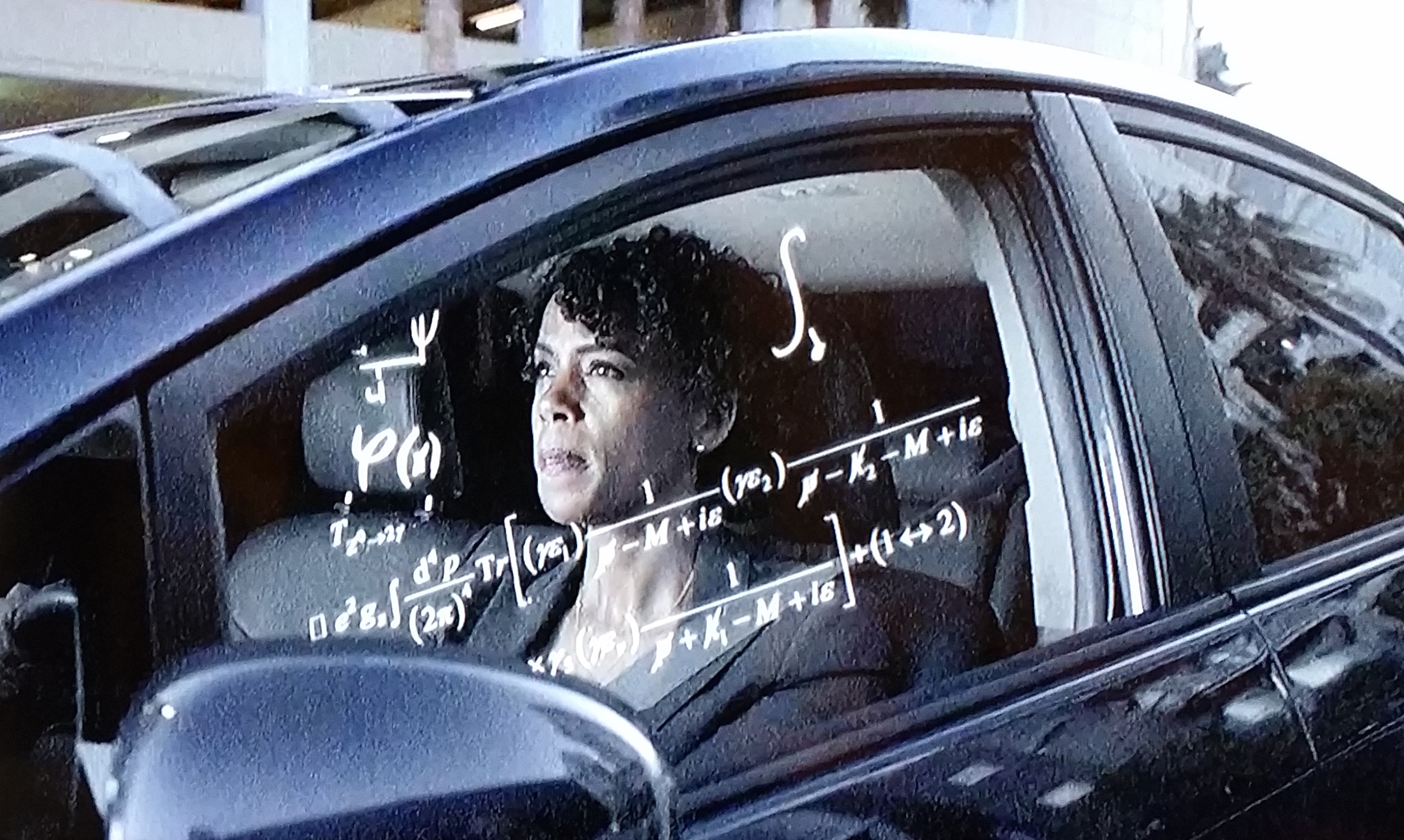
Barbie dolls are not real people. The pictures of actors and models in magazines are barely real people (thanks to Photoshop). The actress in this car commercial is not a real scientist.
It does, however, show anyone watching commercials during the NCAA Men’s Basketball Tournament a stylish woman of color driving a nice car and doing complex-looking mathematics* in her head.
It shows someone who is not white, not male, not bearded, not with crazy hair, not with disheveled clothes, not with sub-par social skills doing complex-looking mathematics* in her head.
As we increasingly recognize that recruiting and retaining a diverse STEM workforce requires presenting individuals in that field with whom they can identify, we have a car company showing us that. This actress may not be a real scientist, but my four-year-old daughter won’t know that her concepts of who can be a scientist will have been expanded positively by a commercial while Daddy watched Duke play basketball on TV.
*I do not have the gift for going “oh, that is X equation” on sight. So, I will leave it up to you, dear readers, to evaluate the actual complexity and accuracy of the mathematical imagery.
UPDATE 14 NOV 2014 11:30AM: Matt Taylor made a sincere (according to trusted reports – I haven’t seen it yet) today.
Charles Duke (CAPCOM Apollo 11) making space history in a bad shirt without offending anyone.
I’m the proud parent of two small children. That means we occassionally (ie, every day) have to review the clothes they select and determine if they are appropriate for the day’s events (eg, landing a robot on a comet). Sometimes we have to intervene because they have made poor choices. We apply experience, knowledge of the day’s activities, and awareness of the effect their personal presentation can have on others to identify poor choices. I am the adult. Making sure my kids represent themselves, our family, and our values positively is part of my job.
My kids don’t always like being told that they need to make a change to their attire. That dislike is sometimes expressed in a loud – painfully loud – and vocal manner. They are young. They are inexperienced. They will be making bad decisions with total commitment well into the future. That does not relieve me of my responsibilities to limit the harm done by those bad decisions, because I am the adult. This is my job.
European Space Agency (ESA) scientist Matt Taylor must not live with responsible parents, because he showed up for work in a shirt covered with pictures of scantily clad women* (violating any HR policy not written by Silvio Berlusconi). He wore that shirt to work on the day that the ESA was landing a robot on a comet – on the day that event was broadcast globally – on the day he was going to appear on that global broadcast. Wearing that shirt was a bad decision.
Matt Taylor’s individual bad decision turned into a bad decision for the entire ESA. He was allowed to go in front of the camera dressed like that. He was allowed to make robotic space exploratio appear unwelcoming to women. He was allowed to make that portion of the webcast unwatchable in my child’s classroom.
Were they so unaware that they did not realize his clothing would offend so many? Or, were they aware, but decided the interview was more important than the offense? Either way it speaks to systematic blindness toward the negative and chilling effects of sexism. Cameras turn off.
During the webcast, numerous old, white guys spoke of ambition, collaboration, courage, and hope for the future; but no one had the bravery to stop one man from making a fool of himself, emabarassing their organization in their moment of triumph, and signalling that the field of robotic space exploration is not ready to treat women with respect and dignity.
Those “no ones” at the European Space Agency – those “no ones” who should have been “someone” – are the ones that I want to hear apologize and explain themselves. I have kids. I know the job you were supposed to do. You didn’t do it.
*No, I am not going to post a picture of it. If you want to see it, you can find it.
Hall did so by mocking young scientists who are active and effective on social media. Science Magazine did so by featuring very few women or people of color in their list.




 The Finch and Pea