Putting his money where his mouth is on gender equality in science

Doing it right. UC Davis microbiome researcher Jonathon Eisen not only turned down an endowed lectureship because the series was too male dominated, but also engaged the lecture series leadership and suggested replacements (hat tip to Evelyn Padilla).

For a more journalistic account, check out Elizabeth Case (hat tip to Jonathon Eisen).

Last Man Science Fiction, 1805: The Bible as Gothic Futuristic Romance

Jean-Baptiste François Xavier Cousin de Grainville’s The Last Man (1805)

martinLastManLong-time readers know I’m a fan of post-apocalyptic science fiction, because it reveals so much about our feelings toward science and its place in civilization. Science mediates between us and nature; in modern civilization, we rarely encounter the raw power of nature without science’s buffering effects.

But are we like the sorcerer’s apprentice, putting the world at risk by playing with powers that are out of our league? Have we used science to truly transcend nature’s casual brutality, or are we just kidding ourselves? How much does our own human nature depend on the scientific underpinnings of civilization, and what happens when science’s support is yanked away — will it be Mad Max-style battling warlords, or pastoral communities in tune with nature’s rhythms, as in Earth Abides?

In End of the World fiction, the answers to these questions are all over the map, and that’s why this genre is so awesome.

I’ve already covered post-apocalyptic SF from the 40’s and 50’s, but it’s time to go back to the beginning of the genre, with the very first book that you could call a Dying Earth science fiction novel: The Last Man, by the French priest Jean-Baptiste François Xavier Cousin de Grainville. Published in 1805, it’s a bizarre rewrite of the Book of Revelations as futuristic Gothic novel, filled with temples, spirits, visions, and trans-Atlantic airships. Continue reading “Last Man Science Fiction, 1805: The Bible as Gothic Futuristic Romance”

You call yourselves nerds?

Last Thursday (or as Thursday was migrating into Friday), I was revelling in the Frazetta covers collage posted at BoingBoing and discussing how Conan the Barbarian (1982) was a truly great swords & sandals movie with Natalie Willoughby (Leia Shot First, which she did), when I saw that Conan the Barbarian was on TV.

In the spirit of #SciWars, I thought retooling Conan the Barbarian quotes to represent scientific experiences would be a great idea. It was fun for me, but almost no one else (Storify of tweets here).

Continue reading “You call yourselves nerds?”

National Academy to Congress: For economic benefits, support basic research

It’s a sobering exercise to go through your day and identify those common, essential things that exist only thanks to fundamental scientific discoveries made in the last 100 years. Of course some of our technology was developed in the Edisonian style, invented without any recourse to a understanding of the underlying science. But so much of the technology of modern life would not be possible without major basic science discoveries made during the 20th century. How we eat, communicate, travel, work and care for our health are all closely tied up with fundamental discoveries made in the past century. In other words, basic science has made a huge contribution to society’s economic growth and well-being.

That basic science generates huge material benefits has been the major justification for federally-funded research since Vannevar Bush’s 1945 manifesto. Unlike, say, the National Endowment for the Arts, which exists mainly to support a vibrant culture, federal science funding is specifically intended to generate tangible economic benefits for society — not simply to support science for its own sake. Continue reading “National Academy to Congress: For economic benefits, support basic research”

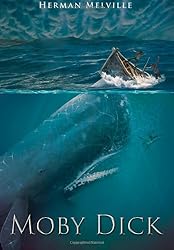
The Mobiest of Dicks

I know that title doesn’t sound right…or does it.

Thanks to a tweet by Jimmy Stamp that was retweeted by Alexis Madrigal, I found this delightful post by Robin Sloan entitled “The Moby Dick Variations” that speculates about what it means to be a novel as a unique work of art. In the post, Sloan investigates how a novel can vary and still maintain its identity. The post instantly connected to two divergent thoughts in my brain. Continue reading “The Mobiest of Dicks”