Running Low – Science for The People

#259 - News from the Dark
#260 – Running Low

This week, Science for The People looks across the Periodic Table and assesses the scarcity of modern society’s essential elements. They’re joined by Dr. Thomas Graedel, Director of the Center for Industrial Ecology at Yale University, to talk about the rare metals that play a role in our electronic devices. They’ll also speak to physics Professor Dr. Moses Hung-Wai Chan about our dwindling supply of helium. And they’ll talk about the phosphorous that plays a critical role in modern agriculture, with ecology professor Dr. James Elser, co-organizer of the Sustainable Phosphorus Initiative at Arizona State University.
News from the Dark – Science for The People

#259 - News from the Dark
#259 – News from the Dark

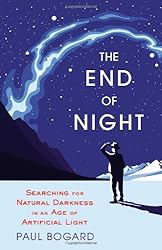
This week, Science for The People is peering out into the black to learn about deepest space, and our own night sky. They talk to Bad Astronomer Phil Plait, about recent measurements of gravity waves, and what they tell us about the birth of the Universe. They also speak to journalist and essayist Paul Bogard about his book “The End of Night: Searching for Natural Darkness in an Age of Artificial Light.” And Noisy Astronomer Nicole Gugliucci tells them about a project using citizen science to map the surface of the moon.

Emerging Infections

#258 - Emerging Infections
#258 – Emerging Infections
Image from National Institutes of Health

This week, my other other family at Science for The People is discussing invading organisms large and small. They talk to Dr. Michael Osterholm, director of the Center for Infectious Disease Research and Policy at the University of Minnesota, to learn why (and how) researchers are creating new strains of flu virus. They’re joined by marine invertebrate researcher Dr. Benjamin Miner, to talk about the wasting disease killing starfish on the west coast of North America. And they talk to physicist Ross Lockwood about the HI-SEAS project, exploring the psychological conditions facing a human crew on a mission to Mars.

Falling Upwards

sftp-fullsize-redbg
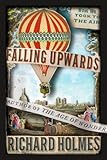
This week on Science for The People the conversation is about the science and history of lighter-than-air flight. The hour is spent with biographer and science writer Richard Holmes, to talk about his newest book, “Falling Upwards: How We Took to the Air.” Learn about the technology of 19th century ballooning, and the pioneering men and women who took to the skies and changed our view of the world.

Falling Upwards: How We Took to the Air by Richard Holmes (Pantheon, 2013)

Migration & The Melting World – Science for The People

sftp-fullsize-redbg
Today, my usual, totally biased praise of the most recent episode of Science for The People will be extra-biased. This week, host Desiree Schell interviews Christopher White about the effects of climate change in Glacier National Park. The discussion focuses on the clearly visible changes in the park, how those changes are monitored, and the cascade of effects resulting from those changes on the park’s ecology. Christopher White and I were both at the Santa Fe Science Writers Workshop earlier this year. He is one heck of a nice guy.

He did, however, miss a good reason to keep calling Glacier National Park “Glacier National Park”, even after all the glaciers are gone. The name begs the question, “Why do you call it Glacier National Park if there are no glaciers?” That question has a sobering and educational answer.

The show’s second interview, with Stephen Castles about human migration patterns, is equally interesting. Castles debunks some of the more grandiose claims about the effect of climate change on migration and refocuses the discussion on the true complexity of the issues.

Finally, how many podcasts do you know that provide links to supporting materials? Well, you know at least one now.