H.G. Wells’ The War of the Worlds (1898)
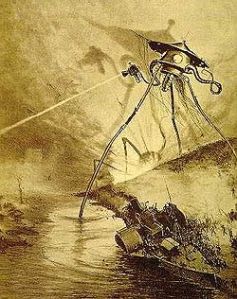 During the new wave of future fiction of the last decades of the 19th century, stories of catastrophic future wars were especially popular. The trend began in 1871 with George Chesney’s “The Battle of Dorking”, a story about a surprise invasion of England by something that sounds like the Prussian military. Writers continued to present increasingly elaborate visions of ever more destructive weaponry right up through the outbreak of World War I. And then there was H.G. Wells, who in 1898 took this popular and overworked late-Victorian genre and completely transformed it into modern science fiction with the classic story of alien invasion.
Swapping Martians with Germans isn’t the only feature that makes The War of the Worlds so different from what came before. Most writers were largely interested with the military and geopolitical aspects of future war, but Wells was interested in the civilians. In fact, War of the Worlds isn’t really about the Martians or their advanced technology; it’s about our cosmic insignificance, and how we react when the security of civilization is demolished. Continue reading “Apocalypse 1898: The Victorian Alien Invasion”

 We took some time off from corrupting classic(ish) films with science, but we came back strong this past Friday with #casLABlanca – a noble effort to science-fy the 1942 classic Casablanca. Despite the risk this posed, I was pleased with the results (measured by my lack of productivity on Friday), but I amuse easily.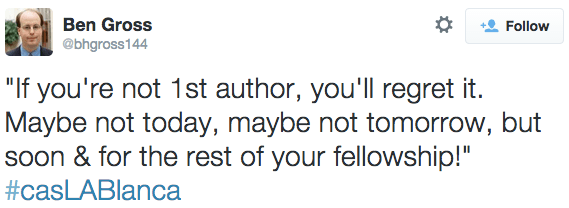



 The Finch and Pea