“The Number Pi”, Wisława Szymborska (1976)
While in Chicago for the Drosophila genetics conference last weekend, I managed to visit some Polish bookstores. My haul included a volume of poems by the late Nobel laureate Wisława Szymborska. Many of Szymborska’s poems engage with scientific ideas and their connection to our experiences of the world, and as it turns out, she wrote a poem about the number Pi.
The poem grapples with the mind-blowing idea of an infinite sequence of digits. Pi is woven into the poem, where it interrupts the narrator’s effort to draw comparisons to snakes, bird nests, comets, and stars. These comparisons fail as the number flows on, and they are replaced with numbers and fragments of the real world, including phone numbers, pocket change, and quotes from the Polish poet Mickiewicz and the bible.
And so, to finish off Pi day weekend, here is probably the only poem about this number by a Nobel Laureate.
The Number Pi

Admirable number Pi
three point one four one.
All its following digits are also initial,
five nine two, because it never ends.
It won't allow itself to be embraced six five three five by sight
eight nine by calculation
seven nine by imagination,
and even three two three eight by jest, or by comparison
four six to anything
two six four three in the world.
The longest snake on earth, after a dozen or so meters peters out.
Likewise, though a little later, do fairy-tale snakes.
The procession of digits that make up the number Pi
doesn't halt at the margin of the page,
it manages to pull itself over the table, through the air,
through the wall, a leaf, a bird's nest, the clouds, straight to heaven,
through the entire inflated and bottomless heaven.
O how short, downright mouse-like, is the braid of a comet!
How frail the star beams, that bend around the bounds of space!
And here two three fifteen three-hundred nineteen
my phone number your shirt size
the year nineteen seventy three the sixth story
the number of residents sixty-five grosz
hip circumference two fingers a charade and a code,
in which my little nightingale, fly, crow
as well as you are requested to keep calm,
and also heaven and earth shall pass,
but not the number Pi, no way no how,
it is continually its still not too bad five,
that no mean eight,
the not final seven,
urging, yes, urging a slothful eternity
to persist.
Translated from the Polish by Michael White


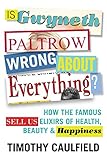 This week we’re looking at how famous personalities influence public opinion about science and pseudoscience. Health law professor Timothy Caulfield returns to talk about his new book Is Gwyneth Paltrow Wrong About Everything?: When Celebrity Culture and Science Clash. We’ll also speak to Conservation and Development professor Daniel Brockington about his research on celebrities and charitable advocacy.

 The Finch and Pea