No sign of life

If you read news reports, you would think that the only point of sending the Curiosity rover to Mars is to search for extraterrestrial life. Therefore, I suggest, that after every test it conducts Curiosity play the chorus of OK Go’s “No Sign of Life”. This will make it easier for the journalists to understand the results, but also carries a sense of optimism for the future.

No sign of life, no sign of life, no sign of life, no sign
But I got a hunch, oh, it’s not over yet, oh, it’s not over yet Continue reading “No sign of life”

The Art of Science: Linger a Little Longer


Designer Jay Watson calls this deceptively simple table and bench set “Linger a Little Longer”. The thermochromic finish of the table and benches responds to the heat of the body parts or dishes placed on it, leaving a “watermark” on the particular point of contact, a fleeting echo of the enjoyment of food and company, of the evanescent pleasures of life.

Watson used a technology, sometimes called hypercolor, that has been around for decades, and updated it by using it, not in tacky t-shirts, but in quietly elegant pieces of furniture…with a secret.

More information at Jay Watson’s website.


Linkonomicon III


  1. Not all failing schools are failing. Reminds me of Hamilton High School – via Carrie Brown-Smith via Deborah Blum.
  2. Neil Armstrong was about two seconds and one ejection seat away from not being the first man on the moon – via Maggie Koerth-Baker.
  3. Greatest meme ever would have been Buzz Aldrin punching Neil Armstrong like a moon landing hoaxer. Instead, he was just pouty. On the moon – via Tyler Cowen.
  4. There was a time when nice girls* didn’t do comedy. Thankfully, that time is gone. Gorgeous* Ladies of Comedy – via Jamie Frevele.
  5. Don’t believe that there was a time when nice girls* didn’t do comedy? Listen to the Nerdist Podcast interview Joan Rivers and change your mind.
  6. Thanks to a dinosaur show in my youth, my nightmares start with the phrase “packs of carnivorous, goose-sized dinosaurs”. Take note, my nightmares, geese ARE dinosaurs, and vicious – via Mark Frauenfelder.

*All jokes, by they way, in case you happen to have the comedic depth of an average internet commentor or the “funny” sub-reddit.


Guilty of a Broken Brain

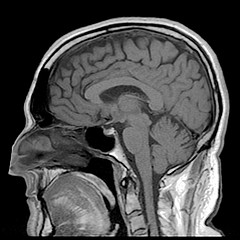
Neuroscience is finding itself at the center of a growing controversy in the courtroom. Will judges weigh biological evidence that could suggest future dangerous activity or impaired control differently and how will that affect systems of sentencing and determinations of guilt in the court? This biological evidence could be considered “mitigating” or decreasing a sentence (their brain is broken, it’s not their fault) or it could be “aggravating” (their brain is broken and they will offend again) and increase a sentence. To test whether Judges would reason differently after receiving biological evidence in a trial, a group has conducted a study on U.S. state trial judges. Continue reading “Guilty of a Broken Brain”

Sunday Science Poem: Melville and Mechanized War

When you think about poetry and the Civil War, Herman Melville is probably not the first person who comes to mind. Yet, with some serious hindsight, Melville has turned out to be one of the major poets of the Civil War. As readers of Moby Dick, White-Jacket, and “the Bell Tower” know, Melville had a longstanding interest in technology, science, and the mechanization of society. This made Melville especially attuned the effects of technology on war, and on the role of soldiers in war.

This week’s Sunday Science Poem is “A Utilitarian View of the Monitor’s Fight.” The Monitor was the first Federal armored “ironclad” warship. On March 8, 1862, the Monitor and the Confederate Virginia (previously known as the Merrimac when it was a Federal ship) battled to a draw in the world’s first battle between armored warships – an ominous milestone that Melville explores in this poem. This was a battle of “no passion; all went by on crank, pivot, and screw, and calculations of caloric.” It was not a glorious fight of heroes, but a professional battle of technical “operatives.” Today, the operatives can control unmanned, mechanical weapons without even being present on the battlefield. Continue reading “Sunday Science Poem: Melville and Mechanized War”