Doolittle disagrees, politely

The rebuttal to the ENCODE project’s claim to have vanquished junk DNA by Graur et al. got a lot of attention for its scathing rhetoric. If you already have enough troubles in your life, W Ford Doolittle penned a cogent, but polite rebuttal of the claim in PNAS.

…what would we expect for the number of functional elements (as ENCODE defines them) in genomes much larger than our own genome? If the number were to stay more or less constant, it would seem sensible to consider the rest of the DNA of larger genomes to be junk or, at least, assign it a different sort of role (structural rather than informational)…A larger theoretical framework, embracing informational and structural roles for DNA, neutral as well as adaptive causes of complexity, and selection as a multilevel phenomenon, is needed.

Unfortunately, you need a subscription to read the full length article, which I do not. Therefore, I’m not endorsing all of Doolittle’s arguments, but I do like that he seems to agree with my assertion from “Decoding ENCODE” that evolutionary theory expects junk DNA in species with the population and genomic characteristics of humans.

*Hat tip to Leonid Kruglyak.
The CFAA Reform “Ask Me Anything”

A long list of characters and organizations  involved in the fight to reform the outdated and overly-broad Computer Fraud & Abuse Act (CFAA) – the law used to prosecute Aaron Swartz prior to his suicide and criminalizes violating user agreements – just did an “Ask Me Anything” on Reddit. It is an interesting read:

I think there’s a growing constituency that opposes over-criminalization. CEI, Heritage, TechFreedom, Right On Crime, etc are helping to legitimize that position among conservative and libertarian Republicans, on spending and state authority grounds. The majority of Dems on House Judiciary, the committee of jurisdiction here, are in the orbit of the Progressive and/or Black Caucus, and are sympathetic to concerns about over-crim, prison industrial complex, etc. We need people who are working to legitimize those concerns/frames to keep up there work and have increased success as they do so, so we can discuss issues like the CFAA through those frames and have it resonate. – David Adam Segal, Executive Director of Demand Progress

There is an irony to people asking for fewer emails kind of spamming the thread, which will make you want to skip about 50% of the comments. Most take the form of “I really support your cause, but not enough to deal with a couple of extra emails each week.” Full credit to the reformers, as I did not see a single reply from them like, “Oh, you support us that much? THANKS!”

Breaking in Order to Build

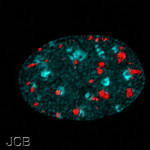
Image courtesy of the Journal of Cell Biology
Image of labeled (red) DNA breaks in a single cell courtesy of the Journal of Cell Biology

Do you ever think about how every time you encounter something new your brain adjusts and rewires and makes molecular changes so you can remember this new object in the context of what you already know? I know I do, though that may be a by-product of my neuroscience upbringing. Even if you don’t think about it, it’s happening. Complex changes in the numbers and amounts of gene expression are critical to developing and maintaining memories. And as it turns out, breaking the DNA in your brain cells into pieces is also part of the process.

Continue reading “Breaking in Order to Build”

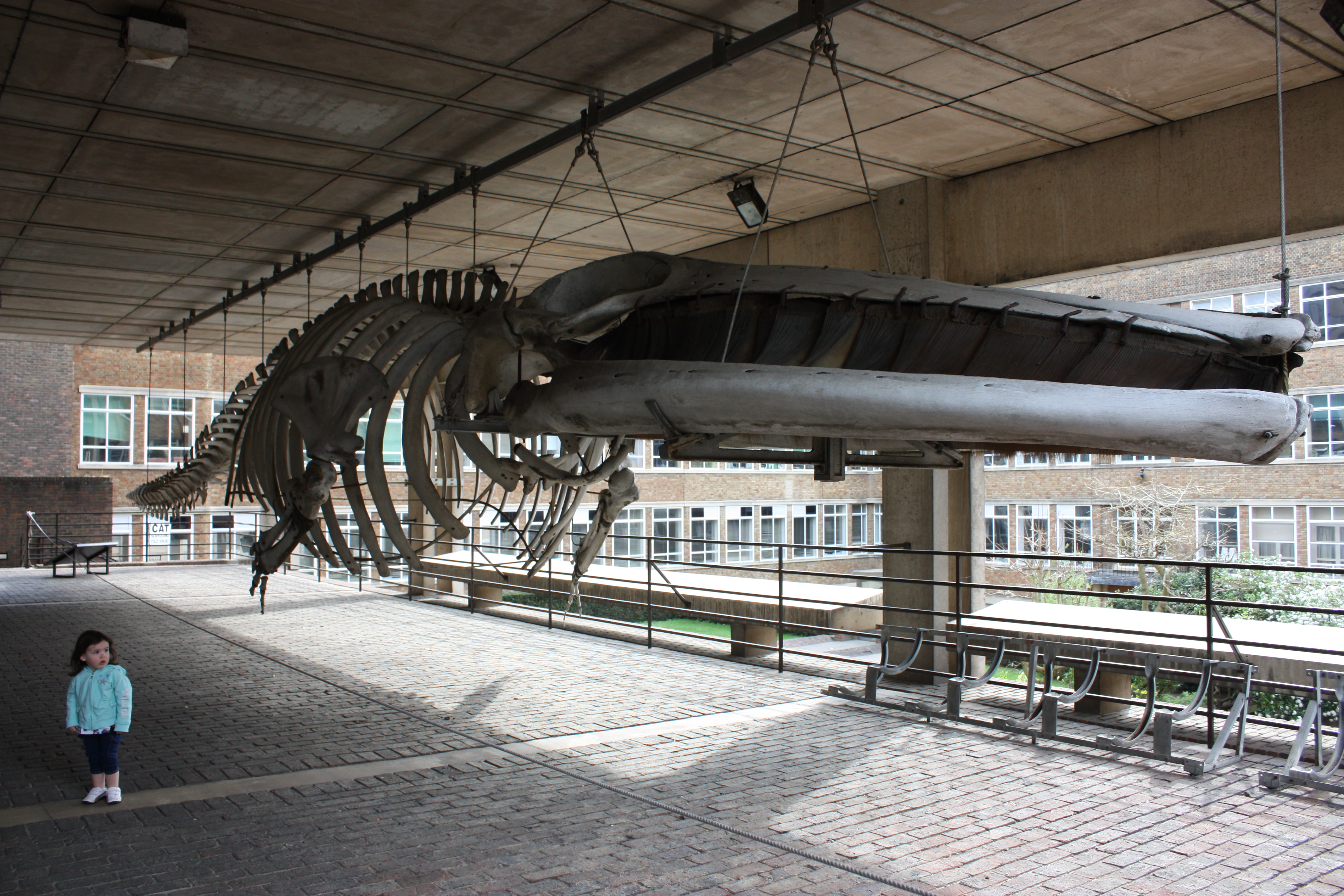
Cambridge University Museum of Zoology

Finback Whale Skeleton outside the Cambridge University Museum of Zoology - 2.5yo child for scale (Photo by Josh Witten - All Rights Reserved)
Finback Whale Skeleton outside the Cambridge University Museum of Zoology – 2.5yo child for scale (Photo by Josh Witten – All Rights Reserved)

For being a relatively small town, Cambridge, England, has a lot of museums. I already showed you the Sedgwick and the Cambridge Science Centre. Today we’re visiting the Museum of Zoology.

The museum is hidden in a densely built courtyard, behind lecture halls and other buildings. You know you’ve found it when you spot the whale skeleton.

Inside, the museum has more skeletons, but these are a bit smaller than the whale outside. Continue reading “Cambridge University Museum of Zoology”

Speculative Electro-Paleontology

Soft tissues generally do not show up well in fossils. That missing information means that paleontology is particularly fertile ground for speculation. One of my favorite bits of paleontological speculation comes from Putting the Life Back in Science Fiction where a post wonders whether plesiosaurs had long necks to allow for electric organs like electric eels, useful for defense, electrolocation, and fishing. The post is careful to note that it is indulging in wild speculation.

The speculative theory probably isn’t true, but it is more fun to imagine that it is.