
If you are in the Baltimore want to see Michele Banks and her fabulous science art in person, you can visit her at Artscape tomorrow through the rest of the weekend (18-20 July). Remember, our artists can’t support themselves.
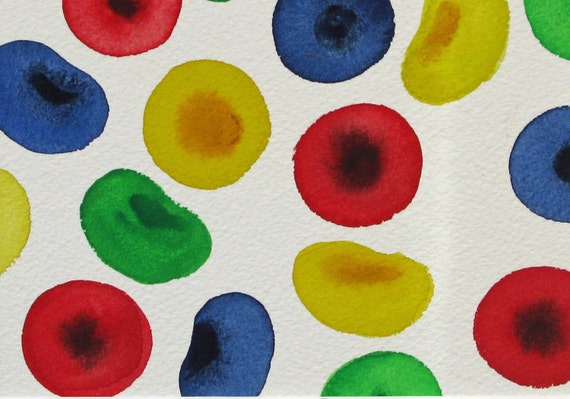

If you are in the Baltimore want to see Michele Banks and her fabulous science art in person, you can visit her at Artscape tomorrow through the rest of the weekend (18-20 July). Remember, our artists can’t support themselves.

The first thing you need to know about Energy Duck is that Energy Duck does not exist. It’s just a design, an entry in the Land Art Generator Initiative (LAGI), a competition to design and construct public art installations that also serve as sources of large-scale clean energy generation. So for now, file it with the other wonderful, terrible things that live on the internet, like the trampoline bridge on the Seine and the city buses with roof gardens.
If it gets built, though, Energy Duck will have the ability not only to provide solar and hydro power to Copenhagen’s public grid, but to fuel the nightmares of Danish children for decades to come.

A London-based team of artists, Hareth Pochee, Adam Khan, Louis Leger, and Patrick Fryer, modeled the sculpture on the common eider duck, which is found in the waters of Copenhagen. The Energy Duck, which is planned to be 12 stories tall (!) and constructed around a lightweight steel frame, with very lightweight steel supporting a skin of photovoltaic panels, would float in the city’s harbor. At night the duck would be lit by LED lamps that change color, with the color pattern undulating according to the output of the hydro turbines. Visitors would be able to move around the inside of the duck.
All this is well and good, I suppose. Sustainable energy produced by a plant floating offshore is a great concept. But as a person who lives in a 7-story building near a river, the idea of a huge, black, armored duckie larger than my apartment building floating nearby is somewhat less than appealing. It’s terrifying, in fact. The fact that it would turn into a glowing, pulsing, rainbow hippie duck by night helps matters not at all.
I do kind of hope that Energy Duck gets built. At the very least, it would provide endless entertaining photo ops of the “then Lancelot, Bedivere and I jump out of the duck” variety. Please, Just not in my backyard.
H/T: Inhabitat
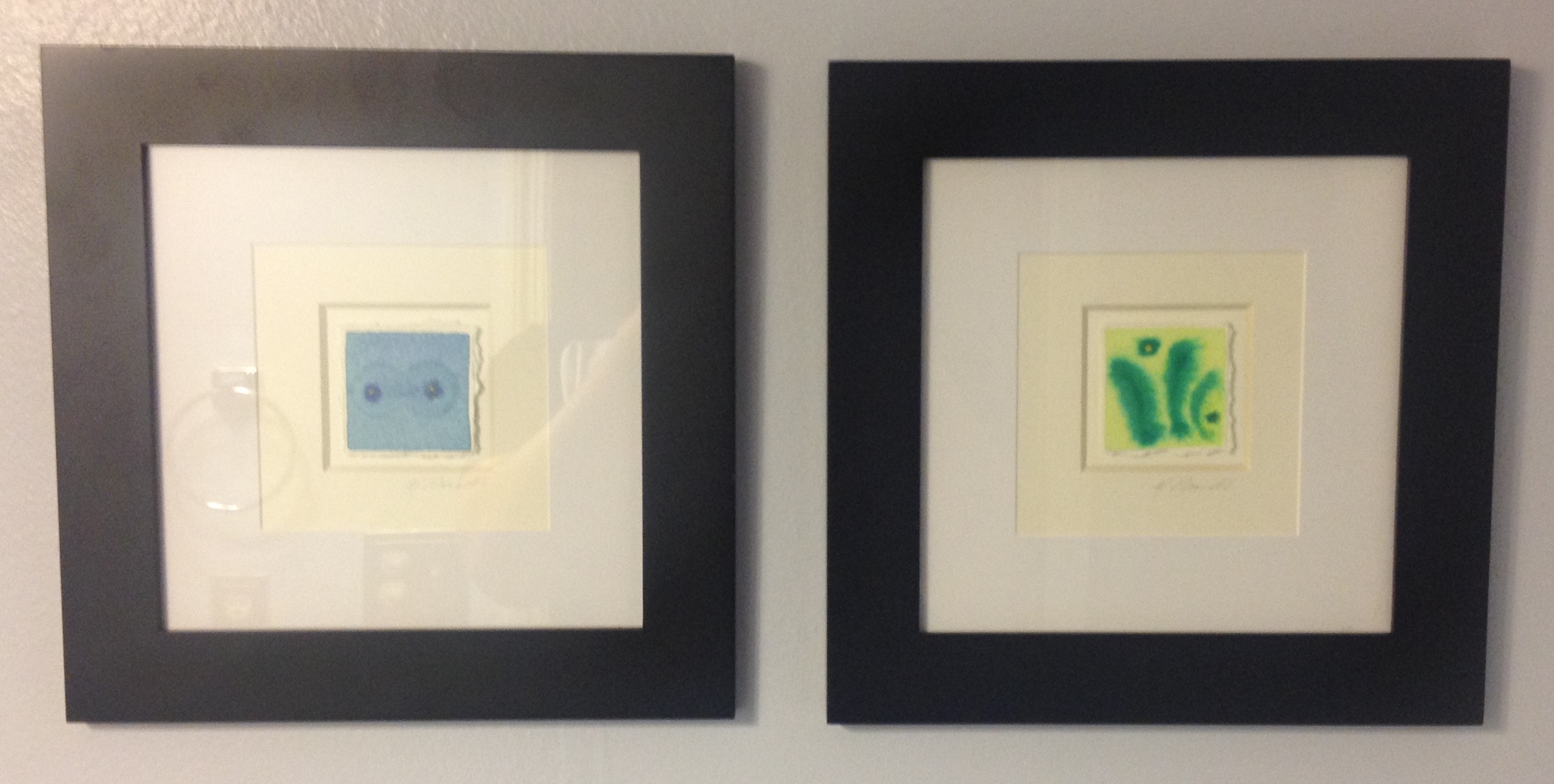
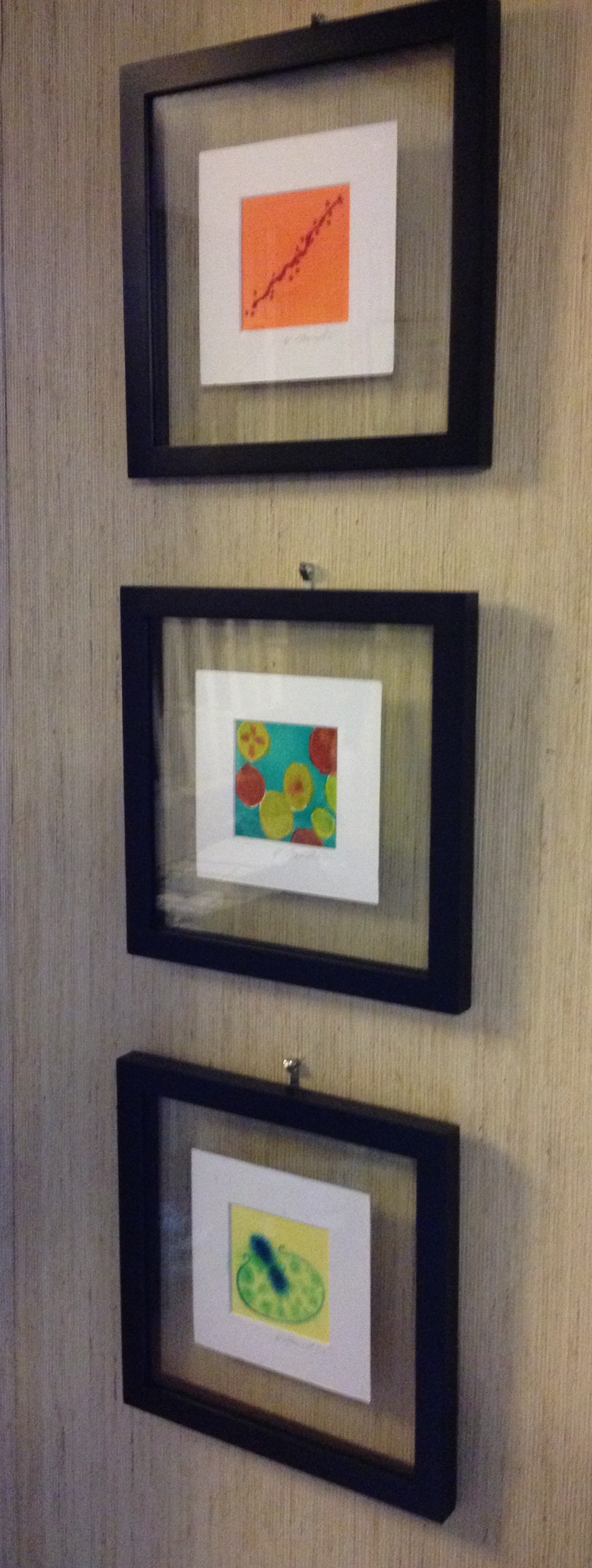 We were rehanging some of our art from Michele Banks today. The first is on a wall in our family room. The second is on the wall of our downstairs, guest bathroom, which we just repainted.
Where is yours? You do have some “Artologica” Art, don’t you?
If not, go here as quickly as possible to correct that situation.
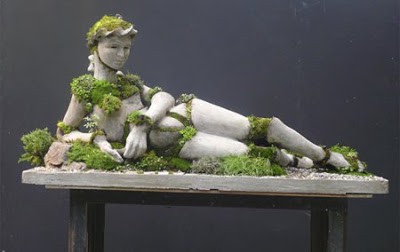
Robert Cannon refers to his sculpture technique as terraforming, a word used by scientists to describe the process of creating habitable, “earth-like” environments in places like the moon or other planets. Cannon’s terraforms are much more, shall we say, down-to-earth. He builds them, often in the shapes of people, out of hollow shells of ferro-cement, adding pockets of earth and plants in the places where the pieces connect. They look a bit like androids whose spaceship landed in the Garden of Eden.
Cannon says that his sculptures grow and change with the seasons, and reflect the natural and social qualities of their environments. “They would over-grow themselves if left to return to nature, or wither and die if locked away in some storage room, or remain balanced if cared for in a healthy environment.”
You can see (and buy) more of his work here.
Sex education should address the intersection of biology, interpersonal relationships, and society with a backing of solid science. It should and can be sex positive without promoting irresponsible behavior – indeed quality sex education leads to more responsible behavior. Quality sex education can also be aesthetically pleasing, as Carlin Soos demonstrates with “AP Sex Ed”.

 The Finch and Pea