Astronomy + Poetry from CosmoAcademy

As you know*, we like to mix our science and our poetry. Mike has generously loaned this Philistine the reins to the Sunday Science Poem franchise, which I promptly moved to Tuesday; but I had to move it to Tuesday because I don’t want you to miss out.

CosmoQuest is offering an online course (via Google+ Hangouts) looking at the intersection of astronomy and poetry:

Astronomy has played a role in human culture for thousands of years and appears in literature from every era.  We can see not only the influence of the heavens on our writings, but also the influence of language itself on our conception of astronomy. Heralding the dawn of the International Year of Light in 2015, join us now to explore how light from the stars has been important to humans for millennia.  We will begin with Gilgamesh and Homer, and continue through Shakespeare, Robert Frost, Maya Angelou, and into contemporary music and literature.  Along the way, we will also examine how the structure of language has influenced the perception of astronomical phenomena. – CosmoQuest Academy

The classes start on Monday, 17 November 2014 at 9PM (ET). Sign-ups (cost $99) are open until Monday, but there are only 8 spots left.

HT: Matthew Francis

*Frankly, I’m tired of coddling you newbies**.

**Have we decided on a sarcasm font***?

***I imagine all those exchanges are constantly derailed by people writing, “I think this one really works” in a proposed font, and then wondering, “Do they really like it or are they being sarcastic****?”

****…which may actually be a sign that it is working.

The Art of Science: Simulating the Sun

John Gerrard, Solar Reserve (Tonopah, Nevada), 2014

John Gerrard, Solar Reserve (Tonopah, Nevada), 2014

I thought that John Gerrard’s Solar Reserve installation, currently on display on the plaza of New York’s Lincoln Center, was a sort of film, relaying images in real time from a solar power plant in Nevada. It is not.

Gerrard didn’t just set up cameras at the power plant. He sent someone to photograph every detail of it, from the thousands of mirrors to the scrubby little plants, and then he (and a team of programmers) recreated the whole thing as a computer simulation, using a game engine called Unigine. The artwork will play 24 hours a day, 7 days a week on an enormous LED wall until December 1.

The piece – its full name is Solar Reserve (Tonopah, Nevada) – simulates an actual power plant known as a solar thermal power tower, surrounded by 10,000 mirrors that reflect sunlight upon it to heat molten salts, essentially forming a thermal battery which is used to generate electricity. The work mimics the actual movements of the sun, moon, and stars across the sky, as they would appear at the Nevada site, with the thousands of mirrors adjusting their positions in real time according to the position of the sun.

It’s worth having a look at this short video, in which the artist explains how the piece unfolds, following the light as it travels among the mirrors, out into space and back to the landscape, and allows a brief look at the hypnotic effect of the artwork.


Science for the People: Bodies Everywhere

sftp

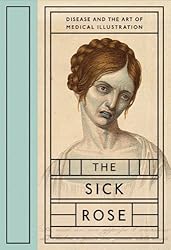
This week, Science for the People is looking at the morbid and fascinating history of our attempts to grapple with disease and death. We’re joined by medical historian Richard Barnett to talk about his book The Sick Rose: Disease and the Art of Medical Illustration.

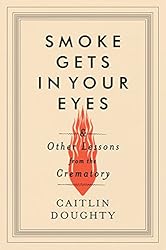
And we’ll speak to mortician and blogger Caitlin Doughty about her new book Smoke Gets In Your Eyes: And Other Lessons from the Crematory, and her ongoing YouTube series “Ask a Mortician“, about the history, science and cultural attitudes attached to dealing with the deceased.

*Josh provides research help to Science for the People and is, therefore, completely biased.

The Art of Science: Popsicles Go Viral

Wei Li, Dangerous Popsicles, 2014

Lick a virus? Probably not a good idea, unless it’s a Dangerous Popsicle, a sweet treat created by artist and designer Wei Li.  Li decided to play with the “aesthetics of user-unfriendliness” by taking something we would ordinarily never put in our mouths (not on purpose anyway) and inviting us to do just that.

Li created the popsicles by first making 3D prints of HIV, chicken pox and flu viruses and MRSA and E. coli bacteria. Then she created silicone molds of them  and filled them with colored, flavored, sugary water. Li created a short video of the project and posted an Instructable online so all you microbiologists can make these for your next party.

Science for the People: Science & Shakespeare

sftpThis week, Science for the People looks at the way science influenced the work of the greatest author in English, and what modern scholars think about its origins. We’re joined by journalist and author Dan Falk, to talk about his book The Science of Shakespeare: A New Look at the Playwright’s Universe. And we’ll speak to Shakespeare scholar and blogger Stanley Wells, for his perspective on the question of who actually wrote Shakespeare’s works.

*Josh provides research help to Science for the People and is, therefore, completely biased.