
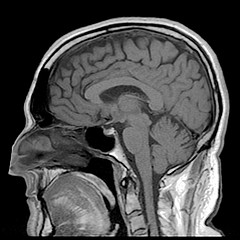
 Neuroscience is finding itself at the center of a growing controversy in the courtroom. Will judges weigh biological evidence that could suggest future dangerous activity or impaired control differently and how will that affect systems of sentencing and determinations of guilt in the court? This biological evidence could be considered “mitigating” or decreasing a sentence (their brain is broken, it’s not their fault) or it could be “aggravating” (their brain is broken and they will offend again) and increase a sentence. To test whether Judges would reason differently after receiving biological evidence in a trial, a group has conducted a study on U.S. state trial judges. Continue reading “Guilty of a Broken Brain”
Category: Follies of the Human Condition
Sunday Science Poem: Melville and Mechanized War
When you think about poetry and the Civil War, Herman Melville is probably not the first person who comes to mind. Yet, with some serious hindsight, Melville has turned out to be one of the major poets of the Civil War. As readers of Moby Dick, White-Jacket, and “the Bell Tower” know, Melville had a longstanding interest in technology, science, and the mechanization of society. This made Melville especially attuned the effects of technology on war, and on the role of soldiers in war.
This week’s Sunday Science Poem is “A Utilitarian View of the Monitor’s Fight.” The Monitor was the first Federal armored “ironclad” warship. On March 8, 1862, the Monitor and the Confederate Virginia (previously known as the Merrimac when it was a Federal ship) battled to a draw in the world’s first battle between armored warships – an ominous milestone that Melville explores in this poem. This was a battle of “no passion; all went by on crank, pivot, and screw, and calculations of caloric.” It was not a glorious fight of heroes, but a professional battle of technical “operatives.” Today, the operatives can control unmanned, mechanical weapons without even being present on the battlefield. Continue reading “Sunday Science Poem: Melville and Mechanized War”
How science climbs out of the chaotic morass and into paradigms and puzzles
Welcome to the first meeting of The Finch and Pea’s The Structure of Scientific Revolutions 50th anniversary bull session book club. Grab a drink, pull up a chair, and let’s talk about the first four chapters of that book you always meant to read.
First, a brief word about the preface. Certain famous books are prefaced with apologetic comments by the author, warning us that what is to follow is just an outline or a sketch. We tend to smirk of over the fact that Darwin considered his 502-page behemoth just an abstract. Kuhn says similar things in his preface to Structure, but in this case I take Kuhn’s apologies more seriously. Historical examples are important in this book, but Kuhn tends to allude to episodes in the history of science, rather than discuss them – at least in the first four chapters. Perhaps this is fitting, because in Kuhn’s view, a successful paradigm necessarily leaves a lot left to be done. Continue reading “How science climbs out of the chaotic morass and into paradigms and puzzles”
Fixing football

This is a repost of an article that originally appeared at The Paltry Sapien on 10 August 2012.
American football. Not proper football. We already fixed that once. We call it rugby.
Speaking of which, we were at a dinner party when the subject of my rugby career was brought up (not by me). A discussion about surviving a full contact sport without padding (don’t hit with your head and hit with forces below the physiological limits of the human body) transitioned into a discussion of how to reduce debilitating injuries in American football.
In the presence of a rugger, people like to suggest getting rid of the helmets and pads. It is the pads that allow American football to be so violent1. You could reduce the violence and, therefore, the injuries by getting rid of pads; but that’s not going to happen. American football is a violent sport. The fans like the violence. The players like the violence.
And, helmets and pads are necessary for the single most important element of modern American football: the forward pass.
Very superstitious
 Automatic trading algorithms are important elements of the financial industry. Their very existence raises issues. In addition, there are issues of robustness and the empirical support for the data they use to make decisions.
Shing Tat Chung created an automatic trading algorithm that makes its decisions based on a variety of superstitions: Continue reading “Very superstitious”
 The Finch and Pea