
On Sunday, I participated in a panel discussion of the ENCODE project and issues related to it, with the folks from ScienceSunday via Google+ Hangouts. Ian Bosdet and I joined hosts Rajini Rao, Buddhini Samarasinghe, and Scott Lewis. to talk about ENCODE and make it accessible to those without a decade of post-graduate training in genomics If you have a spare 78 minutes, the discussion can be viewed on YouTube.
Category: Follies of the Human Condition
NFL moves to protect player’s brains
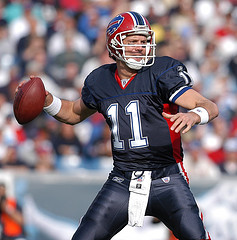 Last week the NFL announced their Head Health Initiative, a 4 year $60 million dollar collaboration to improve diagnosis and recovery from potential head injuries. $40 million dollars will go towards developing imaging technology to better detect trauma in head injuries and $20 million will be devoted to the study of concussions including understanding, diagnosing, and treating them. Continue reading “NFL moves to protect player’s brains”
Retraction rate increases with impact factor – is this because of professional editors?
Folks have long noted the strong positive correlation between high impact factor and retraction rate. There are three primary theories I’ve run across that attempt explain why Nature, Science, Cell, etc. have substantially higher retraction rates than other journals:
1) Acceptable risk/fame and glory theory: High impact factor journals are willing to publish riskier, but potentially higher-impact claims ASAP – more retractions are the price for getting high-impact science out early. The more negative version of this theory is that high impact factor journals care more about a high impact factor than about the integrity of what they publish.
2) Heightened scrutiny theory: papers published in high visibility journals get more scrutiny and thus flaws/fraud are more likely to be detected, but fraud/errors happen roughly equally everywhere. An associated theory is the high-stakes fraud theory: if you’re going to commit fraud, you need to make the payoff worth the risk, so you’re going to submit to Nature and not BBA.
Anthony Bretscher, in an MBoC commentary on editors, proposes a new theory, which, based on personal experience, I believe accounts for most of the correlation between retraction rate and high impact factor journals:
Sunday Science Poem: Reproduction will beat Armageddon
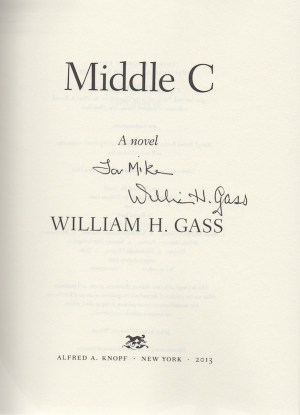 Last Tuesday I made my way to Left Bank Books, a St. Louis favorite, to listen to William Gass read from his newest book, Middle C
While this scene is not written as a poem, it is one long sentence written with the attention to cadence and sound that you expect of poetry, and so it qualifies for this week’s Sunday Poem. As for a possible science-related theme, aside from the association I see with my favorite subgenre of science fiction, this passage from Middle C describes the narrator’s speculation that the human species will somehow, despite losing Armageddon, squeak through with its fundamental biological drive to reproduce intact. Continue reading “Sunday Science Poem: Reproduction will beat Armageddon”
Your Opinion Matters
The idea of peer review is typically associated with science. My brother feared a mythological villain known as “The Third Reviewer” more than any childhood bogeyman. The food world is no stranger to reviews either. Frankly, science you have it easy.

In the food world, true peer review, where chefs are reviewing the work of other chefs, is usually reserved for culinary competitions and reality shows. Instead, we have professional reviewers. These are food journalists, akin to science journalists. They are professionals at reviewing and can vary widely in ability. They may or may not have expertise in the actual creation of restaurant food. They generally have spent a lot of time in and around restaurants. They are not exactly peers, but we try to be very nice to them lest you wind up in Guy Fieri’s shoes.
What scientists generally don’t have is the “everyone else that sits down and orders a plate of food” review. If you are like me, you do a little review in your head every time you sit down at a restaurant to eat. That internalized review might even get shared with your friends and family; but the advent of sites like Yelp have made it possible to broadcast those little reviews to the world.
Peer review of articles and grants can make or break a scientific career. Professional restaurant reviews can make or break a restaurant. So can those amateur, Internet reviews. Continue reading “Your Opinion Matters”
 The Finch and Pea