Uluru and Kata Tjuta

I’ve been busy lately, as you may have noticed by my lack of posts. I desperately need a vacation, but since that’s not an option, I can look at some of my favourite photos of previous vacations. Like this photo of sunrise at Uluru:

Sunrise at Uluru

Uluru is the iconic enormous rock that sits all by itself in the middle of the Australian desert. It looks so imposing and out of place that you can’t help but wonder how it got there. Australia’s indigenous people have had explanations for the rock for ages, all involving spiritual stories. Both a government website and the site of the local tourist resort are unable to share those tales, though, because the stories are restricted by sacred rules. Luckily for us, geologists are more forthcoming with their interpretations about the origin of Uluru, as well as the neighbouring rock formation Kata Tjuta. Continue reading “Uluru and Kata Tjuta”

Baldwin Steps: Climbing Out of an Ice Age Lake

The Baldwin Steps in Scott Pilgrim vs The World.

The Baldwin Steps in Toronto are nowadays probably best known* as the stairs featured in Scott Pilgrim, but they also have an interesting geological history. Continue reading “Baldwin Steps: Climbing Out of an Ice Age Lake”

Gouffre de Padirac

Gouffre de PadiracWhen I was a teenager, my family went to France every summer. The different trips are all mixed up in my head. I don’t really remember which campsite memory belongs with which French castle memory. There is one visit that I do remember very well, and that’s our trip to Gouffre de Padirac.

Gouffre de Padirac is a deep chasm with a scary lift that leads to a magical fairy tale cave where you take a boat on an underground river. At least, this is how I remembered it, but according to a quick web search this is pretty much the most accurate description possible. As it turns out, Gouffre de Padirac is a bit of a mystery. Continue reading “Gouffre de Padirac”

John Snow and the Broad Street Pump

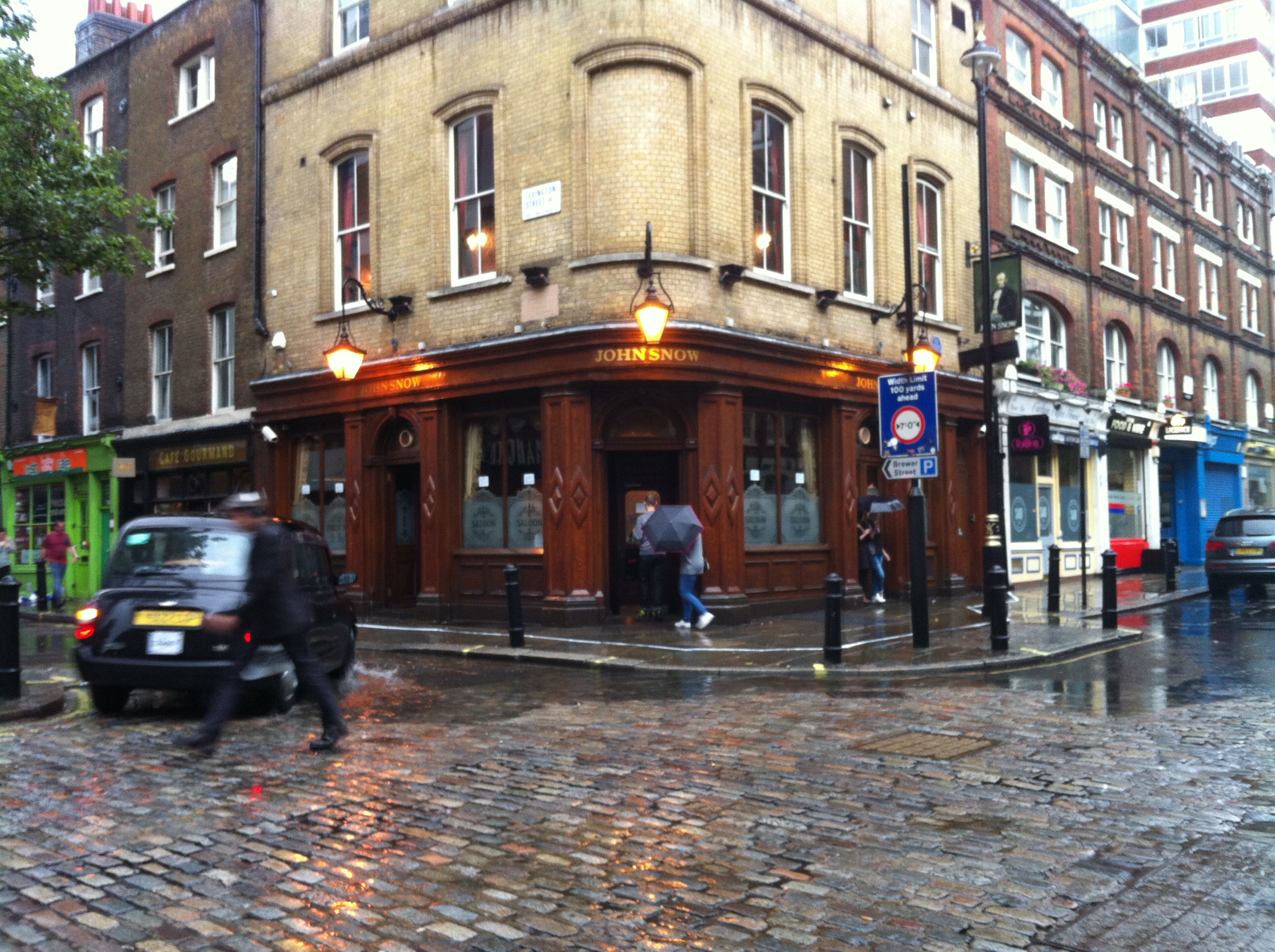
2013-08-24 16.14.10In the summer of 1854, the central London neighbourhood of Soho was struck by a sudden cholera epidemic. Local physician John Snow identified the Broad Street pump as the source of the outbreak, preventing further spread of the disease. These days, the affected neighbourhood is home to many pubs and cake shops, prompting my friends to organise a “cholera and cake” pub crawl with out-of-town visitors this past weekend.

The Broad Street pump is not longer there, but in 1992 a symbolic pump was placed across the street from the John Snow pub, which is thought to have been the original location of the pump.

2013-08-24 16.14.55

Locating the source of the cholera epidemic was an especially impressive feat because the prevailing medical opinion at the time was that cholera was caused by “bad air”, and not by something you can find and eliminate. Germ theory hadn’t yet caught on, but John Snow was skeptical of the “bad air” theory, and suspected that there was something else.  He talked to lots of people in the affected area and in neighbouring streets, and he started to notice a pattern. Continue reading “John Snow and the Broad Street Pump”

The Ontario Science Centre

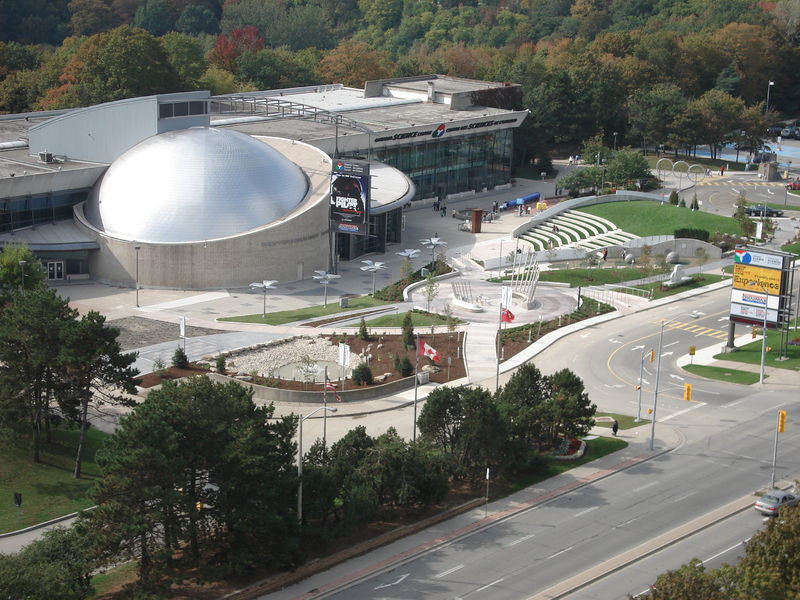
I lived in Toronto for years before I finally made it to the Ontario Science Centre. First I didn’t know it existed, then I didn’t know where it was, and then it just took me forever to find time to travel that far on the subway and bus. It’s not downtown, where everything else is, but in a residential neighbourhood – and I never needed to be there.
800px-0OSC_Sept23_06

But when I did finally make it, it was awesome, and I made a point of coming back a few times. The science centre was built in the 1960s, and uses its surroundings really well. It’s on a hill, with some sections at the top, and others further downhill. The parts are connected with hallways that vaguely remind me equally of a spaceship and my elementary school. It’s difficult to explain…

The hillside location gives the science centre a lot of space to do interesting things. There’s obviously an IMAX theatre, because that’s what all science centres have these days.

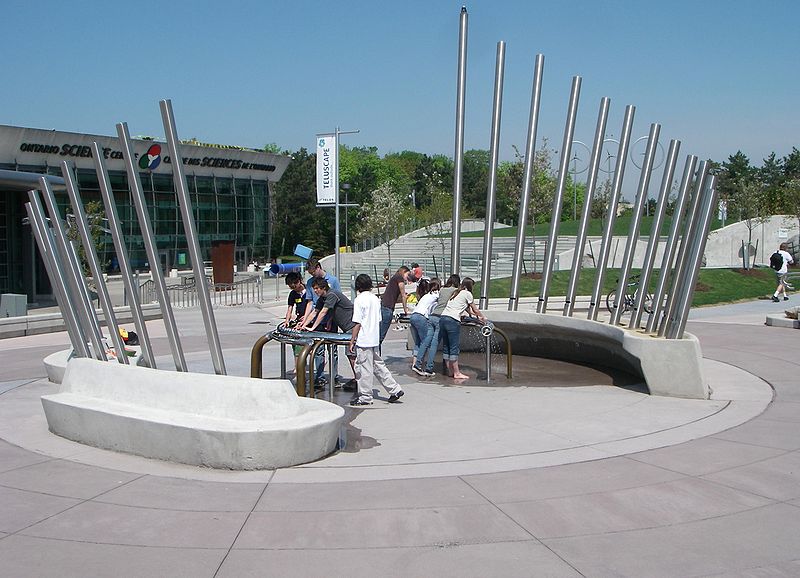
Outside the entrance is a giant hydraulaphone, designed by local inventor Steve Mann. It’s a fountain that makes music, and you control it by closing particular water streams.
800px-Hydraulophone_at_Ontario_Science_Centre_imgp4940rp

There’s also an entire section where I’ve never been because I’m not allowed inside: adults can only enter it if they’re accompanied by a child, and I didn’t know any children of the right age.

It’s a bit hard to find any information on the permanent exhibits on the site (it’s here – took me a while), because it’s all focused on themes and events. The museum hosts rotating exhibits, and they seem to be getting all the attention. For example, I saw Body Worlds here a couple of years ago.

Speaking of moving exhibits, the Ontario Science Centre rents out some of its own original exhibitions. Among the collection of exhibits they offer to other science centres is my favourite OSC exhibit, about living on Mars! I went there with friends, and we had a great time practicing our survival skills. There was one display where you had to try to get a solar panel to produce as much energy as possible, using only a bunch of random objects. After lots of puzzling, we managed to get it up to about 99%, woo!

Another fun hands-on part of the museum is the Weston Family Innovation Centre, although, like in other popular parts of the science centre, things often start to move away from science. I’m not sure how I feel about that, especially considering this part gets a lot of media and attention, and is easy to find on the site. I know a lot of science museums are branching out, but it would be nice to also focus on the science exhibits.


Shelley loves intestines