The Art of Science: Nature and Nurture Reversed

nurture9

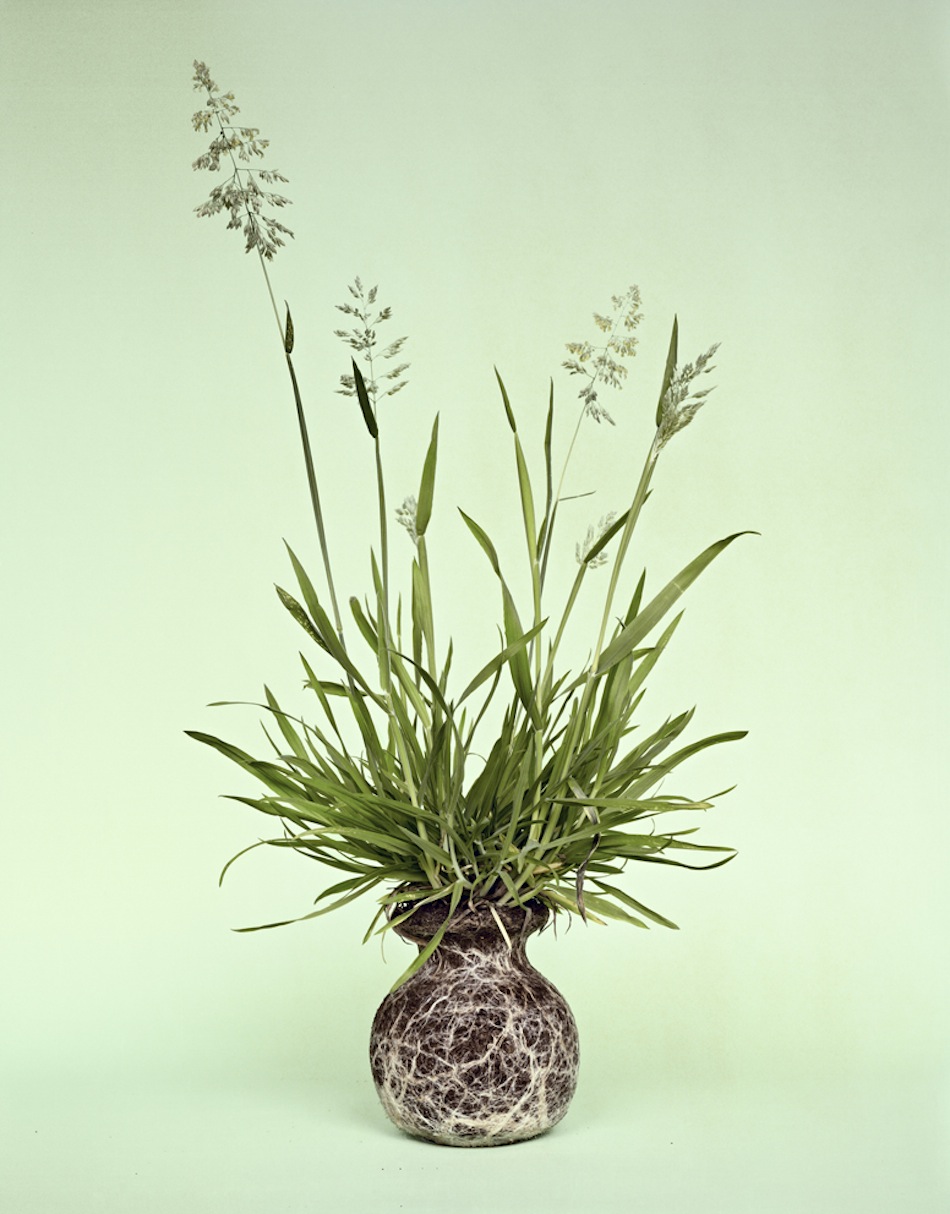
When cultivating a garden or taking photographs of plants, most people carefully tend to the top parts – the leaves and flowers – while letting nature handle the bottom – the roots and soil.  Artist Diana Scherer, in her Nurture Studies, turns that focus on its head. She takes seeds from her garden and grows plants in vases, carefully nurturing them for months, before breaking the vases and photographing the results.

It’s not a surprise that the roots of flowers and weeds are beautiful in themselves. What startles is the focus on what’s usually unseen.  Scherer, a German born artist living in the Netherlands, explains:  “Above ground, I let nature run its course. However, below the surface, by using a vase as a mold, I control the growth of the roots and the shape.”

Her photographs are simple, elegant and formal – the soil-coated roots of a dandelion are presented as if they were the blooms of an orchid. Says Scherer:

“I’m interested in the age-old human practice of manipulating nature. There is a certain ambiguity that I find intriguing; the idea of loving care and, at the same time, ruthless manipulation. For example, the gardener who loves nature and nurtures the plants he desires also ruthlessly cuts, snips and manipulates them.”
from “Review of Nurture Studies” in Hotshoe Magazine by Miranda Gavin

Scherer says that, once she is done photographing a plant, she replants it in her garden and once again allows nature to take over. The roots, having had their moment in the sun, so to speak, can return to their sometimes overlooked but crucial role beneath the surface.

You can see more of Diana Scherer’s work here.  A book of Nurture Studies is available here.
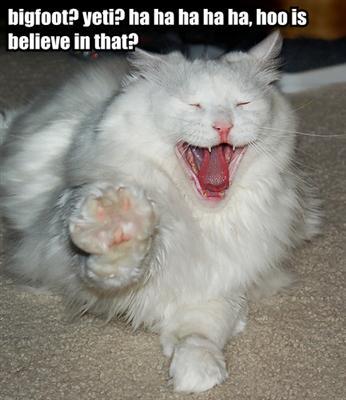
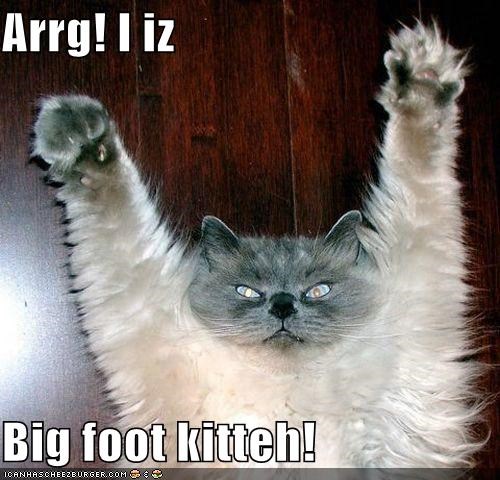
Science Caturday: The Search for Bigfoot

bigfoot-yeti-ha-ha-ha-ha-ha-hoo-is-

Late last year, a group of scientists led by Dr. Melba Ketchum announced that they had sequenced the genome of a bigfoot, (also known as sasquatch or yeti), a furry, mountain-dwelling creature generally considered mythical. Not surprisingly, most mainstream scientists questioned Ketchum’s paper on the “Bigfoot Genome”, which, after being rejected by all the peer reviewed journals in the field, was published in De Novo, a brand-new journal which has published nothing else since.  The paper asserts that bigfeet are hybrids, the product of humans interbreeding with a still unknown species of hominin.

aaargh

A few months after the findings were released, John Timmer, the science editor of Ars Technica, wrote an article which systematically reviewed and explained the weaknesses in Ketchum’s paper.  Timmer spoke extensively with Ketchum, who, while admitting that some of her data didn’t fit a standard scientific model, claimed that she was confident in her knowledge that bigfeet exist – because she’s seen them.  Apparently they are “very fast” and curious about people. (Have I convinced you to read this article yet? You really should.)

catsquatch

Now a British scientist has come forward with more exciting news for cryptozoology fans.  Oxford University geneticist Bryan Sykes recently reported the findings of a project which tested hair and tissue samples that people claimed belonged to bigfeet, yetis or sasquatches. According to Sykes, DNA from two hair samples from the Himalayas matched the genetic signature of an ancient polar bear jawbone that was found in the Norwegian Arctic in 2004.  Although intrigued by the possibilities, most scientists in the field are withholding judgment until Sykes’ data are published and subject to peer review.

refuses

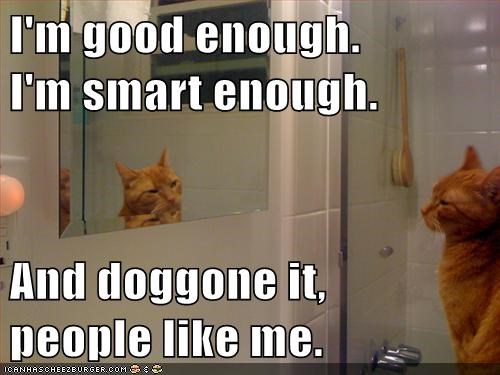
So maybe bigfeet are the descendants of prehistoric polar bears. Or maybe they’re half-human. Or maybe, just maybe, they’re cats. Nobody has tested the DNA yet, but the visual evidence is strong.

All photos via Cheezburger.com

The Art of Science: Ghost Food

ghostfood03

Is “Ghost Food” the food of the future? Climate change threatens our continued ability to harvest many of the foods we take for granted now. So will we simply say goodbye to the tastes of today, or find ways to replicate them with technology? An innovative art project takes a look at one possibility.

GhostFood, created by Miriam Simun and Miriam Songster of STEAMworkPHILLY, along with the Monell Center and NextFab Studio, is a participatory installation based on the concept of a food truck. The GhostFood truck, which debuted in Philadelphia this month and then traveled to New York City and Newark, NJ, serves substitutes for chocolate, peanut butter and cod, three foods at risk from climate change.

The “ghost foods”, made of climate-change resilient ingredients (including algae and vegetable protein), are meant to look like the real thing. But the flavor is delivered via a mask with a fragrance bulb which delivers the scent of the real food as you eat the substitute. The combination is not supposed to exactly replicate the experience of eating the original food, but give participants a sense of what that experience might be like in the future, when the “real” food is just a memory.

It sounds a little sad, but who knows? It might work. Lots of people who have given up meat prefer tofurky to plain tofu, so why not fish-scented algae instead of plain? In any case, it’s an interesting experiment that combines practical responses to climate change with leaps of artistic imagination.

More information about the project is here.

Science Caturday: For the Women of ScienceOnline

smalleycat

It’s been a traumatic and bruising week for the science blogosphere, particularly for the ScienceOnline community (if you don’t know why, please come back next week for a normal, funny Science Caturday).  This one is for the women of ScienceOnline, you wonderful, smart, hardworking, funny, talented, kind, empathetic and supportive group. You deserve to be treated like the dedicated professionals you are. I stand with you. Whenever possible, I drink with you and eat cake with you.  I know it’s not much, but this cat’s for you.

The Art of Science: Kendall Buster’s Parabiosis

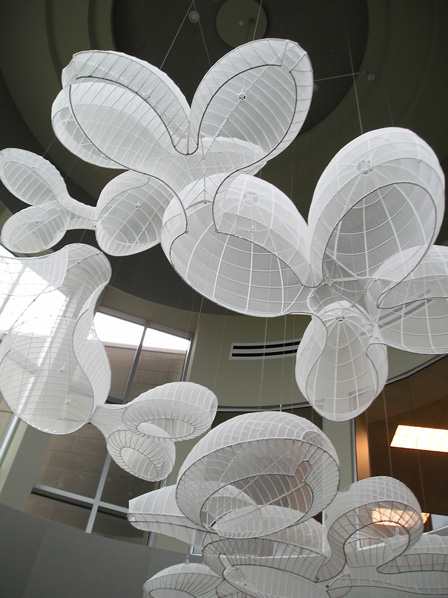
Kendall Buster, Parabiosis IV, 2004

Kendall Buster was educated as a microbiologist and then became a sculptor. Her scientific training is manifest in her work: huge sculptures, often made of fabric over metal armatures, that refer directly or obliquely to the cells, vessels and biological processes of living creatures. I was drawn to this 2004 piece, Parabiosis IV, simply because of its intriguing beauty, but I had no idea what it meant. I discovered that parabiosis is a technique dating from the 19th century in which two living animals are joined together surgically and develop a single, shared circulatory system” (source). In recent years, researchers have used the technique in mice and found that giving old mice “young blood” through parabiosis may enhance neurogenesis (brain cell growth) and reverse age-related degeneration of the heart muscles.  So obviously, this is an exciting field of research – but it’s also deeply creepy, involving stitched-together “frankenmice”, which are quite unsettling to look at. So let’s thank Kendall Buster for presenting this thought-provoking concept, rich in history as well as promise for the future, in such an attractive (non-bloody, non-furry) way.

Much more at Kendall Buster’s website.