The Art of Science: Hiroshi Sugimoto Gets Right to the (Infinity) Point

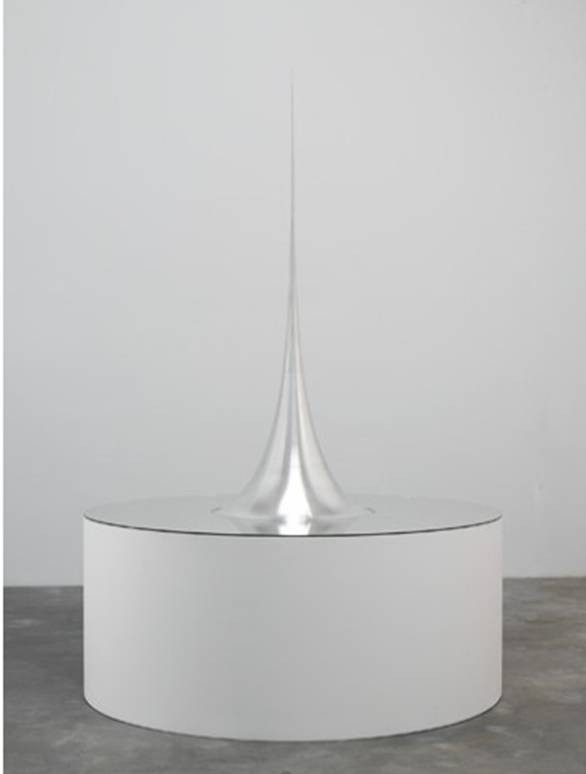
Mathematical Model 009 Surface of revolution with constant negative curvature, 2006
Hiroshi Sugimoto, Mathematical Model 009, Surface of revolution with constant negative curvature, 2006

Japanese artist Hiroshi Sugimoto is best known for his photography, especially his gloriously simple compositions of seascapes and lightning. But my favorites are his sculptures based on mathematical models. According to Art News, “Drawn to the objects’ purity of form and also inspired by Man Ray’s interest in photographing mathematical models, Sugimoto first photographed nineteenth-century plaster examples for his Conceptual Forms series. During the process, he was struck by the softness and fragility of the vintage models – many had lost pieces or no longer possessed the sharpness that they were meant to represent. Sugimoto sought to extend the limits of these mathematical models using cutting-edge technology, searching out the highest-level precision metalworking team in Japan. For Conceptual Form 009, a model of the equation for a surface containing a single point extended to infinity, Sugimoto succeeded in creating an infinity point with a mere one millimeter diameter, the minimum width before the material itself becomes structurally unstable.”

I can’t even begin to understand the math behind it, but as a visual representation of an “infinity point” it’s hard to top that.  If you live in LA, don’t miss the chance to see an exhibition of Sugimoto’s work at the Getty Museum from February 4-June 8 . If you don’t, see lots more of his work at his website.

The Art of Science: The 12 Days of (Future) Christmas

12daysfuturexmas_7genes1

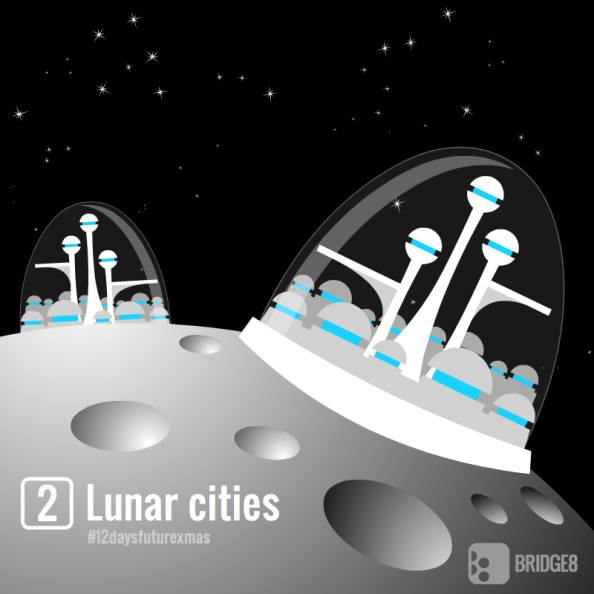
Here at the Finch and Pea, we love things that put a scientific spin on tradition, so this remake of The 12 Days of Christmas is right up our alley. Created by James Hutson of Australia-based Bridge8 and posted in 12 installments starting on Christmas day and running through the Feast of the Epiphany (January 5), the series considers visions of Christmases to come based on current directions in science.

Says Hutson, “This project grabs a fist full of the now; the promised but never came; and the far-flung maybe.” The mix of “near/likely and far/fictional” future scenarios includes advances in everything from genetic engineering (9 dodos de-extincted) to space exploration (6 ships a-jumping) to food science (3 lab-grown steaks). Hutson says he tries to balance “pop culture whimsy and nuts and bolts reality to produce engaging and understandable possible futures, so people take the time to think about it a little more and a little better than they usually would.”

12daysfuturexmas_2lunarcities

While there’s a touch of Jetsons-esque retro about Hutson’s signature style – yes, there are jetpacks – most of the “Days of (Future) Christmas” already bear a much greater resemblance to modern life than anything involving lords a-leaping and maids a-milking. You can read the whole thing here and follow James Hutson  and Bridge8 on twitter.

Accidental Art of Science: Parking Lot Mitosis

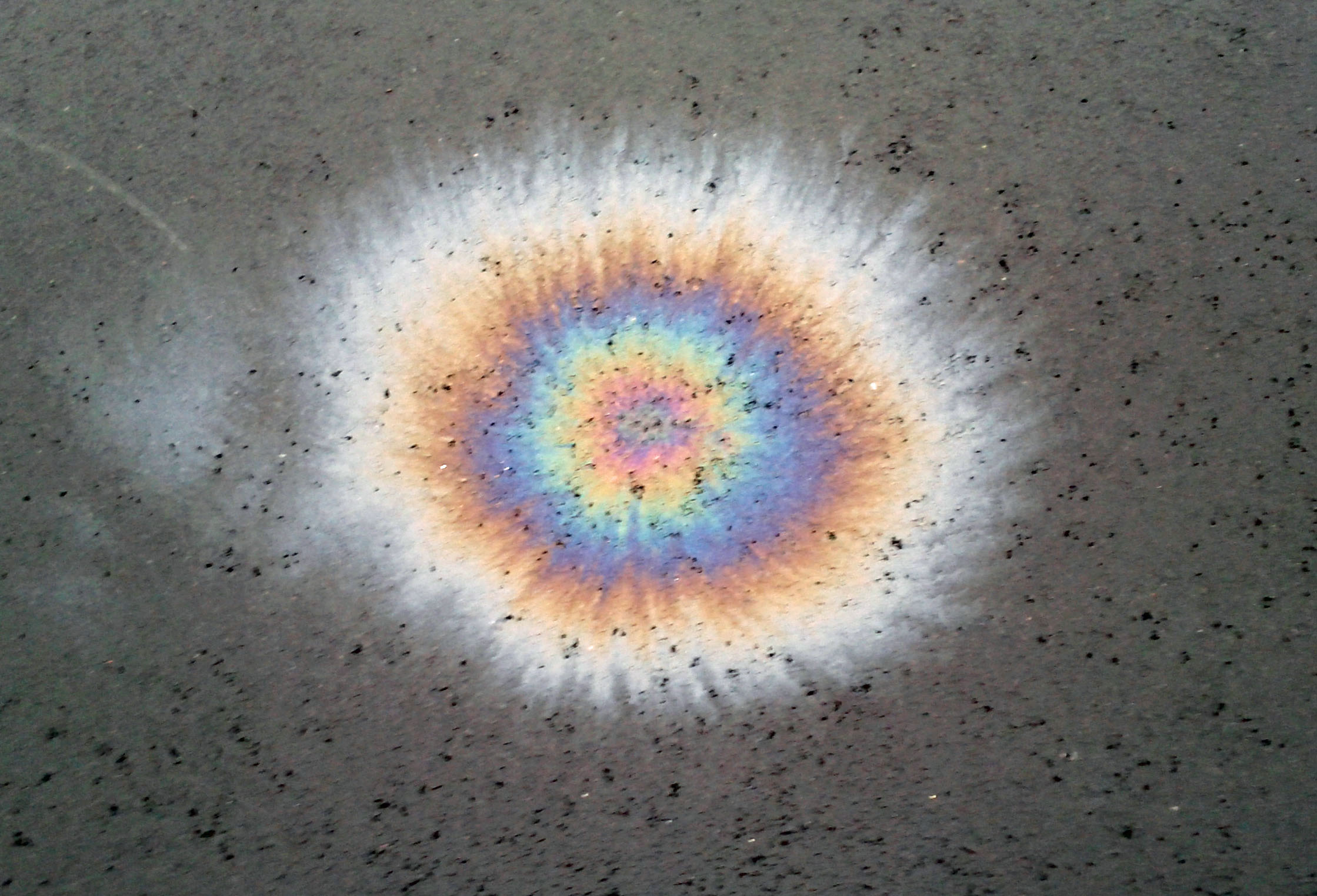
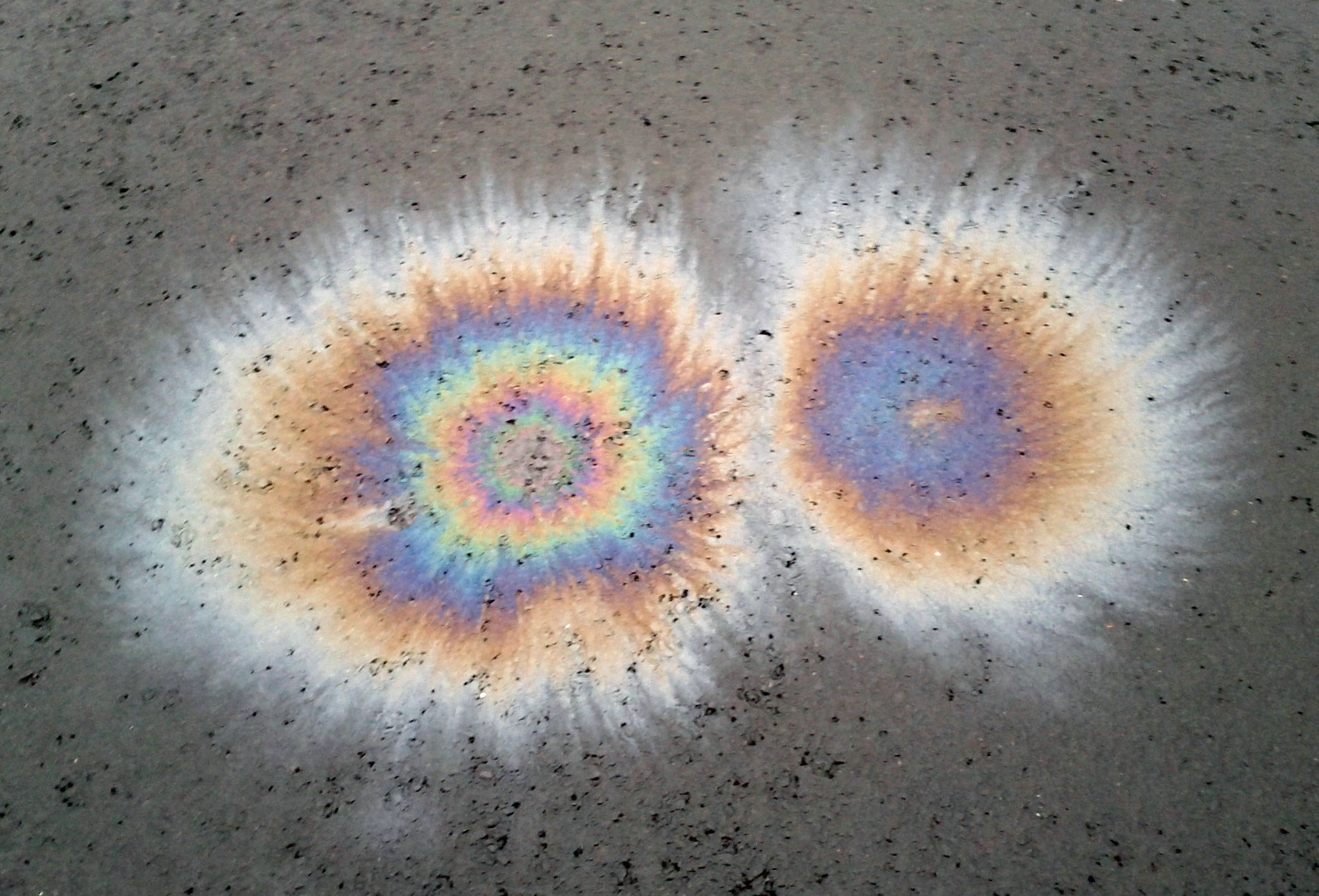
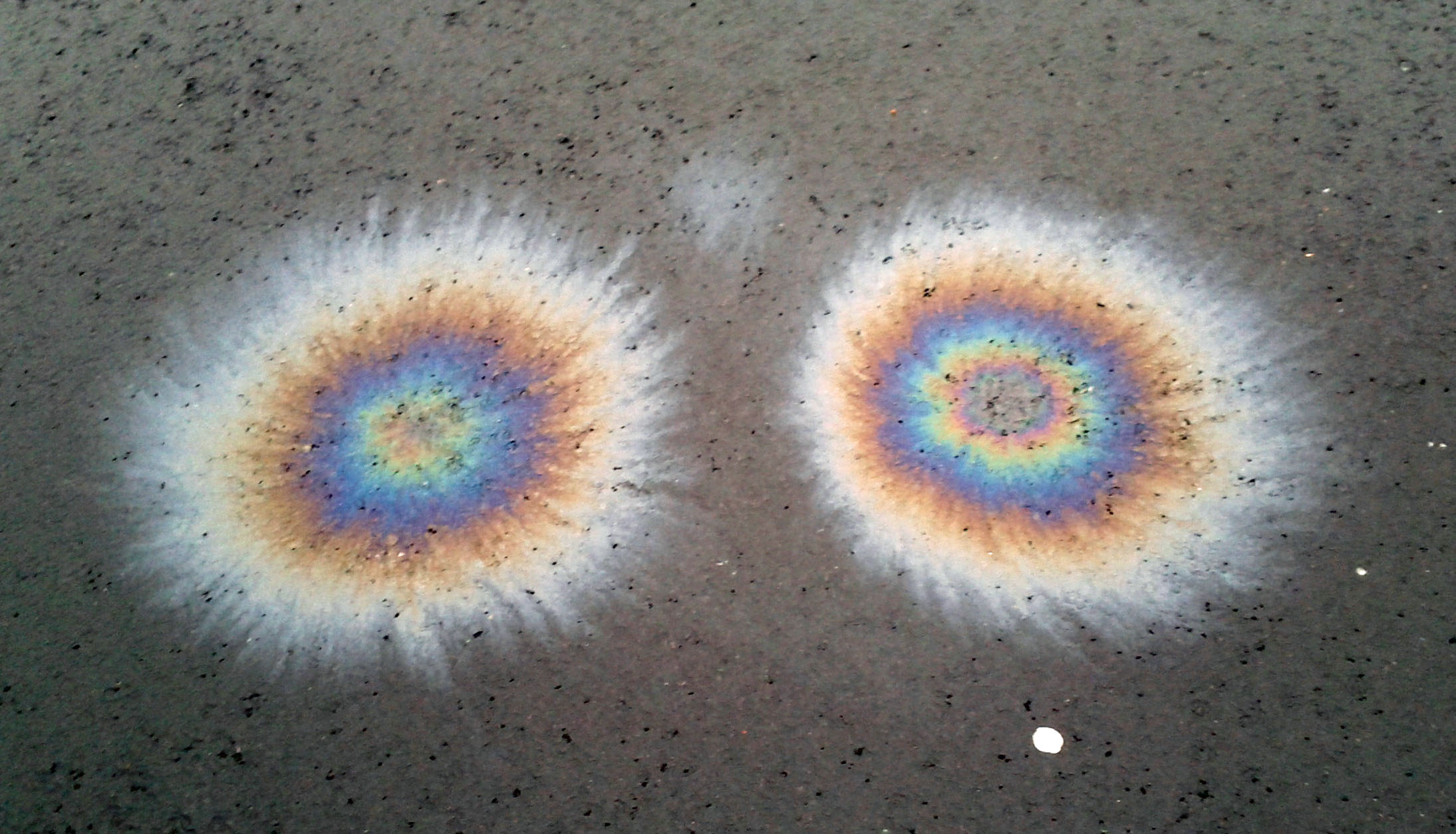
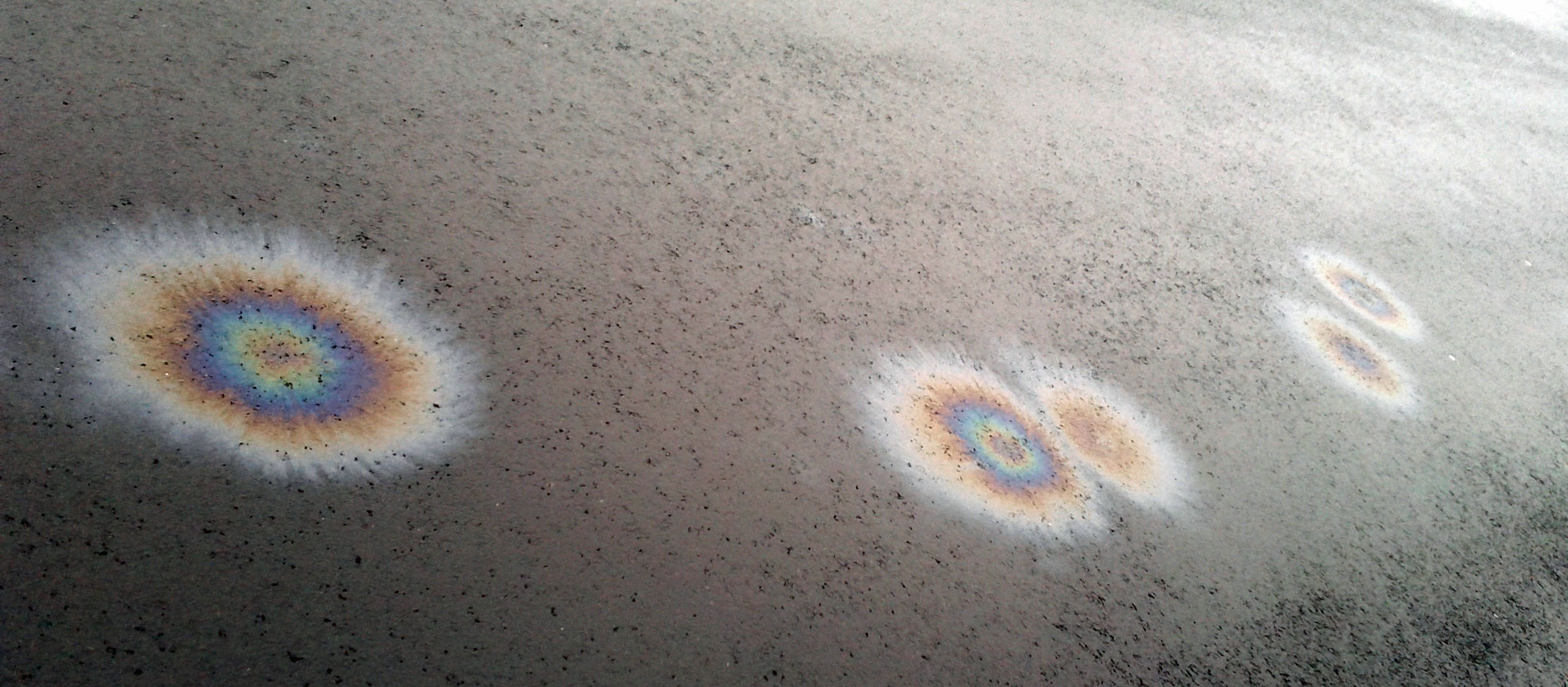
I came across this amazing example of accidental science art yesterday in a shopping center parking lot in northern Virginia. After I tweeted a cell phone picture of the full sequence of cell division – it’s even in the right order, as you can see from the bottom photo – someone directed me to this excellent post by Malcolm Campbell on the science of oil rainbows.

prophase

anaphase

daughter cells

whole

The Art of Science: Roni Horn’s Library of Water

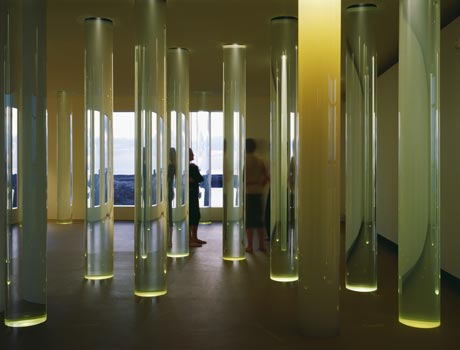
Roni Horn, Water, Selected, 2007

Artist Roni Horn has been traveling to Iceland from her home in New York since the 1970s. The unique nature of the Icelandic landscape and climate deeply informs all her work, which ranges from sculptures and drawings to photos and books.

In the 1990s she discovered the local library in the small town of Stykkisholmur and was impressed with its architectural style and its views of the sea, sky, town and harbor. When the library ceased operations in 2003, Horn proposed the creation of a permanent installation in the building. The result, Vatnasafn/Library of Water, opened in 2007.

The Library of Water consists of three linked parts: The first, Water, Selected is a sculptural installation of 24 glass columns containing water collected from ice from some of Iceland’s major glaciers. The columns bend and reflect the light onto a rubber floor which is printed with words in Icelandic and English related to the weather. As Gordon Burn described it in The Guardian, “with the windows cut to the floor, Library of Water pokes up into the weather. It sets its face at everything the weather can throw at you, which in Iceland invariably means extremes of light and wind and cold; visibility often varies from minute to minute.”

The second exhibit, Weather Reports You, consists of taped interviews with 100 Icelanders about their interactions with the weather and selections from Horn’s books about Iceland. The third part of the library is a private writers’ studio where each year writers from Iceland and abroad are invited to live and work for several months at a time.

The idea of a library of water gathered from glaciers is not only beautiful and novel, but may become essential. A great deal of information about historical climate, atmospheric and geological conditions is trapped in the ice of glaciers. As global warming causes the glaciers to melt, we may have no choice but to look at them in a preserved and cataloged form, like antiquated books in a library.

Information about visiting the Library of Water is here.  If you can’t make it to Iceland, you can see related work by Roni Horn at the Hauser & Wirth Gallery in New York City until January 11, 2014.

The Art of Science: Rogan Brown Cuts Deep

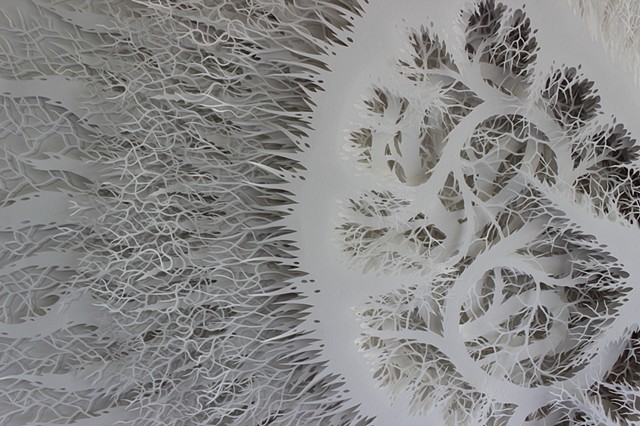
Rogan Brown, Detail from Kernel, 2013

For artist Rogan Brown, the process of making his cut-paper sculptures is as important as the finished product.  Each artwork is built from painstakingly cut and assembled pieces of paper – an arduous, time-consuming task. Says Brown, “The finished artifact is really only the ghostly fossilized vestige of this slow, long process of realization. I have chosen paper as a medium because it captures perfectly that mixture of delicacy and durability that for me characterizes the natural world.”

I would add that by working only in white, Brown amplifies the impact of his incredibly complex works, putting the focus squarely on what Darwin called “endless forms most beautiful.”

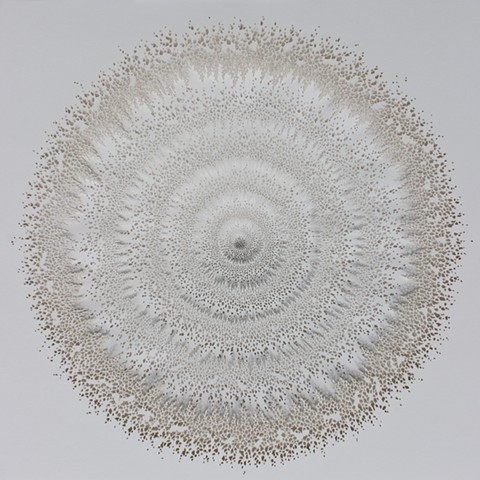
Clone, 2012
Clone, 2012

Brown says he is inspired by natural shapes and patterns “from the microscopic to the macroscopic, from individual cells to large scale geological formations”.  While his art, and the process of study that precedes each piece, pay tribute to scientist-artists such as Ernst Haeckel, Brown does not seek to replicate nature. He rather describes his pieces as explorations: “Everything has to be refracted through the prism of the imagination, estranged and in some way transformed.”

You can see more of Brown’s work on his website and buy originals and prints here.