What the Philae are you doing here?

UPDATE 12 NOV 2014 11:10AM (ET): Apollo 11 shit went down today. No matter what else we might be, we are a species that landed a robot on a comet about 500 million kilometers away for the purpose of scientific exploration. Not too shabby.

UPDATE 12 NOV 2014 11:54AM (ET): There is concern that Philae has not anchored to the comet properly. They are working on it.

Look, we appreciate you stopping by; but humanity is trying to land a robot on a comet for the first time ever. There is Apollo 11 level shit going down today. You can watch the ESA’s webcast live with us. The Philae lander is scheduled to touch down at about 11:00 AM (US Eastern).
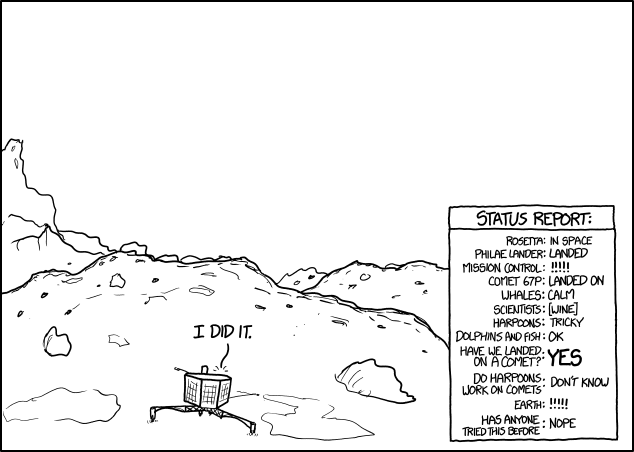
xkcd by Randall Munroe (CC BY-NC 2.5)

Over at xkcd, Randall Munroe is doing live updates of the Philae lander’s progress (and its internal monologue).

HT: Emily Lakdawalla (whom you should be reading today)

Philae: The Power of Positive Thinking?

UPDATE 12 NOV 2014 11:12AM (EST): THEY DID IT!

Philae by Stefan Schindler (All Rights Reserved; Used with Permission)

Tomorrow, the Philae lander detaches from the ESA Rosetta spacecraft and attempts to touch down on Comet 67P/Churyumov-Gerasimenko at Site J. A successful landing will be one of the great feats of human scientific exploration.

A webcast of the landing attempt will begin at 2PM (ET) today (ie, now).

Instead of waiting to post pictures, we are going to be optimistic and start with this LEGO build from Stefan Schindler showing the Philae lander resting comfortably on the comet’s surface. More to come…

Astronomy + Poetry from CosmoAcademy

As you know*, we like to mix our science and our poetry. Mike has generously loaned this Philistine the reins to the Sunday Science Poem franchise, which I promptly moved to Tuesday; but I had to move it to Tuesday because I don’t want you to miss out.

CosmoQuest is offering an online course (via Google+ Hangouts) looking at the intersection of astronomy and poetry:

Astronomy has played a role in human culture for thousands of years and appears in literature from every era.  We can see not only the influence of the heavens on our writings, but also the influence of language itself on our conception of astronomy. Heralding the dawn of the International Year of Light in 2015, join us now to explore how light from the stars has been important to humans for millennia.  We will begin with Gilgamesh and Homer, and continue through Shakespeare, Robert Frost, Maya Angelou, and into contemporary music and literature.  Along the way, we will also examine how the structure of language has influenced the perception of astronomical phenomena. – CosmoQuest Academy

The classes start on Monday, 17 November 2014 at 9PM (ET). Sign-ups (cost $99) are open until Monday, but there are only 8 spots left.

HT: Matthew Francis

*Frankly, I’m tired of coddling you newbies**.

**Have we decided on a sarcasm font***?

***I imagine all those exchanges are constantly derailed by people writing, “I think this one really works” in a proposed font, and then wondering, “Do they really like it or are they being sarcastic****?”

****…which may actually be a sign that it is working.

Museum of the Invisible

IMG_1917

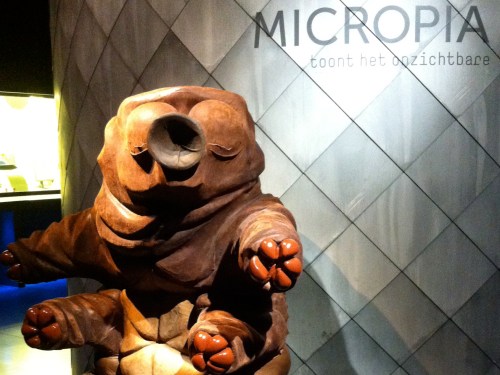
There are plenty of museums to visit in Amsterdam. You can see ancient art, contemporary art, objects of everyday life of the past, objects of everyday life in the present. There are museums of funny things, beautiful things, historical things, useful things, but also invisible things.

Yes, Amsterdam has a museum of invisible things! Micropia is a new museum displaying all sorts of microbes. I visited last weekend, and it’s awesome!

IMG_1927
Credit: Fleur Amsen
Credit: Fleur Amsen
Credit: Fleur Amsen

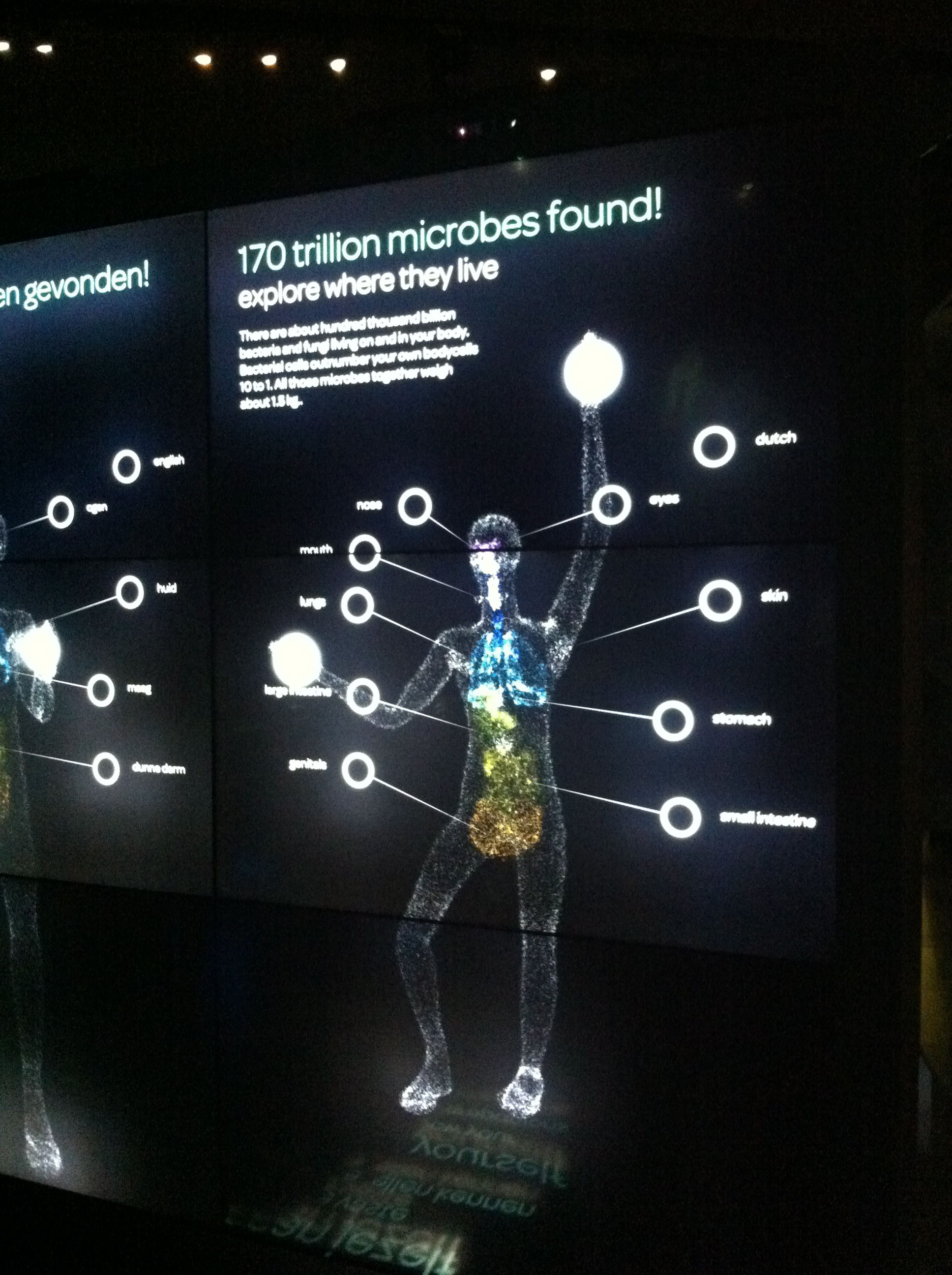
Near the entrance of the museum, a large evolutionary tree is projected on the wall, introducing all the microbes and the diversity of microbes. What follows can best be described as a very interactive microbiology lesson, including peeking through microscopes, looking at all the micro organisms in your own body, and seeing fungi grow.

Credit: Fleur Amsen
Credit: Fleur Amsen

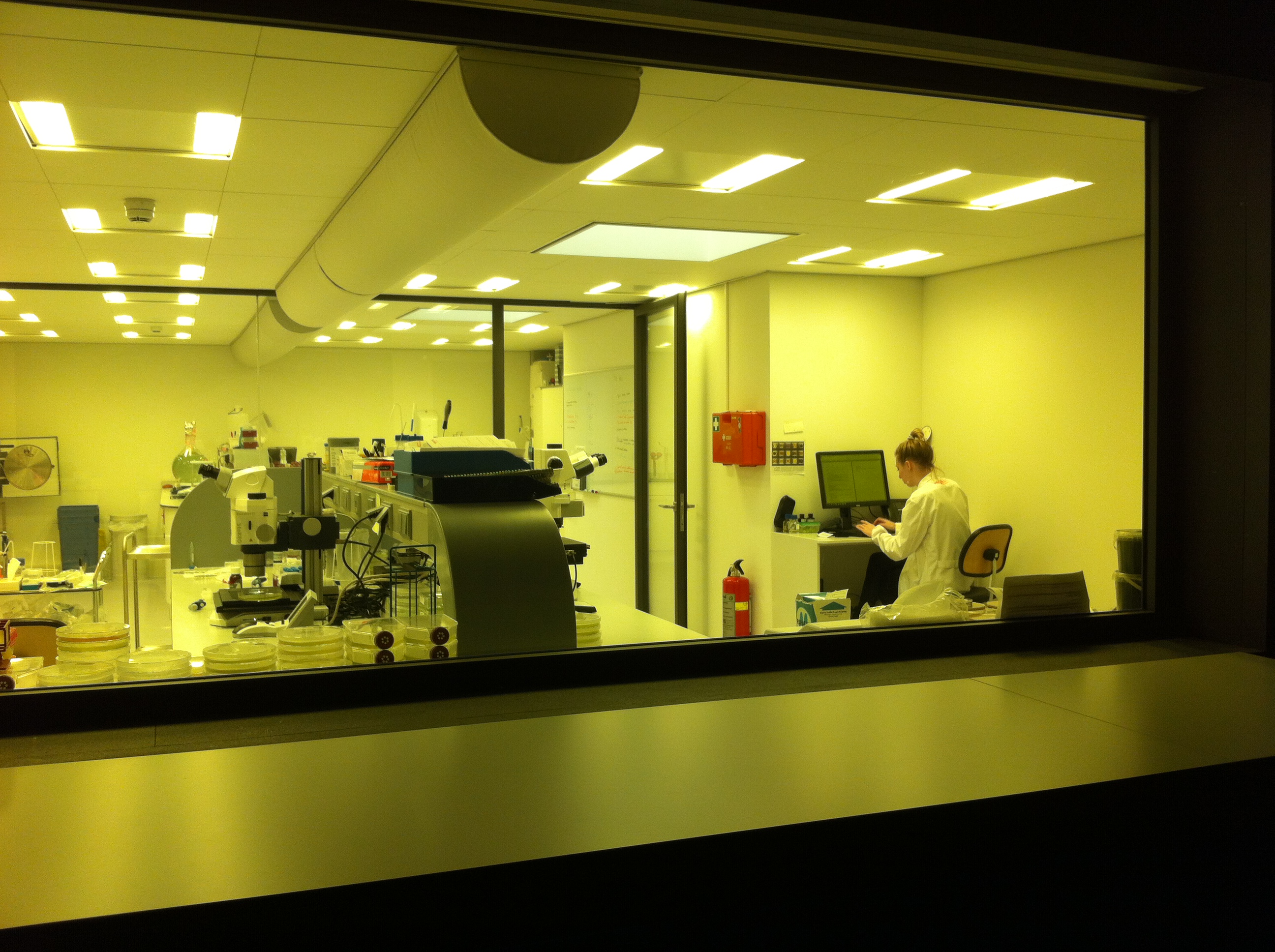
You can also watch real scientists at work. The scientists, however, but don’t have multi-coloured flashing lights, and the only zooming in you can do is by stepping closer. So, they cannot really compete with the microbes they are studying.

As with every museum, of course, there is a take home message: microbes are everywhere, there are a lot of them, we cannot live without them. And don’t forget to buy a new toothbrush regularly.

Apocalypse 1901: Adam and Eve in the Empty World Asylum

M. P. Shiel’s The Purple Cloud (1901)

NorthPoleNOAAThe Book of Revelation isn’t the only part of the Bible that inspires post-apocalyptic fiction — Genesis plays a big part too. The Bible’s story about the beginning of the world has become a popular way to think about the world’s end. Adam and Eve, a paradisiacal Eden, and humanity’s fall get transformed into a last couple, a post-apocalyptic haven, and the forbidden fruit of some unexplored territory or lethal knowledge. What could be called the very first post-apocalyptic novel was explicitly written as a bookend to Genesis. Nathaniel Hawthorne later wrote a replay of Genesis that takes place within the empty remnants of civilization. M.P Shiel’s The Purple Cloud, an overwritten but under-read classic, is also a post-apocalyptic Adam and Eve story: the fall of civilization is brought about by a reach for the unexplored North Pole, and a last couple must consider the moral dilemma of repopulating an empty world.

The Purple Cloud is the first post-apocalyptic novel of the 20th century, but it starts with a throwback, by putting the whole thing within a mystic frame story of the sort employed much earlier by de Grainville and Mary Shelley. Most of the novel consists of the first-person record of the last man as he wrote it down in his notebooks; to get those notebooks in the hands of 20th century readers, Shiel has them dictated by a medium to her physician, who then passes the manuscript on to M.P. Shiel. Finding a plausible explanation for how a future story comes into the hands of present-day readers was a particular concern of 19th century SF writers, but would soon be largely abandoned. Continue reading “Apocalypse 1901: Adam and Eve in the Empty World Asylum”