The edges of old maps, the gateways to parts unknown, are often said1 to have carried the words “Here Be Dragons”. At the dawn of the Scientific Revolution, there was plenty of room for those dragons to roam. Each human culture around the globe was surrounded by a fog of geographic and metaphysical unknowns. Since that time, science has destroyed the habitat of those dragons in a steadily process 2.
The central question of Matt Kaplan’s book, The Science of Monsters, is really focused, not on the monsters, but on us. Why did we populate that fog of unknowns with fabulous creatures that evoked fear and awe? Do we still tell similar stories after the fog has been lifted? If we do, how have the stories changed to reflect our new reality? The Science of Monstersis ultimately about our favorite monster – us. Continue reading “The Science of Monsters”
I stumbled upon the work of animator and illustrator Jack Cunningham the other day, when I saw 3D prints of his dinosaurs featured on CoolHunting. So I went looking for more, and I found his tumblr, which is full of pictures but almost devoid of words. And then I found…nothing. So I really don’t know who Jack Cunningham is, where he’s from, or what his favorite color is, but I guess he likes dinosaurs. This drawing of people and dinosaurs on a busy city street made me wonder what life might be like if events had taken a different turn 65 million years ago.
3D Printed Dinosaurs by Jack Cunningham and Vincent Techer
I’ve lived in London for just over two years now, but have already visited London Zoo three times.
The zoo, founded in 1826 is in the middle of London, but in one of its rare open spaces: Regent’s Park. It’s not a very large zoo, but the zoological society of London has a second – much larger – zoo outside the city, which is where the elephants are. At the moment, the lions are also temporarily out of the city, while they’re getting an awesome new enclosure.
When I was in high school, I did a mini literature research project about zoos, and learned that they have four key functions: entertainment, research, conservation and education. Since then, whenever I visit a zoo, I look for those four roles. London Zoo, perhaps unfortunately, relies very heavily on entertainment. Its Zoo Lates programme, allowing visitors to party in the zoo after hours, has been criticised for being stressful to animals. But on the other hand, the zoo’s popularity also saved it from closing in the 1990s. As a whole, though, the Zoological Society of London, which runs both London Zoo and Whipsnade Zoo, does do a lot of work on animal research and conservation, so the superficial entertainment value of London Zoo is a bit misleading.
In the three times I’ve visited London Zoo in the past two years, I also noticed that it’s currently undergoing a lot of improvements that all create more space or better enclosures for animals. Yay! The most recent one is the new lemur exhibit. It’s not as great a space as the Apenheul or Duke Lemur Center lemurs have, but much better than the old lemur cage (which you can briefly see in the 2013 video at the bottom of this post).
As part of the launch of the new lemur exhibit, the zoo’s website also has a lemur game, where you can let a lemur jump from tree to tree. (Unless you are as bad at platform games as I am, in which case the lemur just does one jump and falls to the ground. I’ll leave the jumping to real lemurs.)
Lest we turn this into the Lemur & Pea blog, let’s move on to this anteater.
This little guy was new to the tropical rainforest exhibit when I visited, and was just as curious as the visitors were. He has free reign of both the animal and people parts of the exhibits, but was still learning to deal with crowds and had two human babysitters (anteatersitters?) with him.
We also visited the penguins, and the exhibit about penguin research. This group of penguins was recently featured in The New Yorker, in an article by Ed Yong, discussing their wobbly walk. Just another example of the “research” function of zoos!
Even with a relatively small zoo as London Zoo, I still have never managed to visit ALL animals in one day. I’ll be back next year to visit the new lion enclosure, and here’s a video from my visit two years ago:
The Star Wars prequels (Episodes I-III1) are not good films2. The debate is about which one is the worst film (the correct answer is Star Wars II: Attack of the Clones despite the Yoda lightsaber scene3). The prequels are, however, very useful in the overarching mythological narrative of the Star Wars universe4. I have come to think of them as integral to the story, but, like a terrible production of Hamlet, almost unwatchable (unlike the new Star Wars VII trailer).
Following the digital release of the first six Star Wars films, my kids have been preparing for the release of Star Wars VII: The Force Awakens by watching the prequels. In the minds of my kids, Anakin Skywalker’s character is second in importance only to Ahsoka Tano. This makes Anakin’s transition from hero to villain – from good to evil – extremely dramatic to them.
It also means that Daddy has had been required to repeatedly explain the narrative arc of Darth Vader. A complete explanation of Vader’s narrative arc requires the prequels to be understood, which is why I am cautiously glad the prequels exist. What follows is the explanation of Anakin/Vader that I give my kids (WARNING: May contain pop-psychology). Continue reading “In Partial Defense of the Prequels”
This week brought confusing news on the legal status of research animals, as a judge in New York state seemed to grant two chimps legal personhood and then revoke it the next day.
New York Supreme Court Justice Barbara Jaffe signed an order on April 20 requiring Stony Brook University to respond to claims by the Nonhuman Rights Project (NhRP) that two research chimpanzees, Hercules and Leo, were being unlawfully detained. The NhRP then claimed that by this action the judge had implicitly granted the chimps legal personhood, because the document, called a writ of habeas corpus, can only be granted to a person in New York state.
However, after extensive media coverage on April 21, Jaffe amended the order, letting arguments on the detention of the chimps go forward but removing the words WRIT OF HABEAS CORPUS from the top of the document.
Sorry, chimps. As far as legal status, cats really do seem to have it better. In 2012, Hank the cat ran for the senate in Virginia, while in 2011, a cat in Italy inherited $156 million. Power. Money. Noms and naps. What next, kittehs?

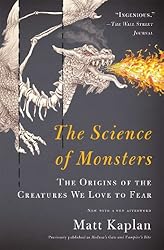 The edges of old maps, the gateways to parts unknown, are often said1 to have carried the words “Here Be Dragons”. At the dawn of the Scientific Revolution, there was plenty of room for those dragons to roam. Each human culture around the globe was surrounded by a fog of geographic and metaphysical unknowns. Since that time, science has destroyed the habitat of those dragons in a steadily process 2.


 The Finch and Pea