Big news in tiny particles: the Large Hadron Collider has set a new energy record ahead of its scheduled full restart in June. Scientists at CERN reported that on May 20, the LHC succeeded in smashing together protons with an energy of 13 trillion electron volts (TeV). That’s close to the 14 TeV maximum that the LHC is designed to achieve.
The record was reached during tests to prepare for a second run of experiments starting next month. The collider underwent a $150 million upgrade after its first run, which produced results that helped confirm the existence of the Higgs boson.
Our physics kitties tend to have substantially lower energy levels than that, but the Large Hairball Collider (pictured above) looks likely to yield important data on particles found under the sofa. The red dot, the so-called “holy grail” of kitty physics, remains elusive. Reached for comment, the head of the LHBC said:
Recommend three books to our readers out of your list of favorites: An older title, a newer title, and title you discovered because you borrowed it from a friend or a library.
Go check out all of the great responses. My answer focuses on, as you may have guessed, post-apocalyptic SF. The best SF book I ever borrowed from a friend was Dhalgren, a marvelous and very weird New Wave beast that takes place in a fictional ruined city. To go with Dhalgren, I picked two other outstanding weird post-apocalyptic classics, something old (The Night Land of 1912), and a strange new book that more people should read (the 2012 Blueprints of the AfterLife). Head on over and whet your appetite for some very weird post-apocalyptic SF.
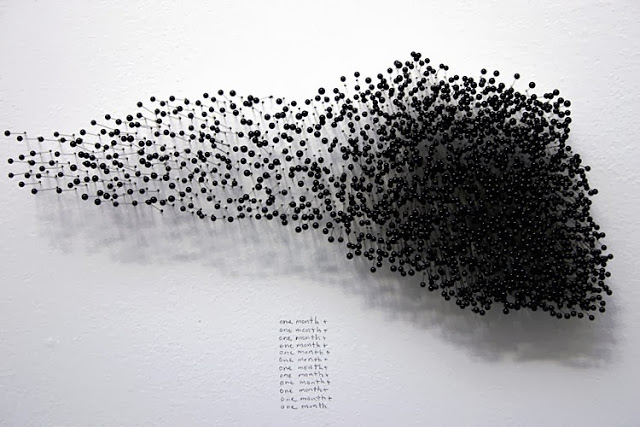
Katie Lewis uses simple materials like pins and thread to create her artworks, which are based on data she collects about her own “bodily sensations” – but she won’t tell you what sensations she’s measuring. Twinges in the back? Rumbles in the tummy, perhaps? She says she uses a very strict method to collect and visualize her data, but she won’t tell you what her method is, either. According to Lewis, it’s all about questioning medicine and science’s view of the body as a quantifiable and endlessly analyzable thing.
She organizes her data into “grid-like charts and diagrams mimicking science and medicine’s representations of the body as a specimen, visually displayed for the purpose of gaining knowledge” – a mindset she sees as false. “The artificially rigid organization of my materials alludes to control – of the individual body as an institutional domain, and of irrational experience as a manageable, concrete set of events.”
Color me conflicted. On the one hand, I understand the artist’s resistance to the idea that every aspect of the self and the human experience can be quantified, crunched and displayed in neat charts. On the other hand, a lot of it can be quantified, and creating art from the data can be beautiful and meaningful, if never the definitive measure of a life.
You can see more of Katie Lewis’ art at her website.
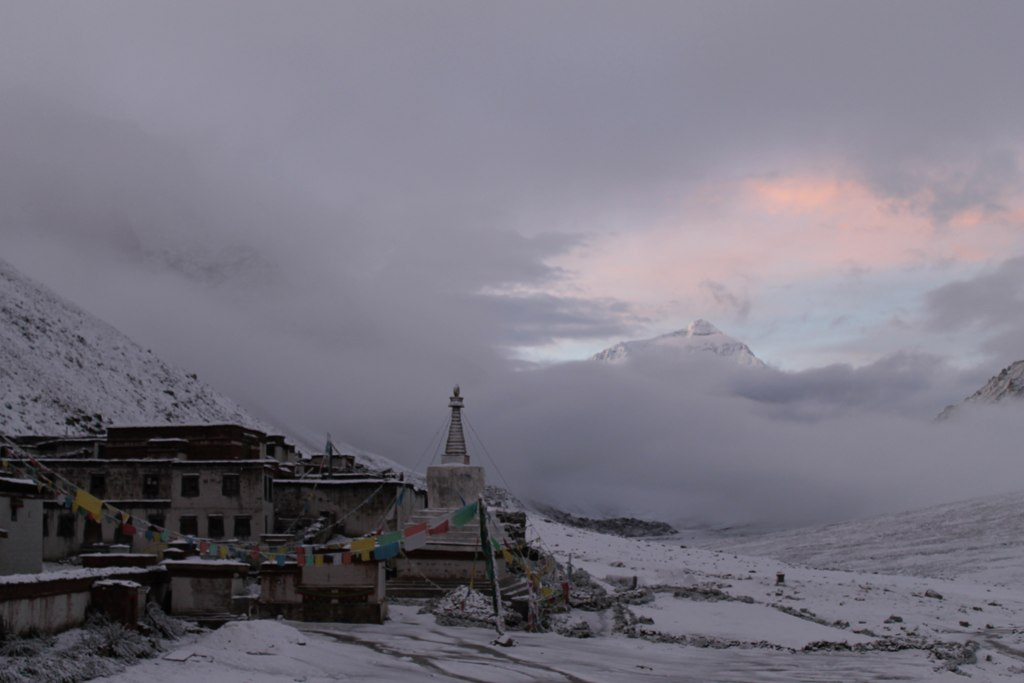
Rongbuk monastery in Tibet, near Mount Everest, which is peeking through the clouds. Here still extra-tall, in 2012.
Climbing Mount Everest is now slightly less impressive than it used to be. After the earthquake that struck Nepal on April 25, Mount Everest sank by about an inch.
The reason Mount Everest and the rest of the Himalayas are there in the first place is the same force that caused the earthquake that shrunk it: India is slowly pushing against the Asian continental plate.
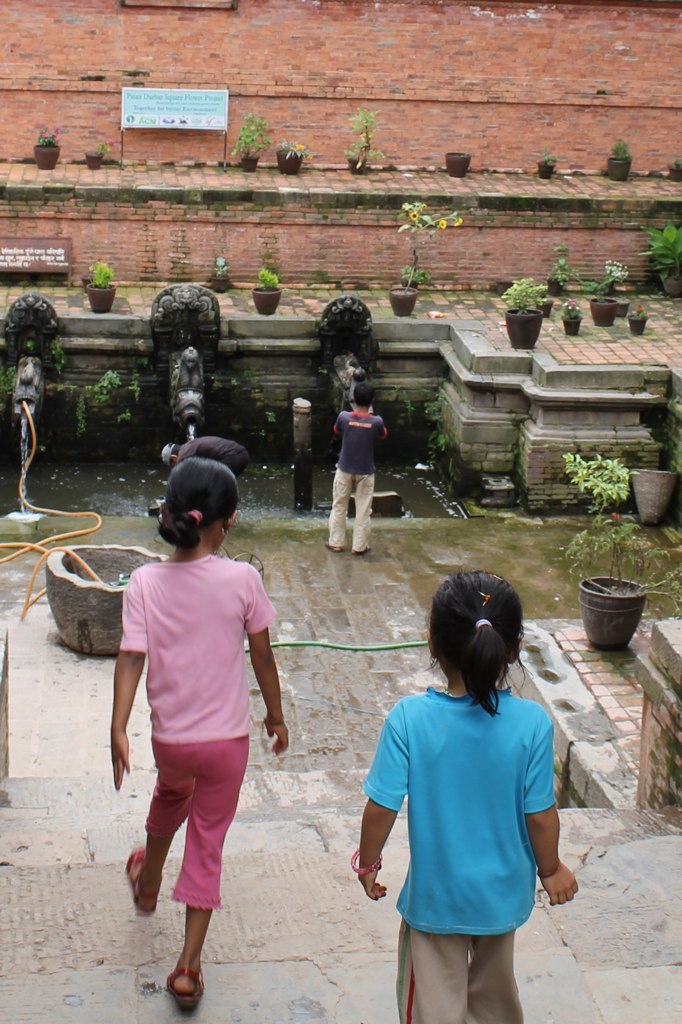
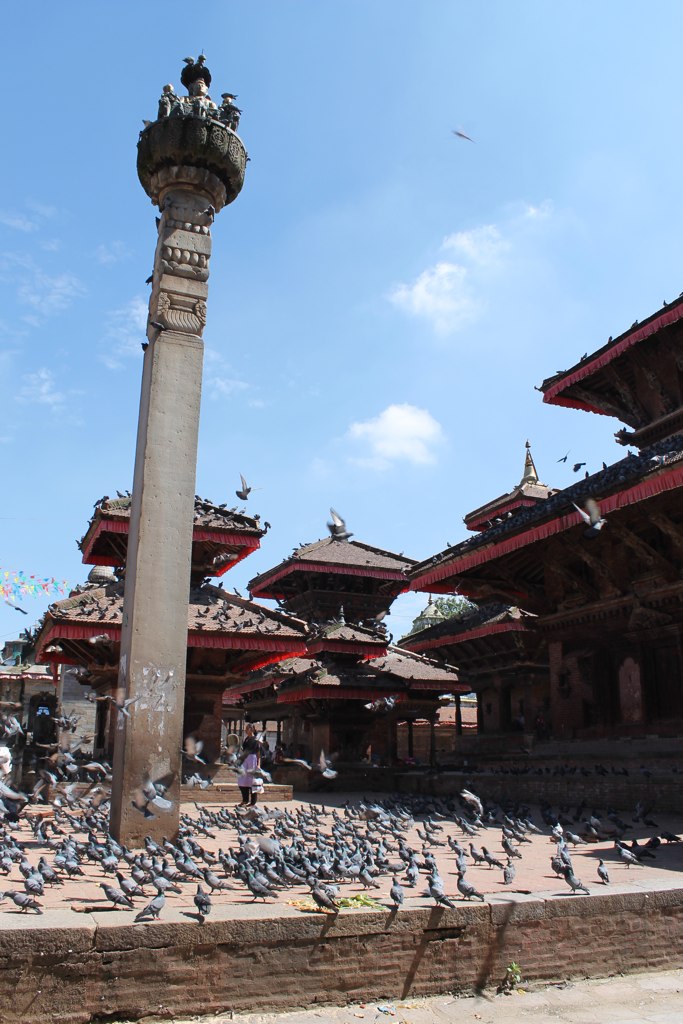
Patan Durbar Square. This area was one of the ones heavily damaged in the earthquake. Here still undestroyed in 2012.
We tend to think of plate tectonics as something that happened in the past to shape the continents as they are now, with features like the matching coast lines of Africa and South America just a remnant of an ancient continental break. But the recent earthquake – as any large earthquake does – reminds us that these shifts are still happening, and that geological features we take for granted, like the height of Mount Everest, are still changing. Usually very gradually, but sometimes with a big and abrupt shift.
The earthquake on April 25, and another big one this past week, haven’t just shifted Mount Everest by an inch, but also caused the region around Kathmandu to rise by a few feet. And this was the shift that caused the most damage.
Kathmandu is an old city with a rich history and a poor population. It has the most UNESCO World heritage sites of any city in the world, but more than half of them suffered extensive damage in the earthquakes.
Kathmandu Durbar Square in better days. Not sure which of these buildings are still standing.
Thousands of people have died, and even more have been made homeless, or suffered a loss of income. I visited Kathmandu a few years ago and I love the city and its people. So I’m simultaneously impressed by the forces that changed the height of Mount Everest and worried for the local community. Earthquakes are pretty impressive, but not always in a good way!
If you would like to help support the rebuilding of Nepal, please consider donating to a reputable organisation. There are too many to list, and they’re different depending on where you live and what kind of support you want to provide (medical, heritage rebuilding, children, etc), but feel free to ask me on Twitter for recommendations.
All photos by me, and I can never take similar photos again, because even Mount Everest no longer looks exactly like that…
P.S. If the photo captions are confusing, there are THREE places called “Durbar Square” in Kathmandu neighbourhoods. All three are UNESCO sites, and all three were destroyed in the earthquake 😦





 The Finch and Pea