
‘Copy Number Variants’ (CNVs) are hot. A CNV is a sizeable chunk of DNA that’s either missing from your genome or present in extra copies. Chunks of DNA get copied or deleted on a surprisingly frequent basis. We’ve all got CNVs, most cases they are probably benign, but CNVs are becoming an increasingly appreciated as a significant source of medically important genetic variation. ‘Recently appreciated’ because we now have the technology to detect CVNVs reliably.
A recent paper in The Lancet links CNVs with attention-deficit-hyperactivity disorder, and find that genetic variants in ADHD occur in the same genes linked with autism and schizophrenia. What this suggests is that CNVs are the reason my ADHD child unfailingly neglects to turn in her completed homework. Continue reading “Why CNVs Explain My Kid’s Grades”
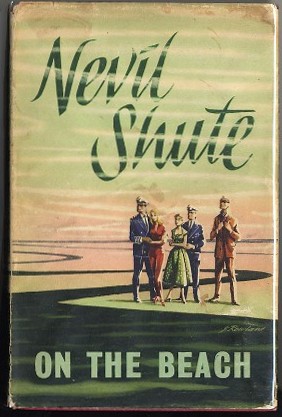 Exactly what nuclear world war would look like was a matter of diverse opinion in the nuclear apocalypse novels of the 1950‘s. Many post-apocalyptic novels of this decade portrayed World War III as an essentially known if more extreme extension of the destructive experience of World War II, much the way that World War II was like World War I jacked up a notch. At worst, large swaths of land would be rendered permanently uninhabitable for decades (The Long Tomorrow), centuries (The Chrysalids), or even millennia (Pebble in the Sky); nevertheless, the destruction of nuclear bombs was fundamentally the same as what came before. Death occurrs on a massive but not extinctive scale, and while there is some danger from fallout, the worst damage is primarily in those areas of direct hits. This was a logical view at the time – after all, the results of the bombing of Hiroshima, at first glance, weren’t much different from the firebombing of Tokyo.
  The Finch and Pea