Science for the People: Lovelace & Babbage

sftpThis week we’re learning about a pair of 19th-century geniuses, and the friendship that gave rise to the era of modern computers. We’ll speak to artist and animator Sydney Padua about her graphic novel The Thrilling Adventures of Lovelace & Babbage: The (Mostly) True Story of the First Computer. We’ll also talk to Suw Charman-Anderson, founder of Ada Lovelace Day, an international celebration of the achievements of women in science, technology, engineering, and math.

Don’t forget to support the Science for the People Patreon Campaign to keep the sciencey goodness flowing toward your ear holes.

*Josh provides research help to Science for the People and is, therefore, completely biased.
SHTEAM

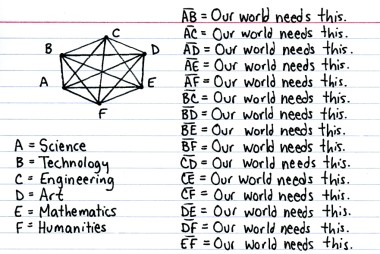
This pretty much sums up my world view.

"Our World Needs You" from Indexed by Jessica Hagy (All Rights Reserved; Used with Permission)
“Our World Needs You” from Indexed by Jessica Hagy (All Rights Reserved; Used with Permission)

Like STEM and STEAM, SHTEAM is a lousy acronym; but it is infinitely preferable to the SHAT ME option.

Art of Science: Kelly Heaton’s Pollination Is Not Just for Plants

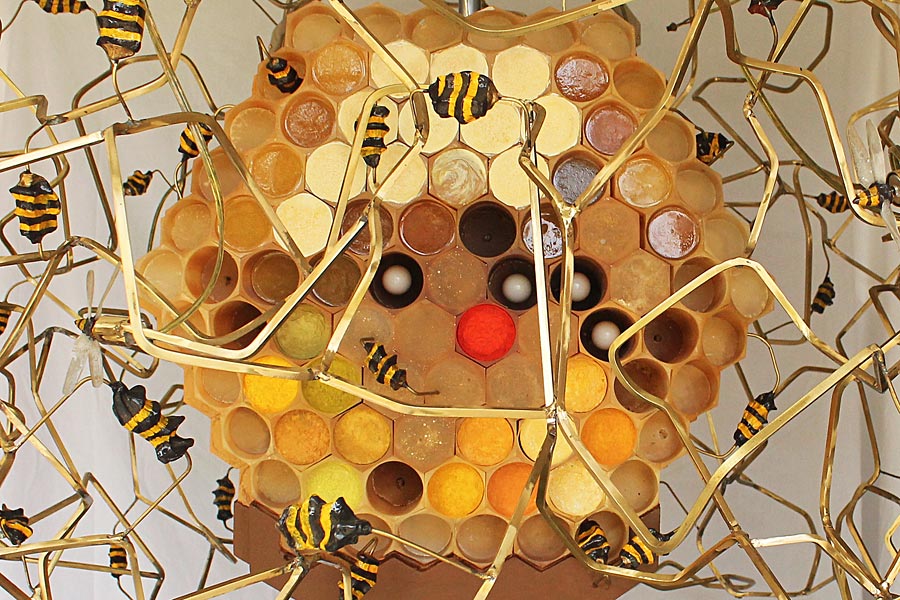
Detail from Kelly Heaton, The Beekeeper, 2015. Kinetic sculpture made with steel, cast resin, brass, electronics, wood and paint.

Kelly Heaton’s new exhibition, Pollination, uses the central motif of plant sex to explore subjects from the scientific (colony collapse disorder) to the romantic (human sexual attraction), to the technological (the spread of ideas). And she uses a dizzying array of media to do it.

The show, at Ronald Feldman Fine Arts in New York through October 24, is dominated by The Beekeeper, a huge kinetic sculpture in which bees fly around an illuminated honeycomb rooted in a landscape of floral electronics.

Heaton also created eight perfumes for the exhibition. Bee The Flower is an “artist’s toolbox” for painting your body with perfume and “pollen.” The perfumes, which visitors can smell, include one made from bee-friendly plants and one actually extracted from dollar bills.

Other works in the show include paintings, pastels and sculptures exploring ideas about the changing world of agricultural production and about humans’ “infestation” by electronics.

If you can’t make it to New York to see Pollination, Heaton, who has degrees in both art and science, has also written a book about the show, which is available on Amazon. You can see more of her work on her website.

Science for the People: Fact Checking Elections

sftp-square-fistonly-whitebgThis week we’re back at the intersection of science and politics, comparing economic data to partisan talking points and polling predictions to election results. We’ll talk to Jim Stanford, economist at Unifor, about his report “Rhetoric & Reality: Evaluating Canada’s Economic Record Under the Harper Government.” And we’ll speak to pollster and consultant Donna Dasko about the science and art of polling in Canadian federal elections.

Finally, don’t forget to support the Science for the People Patreon Campaign to keep the sciencey goodness flowing toward your ear holes.

Support Your Local Podcaster


There are those groups where you keep wondering why they let you in. I’m not talking about impostor syndrome (I went to graduate school – I know that of which I speak), but the kind of group where you are pretty sure folks know exactly who/what you are and they let you stick around anyway. Maybe it was an older sibling letting you tag along when you were younger. Maybe it was a pick-up basketball team that doesn’t care about your lousy jump shot. Maybe it is your life partner.

If we exclude my partner (what was she thinking?), my “that group” is Science for the People*. Starting in 2010, I gradually migrated from fan, to brief guest, to occasional source of information, to official team member. I still maintain that I have the easiest job on the crew.

That is why I’m so pleased that we have launched the Science for the People Patreon CampaignScience for the People has been a labor of love by the entire team for years. The Patreon Campaign is designed to make it possible for those that labor the hardest on producing Science for the People can keep producing the best science podcast** you can find.

*Here, I am in the position to make people put up with me, the poor bastards.
**Conflict of interest disclosure.