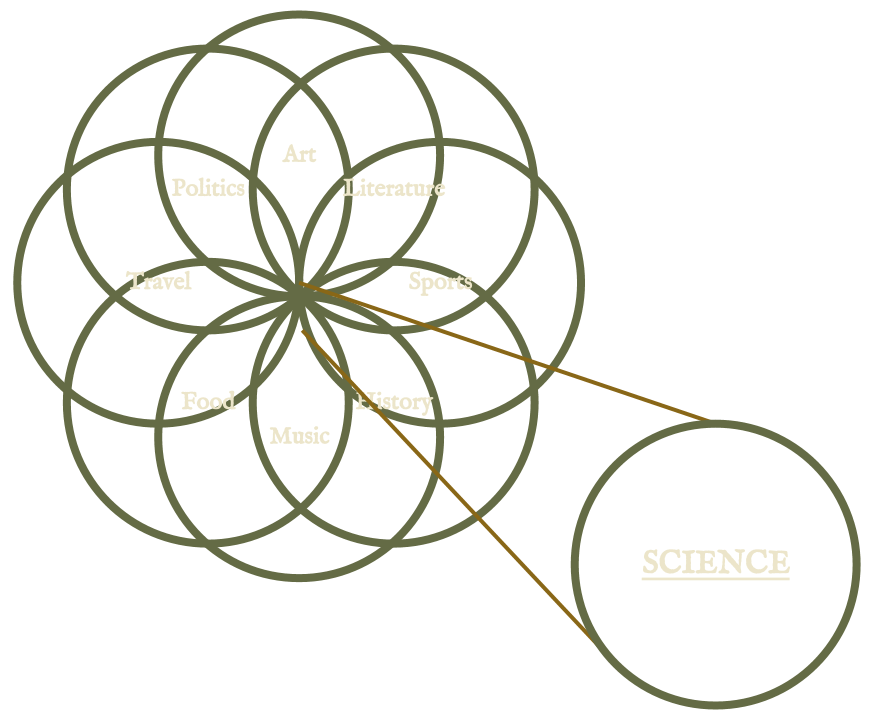
Lucretius and the fear of death

Yesterday’s discussion of Lucretius’ The Nature of Things only touched very briefly on two of the many fascinating ideas of Books I and II. As a supplement to yesterday’s discussion, below is a bit more from the passage in Book I explaining why the fear of death is one of the Epicureans’ main targets, and why an understanding of the nature of things is supposed to aid us in living a life free of anxiety over death. This passage is taken from the Project Gutenberg translation by William Ellery Leonard:

And there shall come the time when even thou,
Forced by the soothsayer’s terror-tales, shalt seek
To break from us. Ah, many a dream even now
Can they concoct to rout thy plans of life,
And trouble all thy fortunes with base fears.
I own with reason: for, if men but knew
Some fixed end to ills, they would be strong
By some device unconquered to withstand
Religions and the menacings of seers.
But now nor skill nor instrument is theirs,
Since men must dread eternal pains in death. Continue reading “Lucretius and the fear of death”
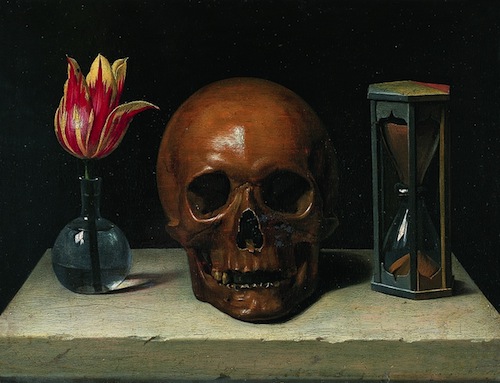
Lucretius did not believe in non-overlapping magisteria

What does science have to do with how we should live? Not much, is often the official answer in our pluralist and technocratic society. We depend on science to be one of two non-overlapping magisteria, for the purpose of social harmony in a religiously diverse society that takes science as a dominating authority, at least in principle – even creationism or climate change denial needs to be couched in technological jargon for it to even pretend to be acceptable in discussion.

This attitude is the opposite of what we find in the Epicurean Lucretius, who wrote the world’s greatest science poem in the express belief that you can’t live life properly if you don’t understand the true nature of the universe. This idea is the key to making sense of what first struck me as an odd juxtaposition in two big features of Epicurean thought: the belief that life’s major goal is to maximize happiness, and the belief that the world emerges from the behavior of atoms. How are these two beliefs connected? The answer is death. Continue reading “Lucretius did not believe in non-overlapping magisteria”

Science Caturday: Mid-Winter Edition

Science Caturday: Mid-Winter Edition

Notice how kittehs contract in the cold and expand in teh warmz.

via Cheezburger.com

The Finch & Pea at ScienceOnline 2013

The Finch & Pea VennPrior to ScienceOnline 2012The Finch & Pea was a two man operation, literally. It was Mike and me. Grouchy and cantankerous; but lovable and cuddly. Now, we number eight. We may be a bit less grouchy, but we remain lovable and cuddly. Our new comrades over the past year – Marie-Claire, Michele, Sarah, Ben,  Heidi, and Eva – have added a lot of variety

And, The Finch & Pea is going to be very well represented at ScienceOnline 2013. Continue reading “The Finch & Pea at ScienceOnline 2013”

Commenters

The other day I was perusing online reviews of iPad styli. The comments on the reviews were shockingly de-enlightening (ie, reading them made one stupider). Even an Internet veteran like myself can still be surprised by how quickly individuals trying to provide advice about an unnecessary gadget can dissolve into anger and name calling. Continue reading “Commenters”