
Science museums and natural history museums are a relatively new phenomenon. Now we can travel the world and step into an exhibit about science in any major city, but a few centuries ago these places did not exist. Tourism didn’t exist either: if you travelled the world, you were doing business or discovering new things. Many of those early travellers brought items from their journeys, which they traded or displayed back home.
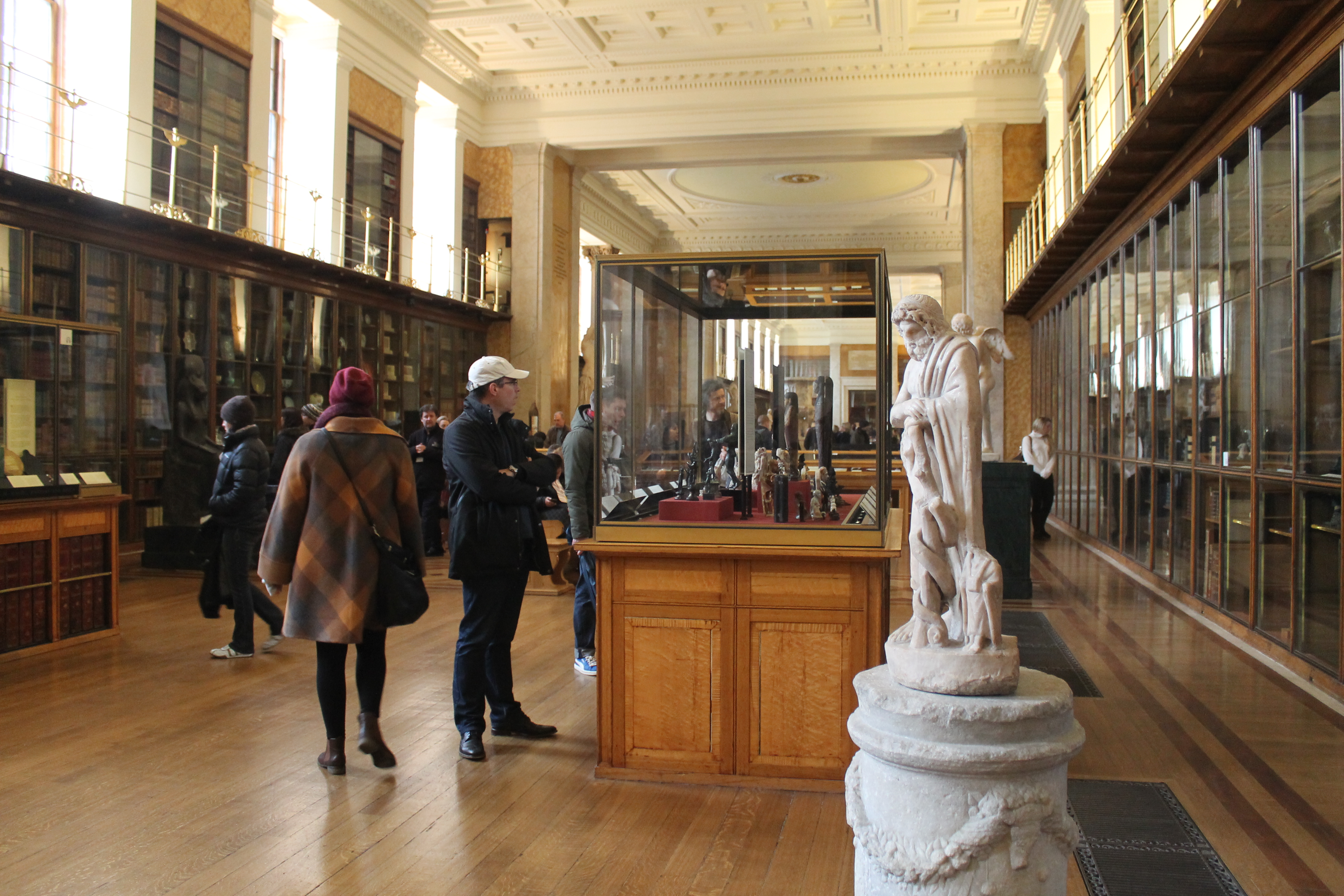
Some of the larger private collections of interesting objects were referred to as Cabinets of Curiosities, and they could contain anything from fossils to archeological finds to stuffed animals. There was very little thematic thought behind these collections, although some collectors had favourites types of items, or would group things by visual similarities.
Over time, some of the more elaborate Cabinets of Curiosities turned into museums. The private collection of Hans Sloane turned into the British Museum after his death in 1753. The British Museum is now an enormous building, which you can’t even hope to take in in just one visit. But the first of the many rooms in the museum is a museum in itself. It’s the “Enlightenment Room”, which is set up to resemble a sort of Cabinet of Curiosities in itself.
The Enlightenment Room serves two purposes: it lets visitors have a close look at a wide variety of artefacts and natural history objects on a small scale, but it also shows where our modern museums came from. Continue reading “British Museum – Enlightenment Room”


 The Finch and Pea