Great Barrier Reef

IMG_8468Are there places where science tourists shouldn’t go? Sometimes, visiting a destination also affects that destination. In a forest, it’s easy to minimize the damage: stay on the paths, pick up garbage, don’t scare the animals. But what if the place you want to visit is delicate, and has no paths to stay on – like a coral reef?

The Great Barrier Reef runs along the coast of Queensland and is the largest “superorganism” on earth (It can be seen from space, but, honestly, what can’t be seen from space these days). Even though it’s quite a distance from shore, it’s visited yearly by more than a million tourists and brings in several billion dollars each year. Continue reading “Great Barrier Reef”

Dewey Decimal Easter Egg?

“Super Why!” Logo (Fair Use)

My kids force me to watch a number of shows I would never have watched on my own that I actually find quite enjoyable, like My Little Pony and Scooby-Doo: Mystery Incorporated. Others, like, Super Why!, well, not so much. It is fine. I just happen to not be an illiterate four year-old, putting me outside their target demographic. Continue reading “Dewey Decimal Easter Egg?”

Hey Ladies!

Image courtesy of the National Cancer Institute

Why are women turning down opportunities to present their scientific work at international meetings? A study in the Journal of Evolutionary Biology uncovered a lower representation of female scientists at the annual European Society for Evolutionary Biology meeting in 2011. The numbers of women were lower in the category of all presenters (48%)(including posters) and regular oral presentations (41%). However, only 25% of plenary speakers were women. But this disparity isn’t because women weren’t asked to present. Continue reading “Hey Ladies!”

Sunday Science Poem: Cloning and other ways of taking adaptive matters into our own hands

Sally Van Doren’s ‘Adaptive’

VanDorenPOSSESSIVE_covfront_sized-300x450With the latest improvements in the technology for creating cloned human embryos, the science fiction idea of human clones is no longer quite so speculative. (Cloning livestock is not only not speculative, it’s almost routine.) In the near future we will have the ability to create, with the technologies of genome editing and cloning, upgraded versions of ourselves – in other words, taking our adaptation to our environment into our own hands, rather than simply accepting what we’ve been handed by evolution.1

Changing the meaning of our DNA to make a new version of ourselves parallels the much less ethically dubious process of reading a poem by deliberately adapting its meaning to our needs and interests as readers. Continue reading “Sunday Science Poem: Cloning and other ways of taking adaptive matters into our own hands”

Science Caturday: Great Moments in Engineering

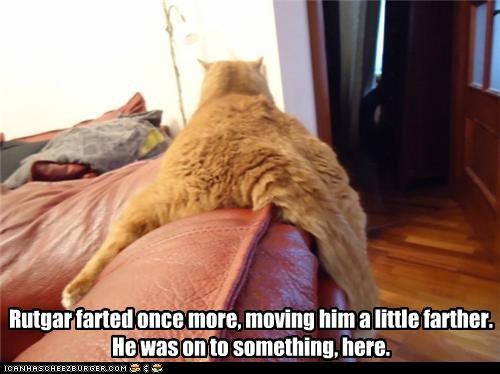
Cats have a slightly different version of  the creation of the gas-powered internal combustion engine.

rutgar

photo via Cheezburger.com