Science Caturday:Buzzed Off

regret

A report released this week by the US Environmental Protection Agency (EPA) showed a link between a major class of pesticides and harm to honeybees, but only when used on certain types of crops. The report showed that pesticides known as neonicotinoids posed a significant risk to honeybees when used on cotton plants and citrus trees but not when used on other big crops like corn and tobacco.

Both the pesticide manufacturer and anti-pesticide advocates were unhappy with the report, which failed to make a clear case for either continued use of neonicotinoids or an outright ban.

Neonicotinoids, chemicals that work on insects’ central nervous systems, have been the subject of intense debate in Europe, where several countries have enacted full or partial bans on their use.  Despite this, most scientific bee experts agree that neonicotinoids alone are not to blame for the problem of dwindling bee populations, although they may be a factor in some cases.

Entomologist May Berenbaum of the University of Illinois noted that the health of honeybees, agriculture’s top pollinator, is a complex puzzle that includes climate, food for bees, parasites, disease and the way different pesticides and fungicides interact. “People would like a nice simple story with a guy in a black hat as the bad guy, but it’s complicated.”

Our science kitteh, on the other hand, seems to have identified a villain. Oh, dear.


Science for the People: Contraception

sftp-square-fistonly-whitebgThis week, Science for the People is taking a closer look at our current – and potential future – contraceptive methods. We’ll speak with Beth Sundstrom and Andrea DeMaria, Co-Directors of the Women’s Health Research Team at the College of Charleston, about why the pill is still our go-to birth control choice when we have long acting reversible contraception methods like the IUD and the implant available for women. And we’ll talk with Elaine Lissner, Executive Director of the Parsemus Foundation, about their continuing work to bring Vasalgel, a long acting, reversible, non-hormonal male contraceptive, to market.
Science for the People is now part of the Skepchick Network.

Don’t forget to support the Science for the People on Patreon to keep the sciencey goodness flowing toward your ear holes.

*Josh provides research help to Science for the People and is, therefore, completely biased.

Science Caturday: Meme Sandwich

hamdog_1451496790750_673916_ver1.0

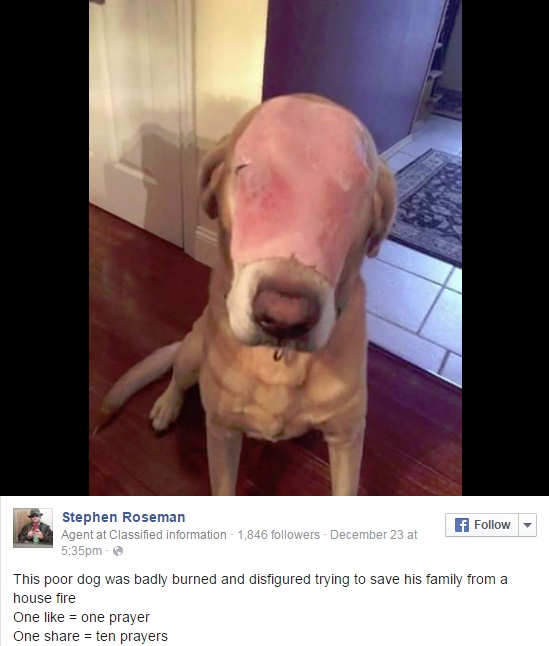
By now you’ve probably all heard the story of Hamdog, in which a guy posted a funny picture of his dog on Facebook with a slice of ham on its face, claimed that the dog had been seriously burned trying to save his family from a house fire, and asked for prayers in the form of likes and shares. Well, it worked: the picture was shared 110,000 times in a week and got over 54,000 likes before the truth came out. We could condemn the hoax or chuckle at the gullibility of internet folk, but instead, we’re going with option 3 – showing people how much better cats are than dogs at this sort of thing. Years before anyone draped ham over a dog’s snout, possibly as early as 2004, someone threw cheese at a cat’s head and gave birth to two classic memes – “Doing it Wrong” and “Who Throws Cheese, Honestly?”

cheez-youre-doin-it-wrong

In 2011, a Reddit user posted a photo of a cat with its head stuck in a piece of bread and spawned a “cat-breading” craze that lasted until 2013.

breadcat

So I guess you could say that the arrival of Hamdog completes a meme sandwich that’s been in the works for a decade, with cats (naturally) leading the way for the slower  canines. Sure, I’ll take some chips with that.

chips

Entitled #dinosaur but makes me think of a dinoflagellate #sciart #finchstagram

Photo by Josh Witten (CC BY-NC-SA) via Instagram http://ift.tt/1NZKDhw

Happy Holidays!


From all of us at The Finch & Pea, we wish you and yours a happy holiday season, whichever holiday (or lack thereof) you choose to celebrate.