Behind the scenes at Monterey Bay Aquarium

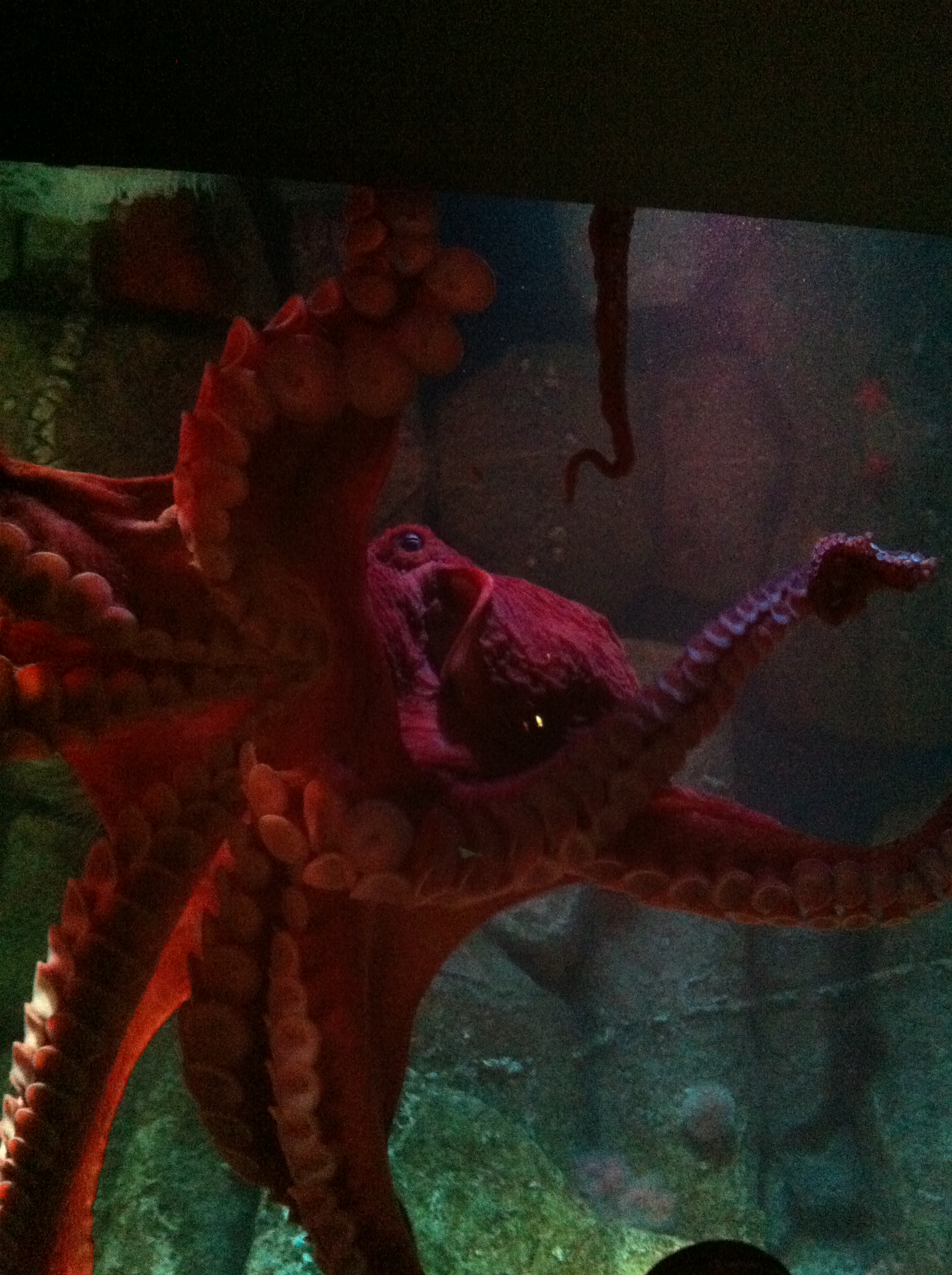
OctopusThe character Doc in John Steinbeck’s novel Cannery Row is based on marine biologist Ed Ricketts, who had a small lab in Monterey.

This fact was one of the first things I learned when I took a behind the scenes tour at the Monterey Bay Aquarium, located on Cannery Row. The aquarium is housed in former Hovden Cannery, which was an active cannery until the early 1970s. Now, the entire neighbourhood of Cannery Row has been converted to a tourist destination, and the former canneries are shops and restaurants. And an aquarium.

There is a more direct connection between Ed Ricketts and the aquarium: The layout of the aquarium, grouping species in exhibits based on their natural ecosystem, was informed by Ricketts’ work Between Pacific Coasts.

Continue reading “Behind the scenes at Monterey Bay Aquarium”

Science Caturday: Rocket Cats!

houston

In the headlines this week: 16th century rocket cats. That’s right, experts recently revealed that a military manual dating from around 1530 imagined the use of cats and birds as weapons of war, with gunpowder-filled “jet packs” strapped to their backs to set fire to enemy castles or cities.

According to this article in The Guardian, the academics studying the manuscript believe that cats would be poor weapons. Given their preference for staying close to home and doing pretty much as they please, a gunpowder-toting kitty would be more likely to set fire to his master’s camp than to go near a strange castle.

However, the photo above, obtained from a top-sekrit source, indicates that some testing of rocket cats may have been carried on long after castle walls fell, and may indeed be going on to this day.

Image via cheezburger.com

Would you like to meet a Tardigrade?

In the Canopy with Water Bears and Wheelchairs

We’ve already met tardigrades (or water bears) virtually. If you are an undergraduate with an ambulatory disability, you also have an opportunity to meet tardigrades in the tops of trees.

At ScienceOnline 2014 I learned from Meg Lowman & Rebecca Tripp during a very impressive keynote presentation about a research program to study tardigrades in forest canopies that was specifically focused on making field research accessible to individuals with ambulatory disabilities. Not only was the research fascinating (water bears are EVERYWHERE), but it also represents an important effort to help the social practice of knowledge building that we call science actually include the diversity of our society.

The project is organized through the lab of William Miller at Baker University in Kansas. If you or someone you know might be interested, contact check-out the announcement flyer below, the information sheet below that, and contact the Miller lab. The application deadline is 14 March 2014. Act quickly while supplies last.REU-2014-AnnouncmentFlyer-2 (1)

REU-Canopy-InfoSheet2014-1 (1)

The Art of Science: John Grade’s Capacitor

Arch2o-Capacitor-John-Grade-61-e1391416613862
John Grade, Capacitor, 2013

John Grade’s sculpture Capacitor is an immense, immersive piece designed to, as he puts it, “encapsulate the viewer.”  As visitors walk inside the  40- x 20- x 40-foot sculpture, made of fabric stretched over metal frames, it moves, lightens and darkens.  

Capacitor was conceived and built in a mere two months and was exhibited at the Kohler Arts Center in Sheboygan, Wisconsin in 2013.

The sculpture responds to information from weather sensors outside the Arts Center, slowly twisting and shifting to changes in wind direction and temperature.  The live weather data are correlated to historic data, so the greater the divergence from historical norms, the more the sculpture moves, and the more dramatic the shifts in light.

Grade says he hopes people come away from the installation “having experienced something about the outside environment in a new way, having experienced it with their bodies.”

You can see more photos and other projects by John Grade on his website.

Growing up Sea Turtle

NEW LINKONOMICON ENTRY: “Where Do Baby Sea Turtles Go During Their Lost Years?” by Ed Yong in Not Exactly Rocket Science at National Geographic Phenomena

photo (1)
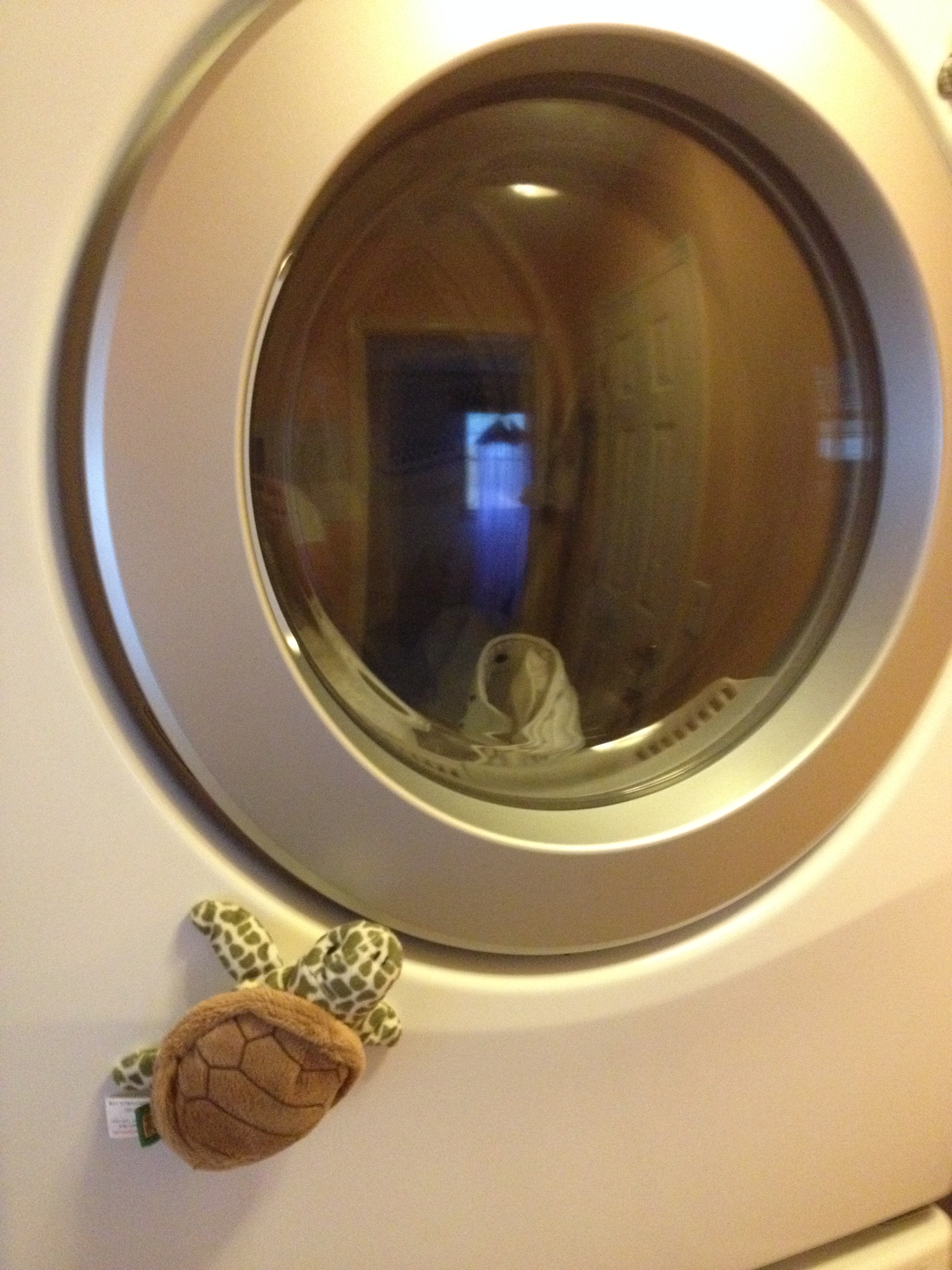
Hatchling sea turtle heads toward the North Hartsville Gyre (Photo Credit: Josh Witten; CC BY-NC-SA 4.0)

Ever wonder where baby sea turtles go to grow up – those awkward middle years between hatchlings racing through a seagull flock of attrition and being nearly impervious adults?

My kids have. Until now, I had to tell them “I don’t know.” Not just because I didn’t know, but because no one really knew. There were guesses, but there wasn’t evidence.

Read Ed Yong’s great piece at National Geographic Phenomena to hear the clever way researchers from the University of Central Florida collected data to back up (mostly) some well-reasoned hypotheses.