
Science Caturday: GOOOOOOOAAAALLLL

soccer

The World Cup kicked off in Brazil this week, promising lots of excitement and drama for sports fans. For science lovers? Well, I found a pretty darn interesting article by Rose Eveleth about how design innovations make this year’s special World Cup ball perform better than its predecessors.

She also wrote this great, slightly scary piece about how many people will get dengue fever, a mosquito-borne illness common in Brazil.  The tournament just started, but Rose Eveleth is looking like a favorite to take the World Cup science-writing crown. You can follow her on twitter here.



Science for The People: Sonic Wonderland

#269 - Sonic Wonderland
#269 – Sonic Wonderland

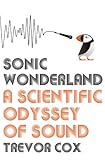
This week, Science for The People is exploring the science of sound and hearing. They talk to Trevor Cox, Professor of Acoustic Engineering at the University of Salford, about his book “Sonic Wonderland: A Scientific Odyssey of Sound.” And they speak to Andrew Wise, Senior Research Fellow at Bionics Institute, about a gene therapy technique to enhance the function of cochlear implants.

Mi Patent, Su Patent?

The biggest news in technology is that Elon Musk, CEO of Tesla Motors, announced that Tesla would no longer attempt to enforce their patents on electric car technology. This has the potential to push electric car manufacturing forward several years in one fell swoop. Referring to Tesla’s patents, Musk wrote:

They have been removed, in the spirit of the open source movement, for the advancement of electric vehicle technology…Tesla will not initiate patent lawsuits against anyone who, in good faith, wants to use our technology.
Elon Musk (emphasis mine)

The potential fly in the ointment is the phrase “in good faith”. They are retaining the right to enforce their patents, but choosing not too. It makes Musk’s definition of good faith and the consistency of that definition quite important. Continue reading “Mi Patent, Su Patent?”

Man Kicks Ball

Thanks to science, a paraplegic man stood up in an exoskeleton controlled by his mind and made the opening kick of the 2014 World Cup.

Alan Boyle has an excellent summary of the event, research, and debate about the resources invested in this event for NBC News.

Ow, My Head

Unlike the widespread reporting of the credulous media, the human skull is not specifically evolved to take a punch from other humans. Brian Switek explains the many problems with this hypothesis at National Geographic’s Phenomena. I admit that I thought, throughout my rugby career, that my head, and only my head, had evolved to be punched. It turns out that the way I played rugby had evolved to make people want to punch me in the head1. I was a particularly annoying person to play rugby against2.

Fortunately, human skulls are pretty robust in some key ways. It is just very unlikely that they got that way due to the evolutionary pressure of hominids punching each other in the noodle. One of the key problems with the punching hypothesis is that it is pure conjecture (and unreasonable conjecture, at that) without supporting experimental evidence. What would it take to really test the punching hypothesis?

WARNING: This post may contain a Game of Thrones spoiler “below the fold”. 

Continue reading “Ow, My Head”