#TheGrantfather

First there was #SciWars, then there was a flailing attempt at #ConanThePostDoc. This weekend a smattering of Twitter users got together to sciencify classic quotes from The Godfather films under the hashtag #TheGrantfather.

You can see a storify of the reworked quotes here:Screenshot 2014-08-04 10.18.14

What classic film should lay the science too this Friday?

A work of staggering genius

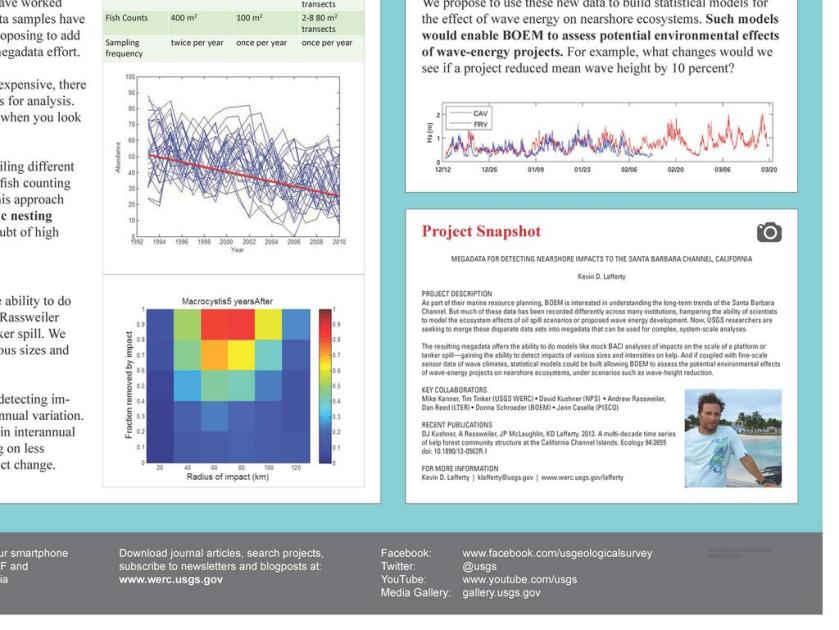
Ben Young Landis has done the smartest thing I’ve seen all day – adding a smartphone camera friendly abstract panel to a comprehensive poster design, in order to make it easy to capture the poster’s soul.

by Ben Young Landis
by Ben Young Landis (Used with Permission)

For many of us, working a research conference using smartphones has become second-nature…It was the poster aspect that had me thinking for a while. How can we make a better poster layout that will be more friendly to smartphone users…and…will stand out from the crowd?

You can see the beginnings of my experiment with this design I created for Kevin Lafferty, a P.I. with the U.S. Geological Survey and UC Santa Barbara. A key innovation is the “Project Snapshot” — this is actually where I’ve tucked all the technical language, the citation, the coauthors, the email addresses, and all the “usual” poster elements. Essentially, I’ve written up your notes for you in this 9×12 inch space, and the camera icon is a reminder that you literally can just take a snapshot of this box, and not have to write all this down. – Ben Young Landis

Continue reading “A work of staggering genius”

End of the World, 1826: Mary Shelley’s The Last Man

Mary Shelley’s The Last Man (1826)
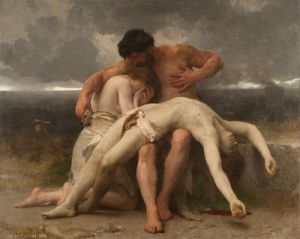
BouguereauFirstMourningNot all post-apocalyptic fiction is about death. That might seem odd, given the high death toll in this genre. But most of it is about something else, like nature, war, technology, civilization, or even religion. Mary Shelley’s The Last Man is an exception: it is a book about death.

And death is what saves it from being just another 19th century door-stopper, doomed to bore contemporary readers. Shelley did what, as far as I know, no other writer in the genre has done. She turned her personal grief into the End of the World. In the Last Man, the deaths of her husband, her children, and her friends are transformed into the complete extinction of the human species. Continue reading “End of the World, 1826: Mary Shelley’s The Last Man”

Science Caturday: Relativikitty, Part 2

blackhole

Yeah, I’m not even going to try to explain. You can haz wikipedia.

Science for The People: Game Change

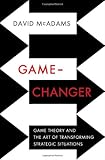
sftpThis week Science for The People is looking at the math and science of business decisions. They speak toDavid McAdams, Duke University Professor of Business Administration and Economics, about his book “Game-Changer: Game Theory and the Art of Transforming Strategic Situations.” Benjamin Ho about his economic analysis of apologies.

*Josh provides research help to Science for The People and is, therefore, a completely biased and cooperative member of the team. He does, however, insists on capitalizing the show name as he sees fit.