Man Kicks Ball

Thanks to science, a paraplegic man stood up in an exoskeleton controlled by his mind and made the opening kick of the 2014 World Cup.

Alan Boyle has an excellent summary of the event, research, and debate about the resources invested in this event for NBC News.

Ow, My Head

Unlike the widespread reporting of the credulous media, the human skull is not specifically evolved to take a punch from other humans. Brian Switek explains the many problems with this hypothesis at National Geographic’s Phenomena. I admit that I thought, throughout my rugby career, that my head, and only my head, had evolved to be punched. It turns out that the way I played rugby had evolved to make people want to punch me in the head1. I was a particularly annoying person to play rugby against2.

Fortunately, human skulls are pretty robust in some key ways. It is just very unlikely that they got that way due to the evolutionary pressure of hominids punching each other in the noodle. One of the key problems with the punching hypothesis is that it is pure conjecture (and unreasonable conjecture, at that) without supporting experimental evidence. What would it take to really test the punching hypothesis?

WARNING: This post may contain a Game of Thrones spoiler “below the fold”. 

Continue reading “Ow, My Head”

Science for The People: Extreme Medicine

#268 - Extreme Medicine
#268 – Extreme Medicine

This week, Science for The People is on the frontiers of medicine, from the fabulous to the foolhardy. They talk to Dr. Kevin Fong, co-director of the Centre for Aviation Space and Extreme Environment Medicine at University College London, about his book “Extreme Medicine: How Exploration Transformed Medicine in the Twentieth Century.” And they’re joined by Dr. Sydnee and Justin McElroy, hosts of the podcast “Sawbones: A Marital Tour of Misguided Medicine.”

And we are going to stop drowning kittens…

by Katie McKissick

The US government just announced that the CIA will no longer use fake vaccination programs as a cover for operations. At a time when anti-vaccination movements have swept the globe, despite the positive effects of vaccinations in limiting previously devastating infectious disease, the US government was actively undermining life-saving, humanitarian programs by using them as cover.

Among the reasons people decline vaccinations is the idea that uniform public health projects must be a nefarious government conspiracy. The fact that the conspiracy theorists are not entirely wrong certainly does not help the fight against infectious diseases.

This is a step in the right direction relative to the previous steps in a horribly misguided direction; but, to my fellow US citizens, the view that our country is a force for good in the world is not an evidence-based position.


Science for The People: An Epidemic of Rumors

#265 - An Epidemic of Rumors
#265 – An Epidemic of Rumors

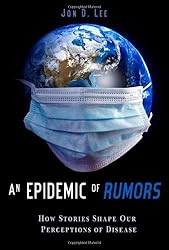
This week, Science for The People looks at the power of stories and innuendo to shape the public perception of science. They speak to author Jon Lee about his book An Epidemic of Rumors: How Stories Shape Our Perceptions of Disease. And they’re joined by Dr. Paul A. Offit, Chief of the Division of Infectious Diseases and the Director of the Vaccine Education Center at the Children’s Hospital of Philadelphia, to get the scientific perspective of the safety and effectiveness of vaccinations.