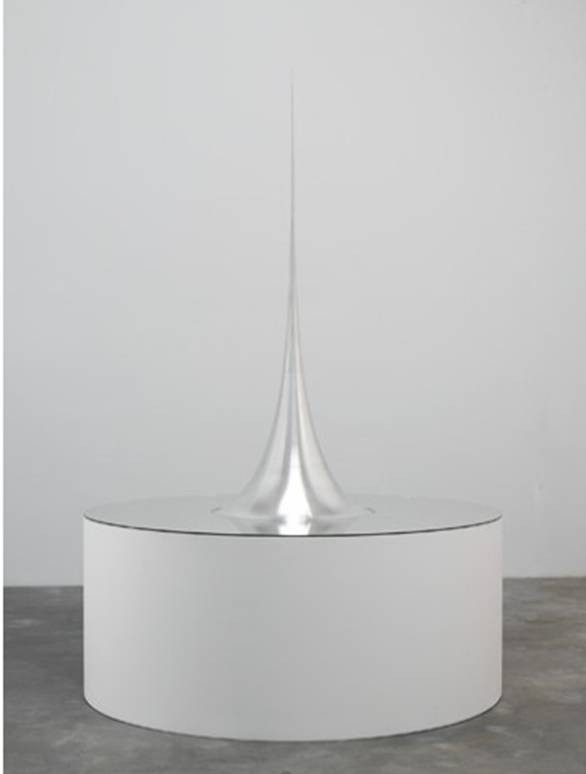
Hiroshi Sugimoto, Mathematical Model 009, Surface of revolution with constant negative curvature, 2006
Japanese artist Hiroshi Sugimoto is best known for his photography, especially his gloriously simple compositions of seascapes and lightning. But my favorites are his sculptures based on mathematical models. According to Art News, “Drawn to the objects’ purity of form and also inspired by Man Ray’s interest in photographing mathematical models, Sugimoto first photographed nineteenth-century plaster examples for his Conceptual Forms series. During the process, he was struck by the softness and fragility of the vintage models – many had lost pieces or no longer possessed the sharpness that they were meant to represent. Sugimoto sought to extend the limits of these mathematical models using cutting-edge technology, searching out the highest-level precision metalworking team in Japan. For Conceptual Form 009, a model of the equation for a surface containing a single point extended to infinity, Sugimoto succeeded in creating an infinity point with a mere one millimeter diameter, the minimum width before the material itself becomes structurally unstable.”
I can’t even begin to understand the math behind it, but as a visual representation of an “infinity point” it’s hard to top that. If you live in LA, don’t miss the chance to see an exhibition of Sugimoto’s work at the Getty Museum from February 4-June 8 . If you don’t, see lots more of his work at his website.
Ice sculpture at the 2014 Harbin Ice and Snow Festival
You build with what you have, so it’s no surprise that people in cold regions like Russia and Northern China have been making things from ice for centuries. In the past few years, artists from both places have expanded on these traditions using science and technology to explore new directions in ice and snow art.
Since at least the 1600s, people from China’s Heilongjian province have used buckets to freeze water, hollowed out the molded ice and inserted candles to make ice lanterns. The lanterns became more elaborate over the years, and in the 1960s, the provincial capital, Harbin, starting holding an ice lantern festival. The small, local event grew over the years into an amazing international extravaganza.
For example, the centerpiece of this year’s Harbin Ice and Snow Festival is a replica of the Hallgrimskirkja church in Reykjavik, Iceland made from 12 thousand meters of ice. (lots of great pix in this Mental Floss post)
To make such ambitious ice sculptures, artists and engineers have worked together to update the field’s technology. The Harbin sculptures are designed by local engineering students. Traditionally, workers have used huge blocks of river ice and carved with chainsaws, using chisels and heat to shape fine details. Now, they create extra-clear ice by deionizing the water. They use lasers to slice through the ice with much greater control than previously possible, and LED lights to change its color without dyes.
In Russia, the most famous ice structure was the ice palace built for the Empress Anna Ivanovna in 1740. Twenty meters tall and fifty meters wide, the ice palace featured a bed made of giant blocks of ice. The empress decided to use the palace to hold the wedding of a disgraced aristocrat, Prince Mikhail Galitzin, whom Anna Ivanovna forced to marry an unattractive female jester, Avdotya Buzheninova. The couple survived their wedding night in the ice bed, reportedly by trading jewels for a guard’s sheepskin coat.
If you’re wondering what any of this has to do with science or art, we’re getting to that.
Russian born scientist and novelist Julia Sidorova was fascinated by the story of the ice palace, asking herself, “Was it a torture chamber or a scientific experiment?” Using this odd historical event as the starting point of her story, Sidorova wrote the 2013 novel The Age of Ice, taking as her main character one of the twins she imagined was born from that night on an icy bed. Her protagonist, Alexander Velitzyn, might be best described as a man with a core of ice. He is immune to cold, and also immortal. He becomes an artist of ice, although not an ice sculptor. It’s complicated.
Sidorova, the author, is a biomedical scientist who works with human DNA at the University of Washington. She told Seattle Magazine, “Science is always embedded in my stories because it’s my world outlook.” She describes herself as “a complexity seeker” and that seems to hold true for both her scientific and literary styles.
In the hands of artists like Sidorova and the sculptors of Harbin, frozen water can get very complex and sophisticated. As a material, ice comes almost prepackaged with metaphors: it’s hard, it’s cold, it cracks, it can be pure and clear or cloudy and dirty. And of course, in the end, ice melts. Even in frigid Harbin, with an annual average temperature of just 38 degrees Fahrenheit, the giant sculptures generally don’t last beyond the end of February. This hard truth adds yet another layer to ice as art – its ephemeral nature adds poignancy to its beauty. To paraphrase Robert Frost, nothing cold can stay.
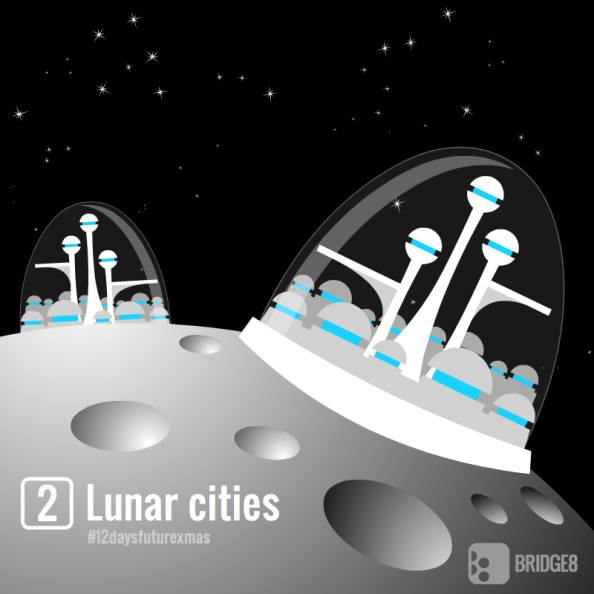
Here at the Finch and Pea, we love things that put a scientific spin on tradition, so this remake of The 12 Days of Christmas is right up our alley. Created by James Hutson of Australia-based Bridge8 and posted in 12 installments starting on Christmas day and running through the Feast of the Epiphany (January 5), the series considers visions of Christmases to come based on current directions in science.
Says Hutson, “This project grabs a fist full of the now; the promised but never came; and the far-flung maybe.” The mix of “near/likely and far/fictional” future scenarios includes advances in everything from genetic engineering (9 dodos de-extincted) to space exploration (6 ships a-jumping) to food science (3 lab-grown steaks). Hutson says he tries to balance “pop culture whimsy and nuts and bolts reality to produce engaging and understandable possible futures, so people take the time to think about it a little more and a little better than they usually would.”
While there’s a touch of Jetsons-esque retro about Hutson’s signature style – yes, there are jetpacks – most of the “Days of (Future) Christmas” already bear a much greater resemblance to modern life than anything involving lords a-leaping and maids a-milking. You can read the whole thing here and follow James Hutson and Bridge8 on twitter.
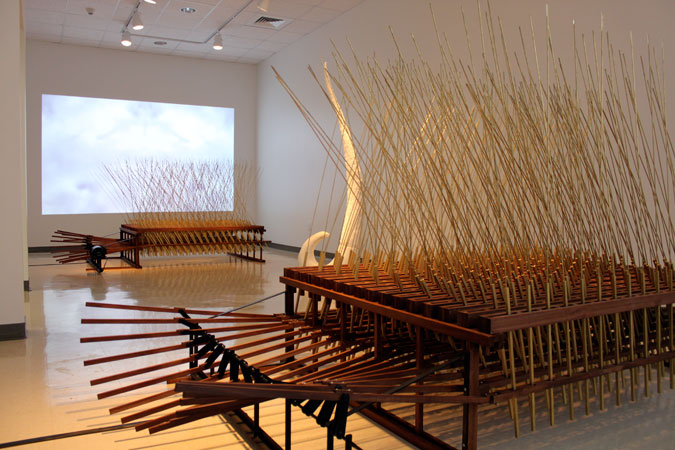
The new exhibit of kinetic sculpture at the MIT Museum is called 5000 Parts, which seems like a very low estimate when you consider the work of John Douglas Powers, who creates forms that mimic fields of grain and ocean waves, among other natural patterns of movement.
His sculpture Ialu, included in the show, is made of hundreds of wooden sticks or reeds mounted on beams which are moved by a motor. The reeds sway gently before a video of a cloudy sky. Unlike the idyllic scenes they conjure up, Powers’ sculptures squeak, clatter and groan as they move (watch video of the piece in motion here). Although in some ways his evocation of the patterns of nature is uncanny, its artificiality is also on full display.
In his materials and gestures, Douglas pays tribute to nature. But his embrace of the mechanical, his unwillingness to hide the machinery, he nods to the extent – and limitations – of human ingenuity.
5000 Parts also features work by Arthur Ganson, Anne Lilly, Rafael Lozano-Hemmer, and Takis. It runs through November 2014 at the MIT Museum in Cambridge, Massachusetts.
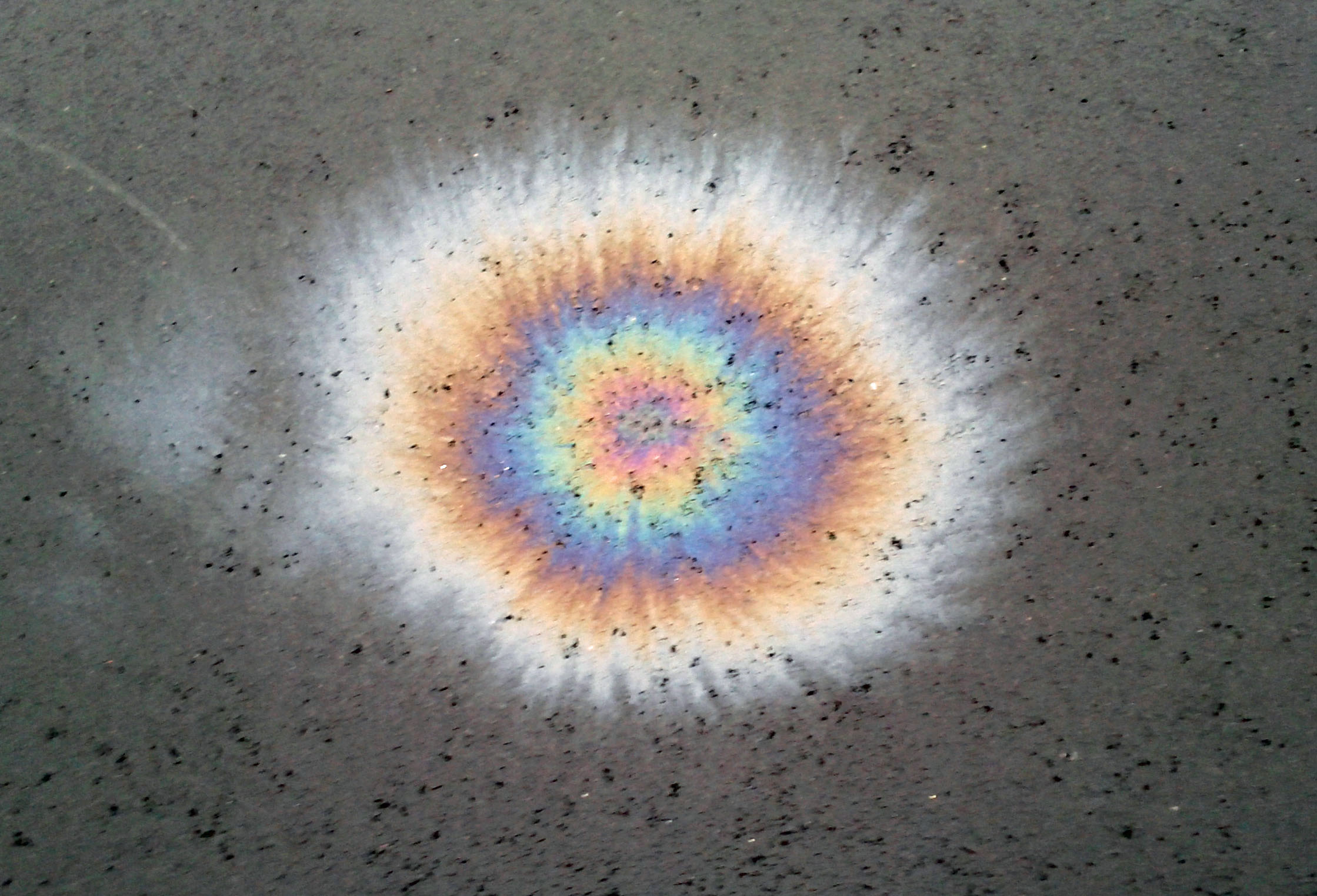
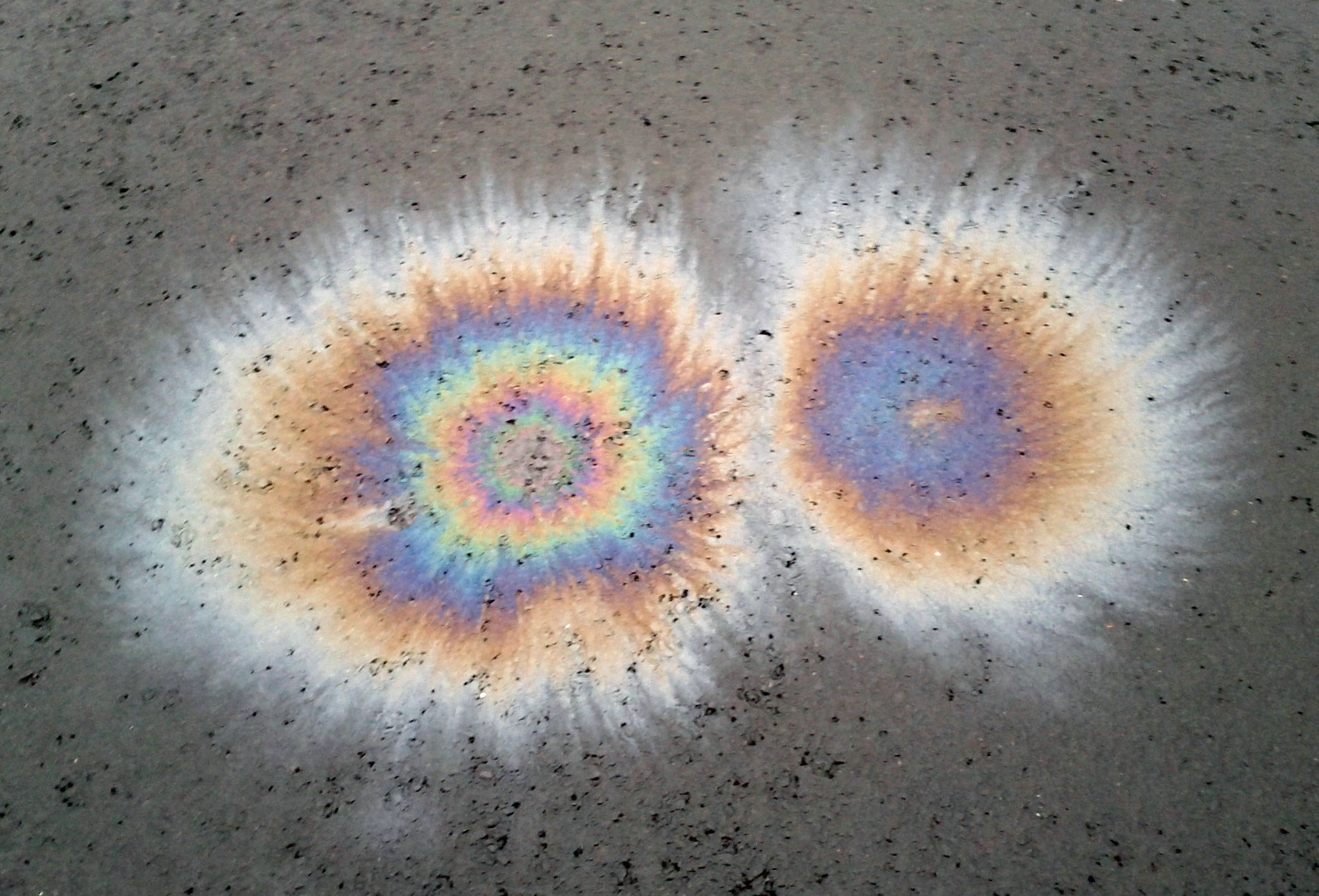
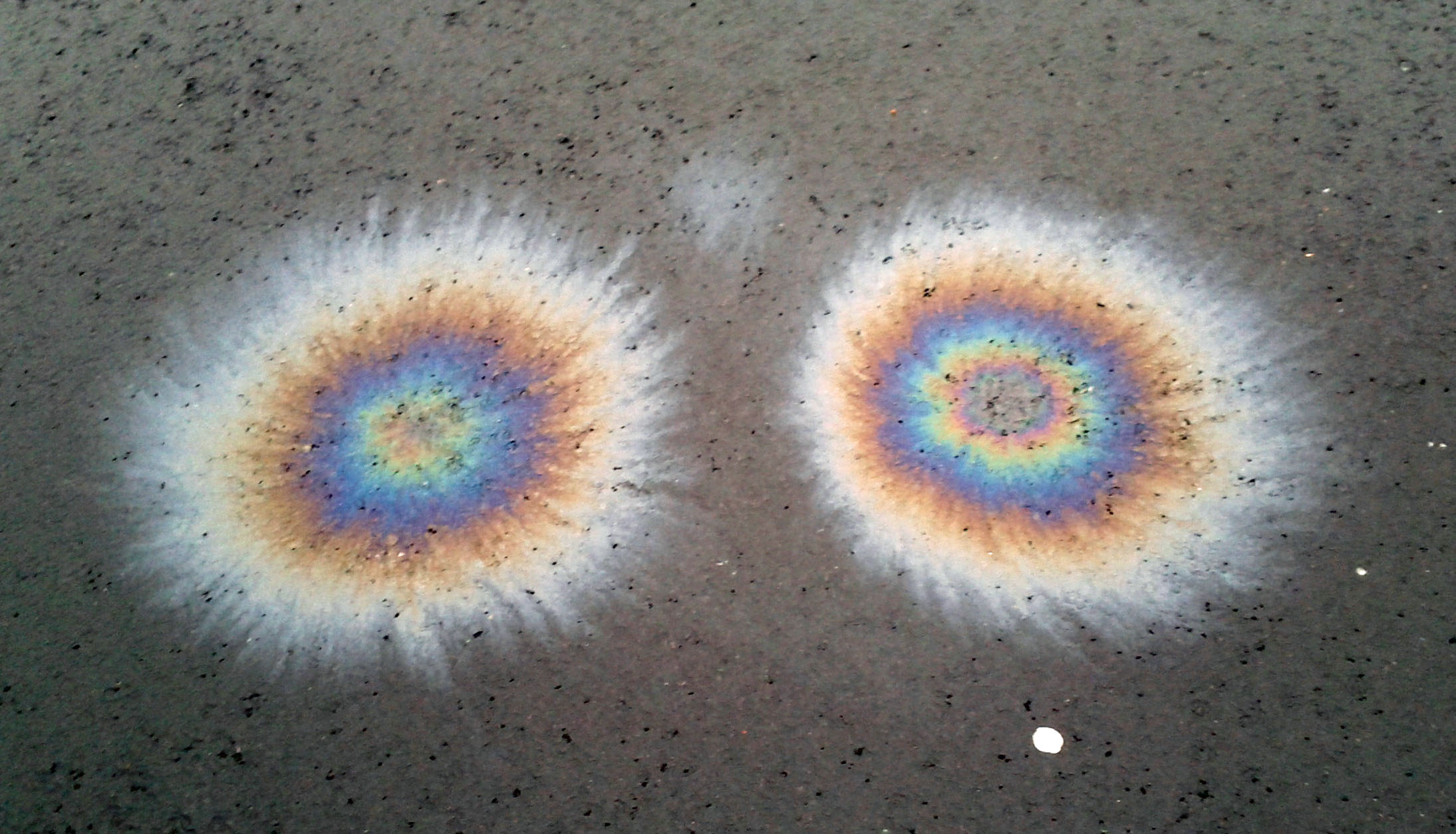
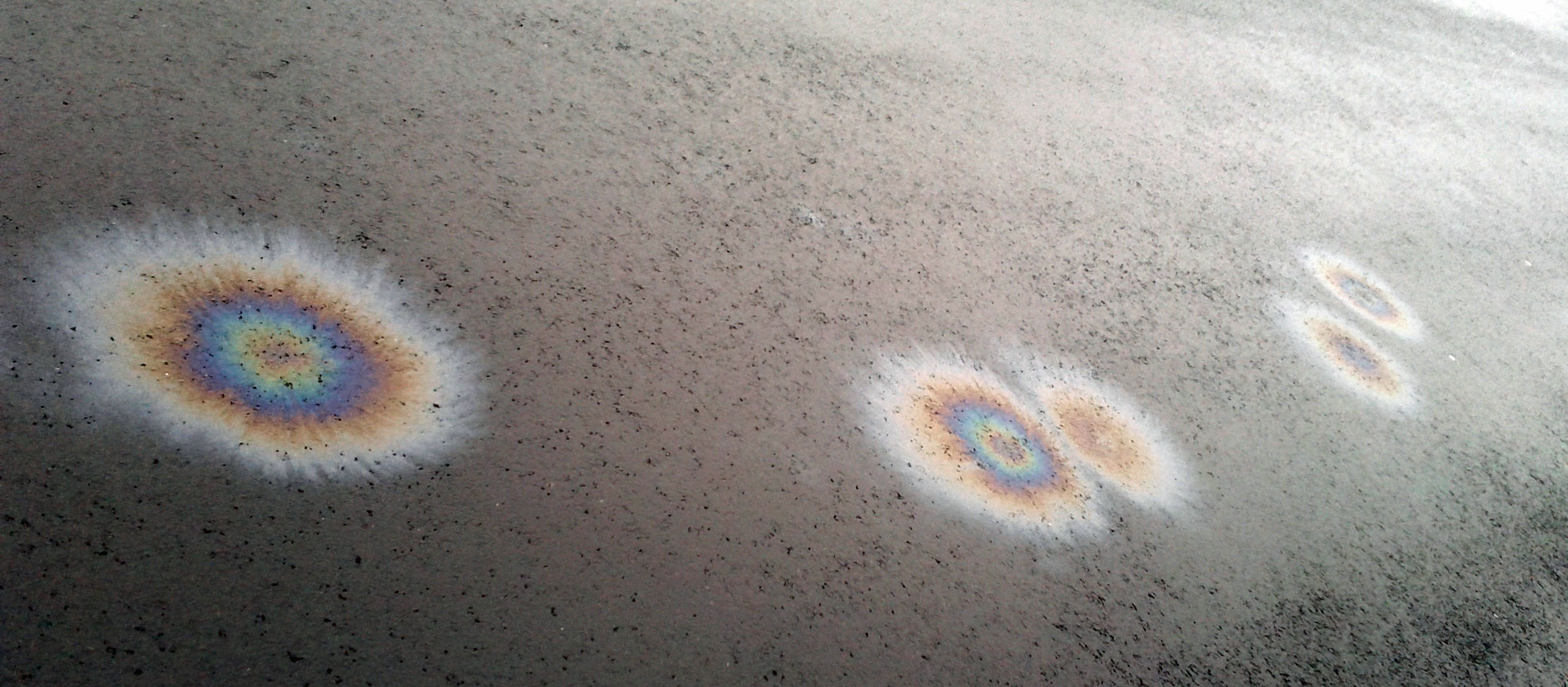
I came across this amazing example of accidental science art yesterday in a shopping center parking lot in northern Virginia. After I tweeted a cell phone picture of the full sequence of cell division – it’s even in the right order, as you can see from the bottom photo – someone directed me to this excellent post by Malcolm Campbell on the science of oil rainbows.



 The Finch and Pea