
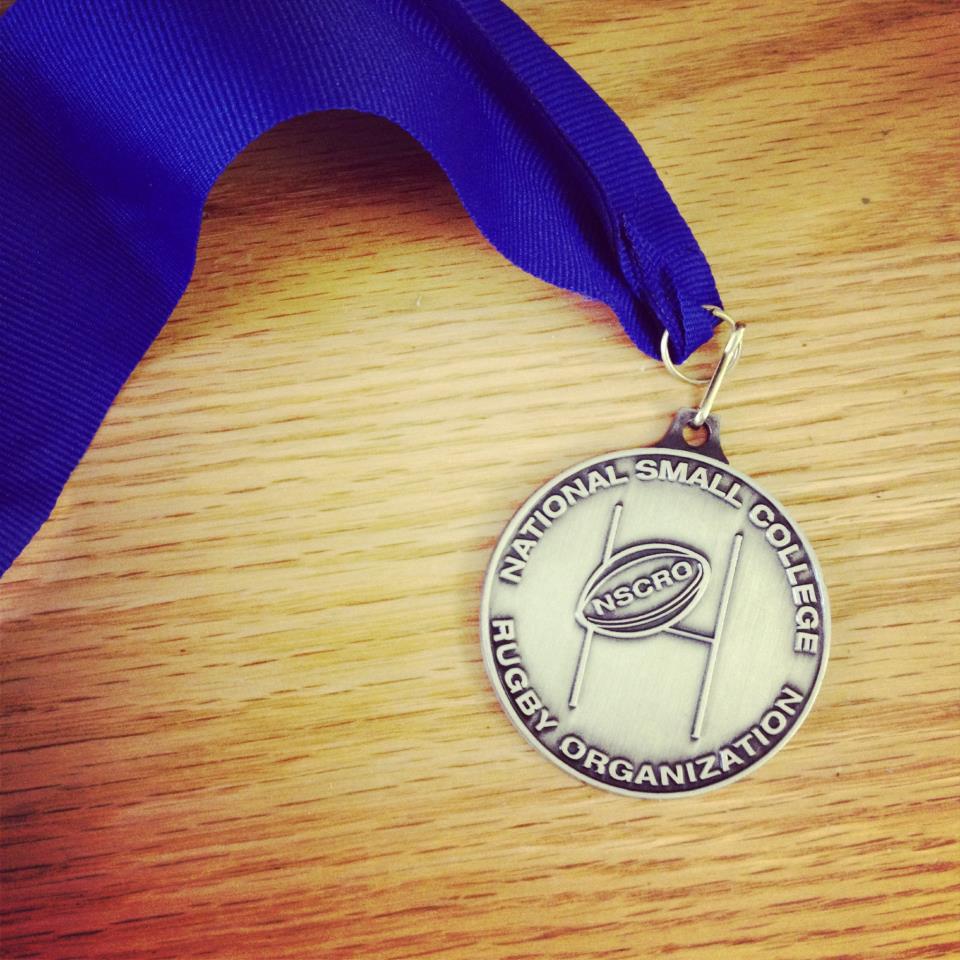
D-U-K-E!

Photo by Scott Cara
Photo by Scott Cara

As you all probably know from my posts on NCAA basketball, in which I use fawning examples of Coach K‘s tactical and strategic genius, I went to Duke. You also probably know that I played rugby, a lot of rugby.

Though I will try, words cannot express how proud I am that Duke was the runner-up for the National Small College Rugby Organization* national championship this year, losing in the final to St. John’s University 31-16.

My first season (1997-1998), I don’t think we won a single game. In my senior season, after transitioning to Division 3 to play against comparably sized schools, we went undefeated in our regular season league play. As a former team captain and club president, I’ve watched from a distance with great pride as the club has continued to build upon its successes, culminating in this year’s achievement.

If you live in Hartsville, SC and think you might be hearing slightly off-key rugby songs drifting on the wind from the direction of my house tonight, you are right.

*Duke may be an NCAA Division I school for major sports, but the actual undergraduate student body size is only about 6500. For non-scholarship/club sports, this makes Duke comparable to smaller colleges.
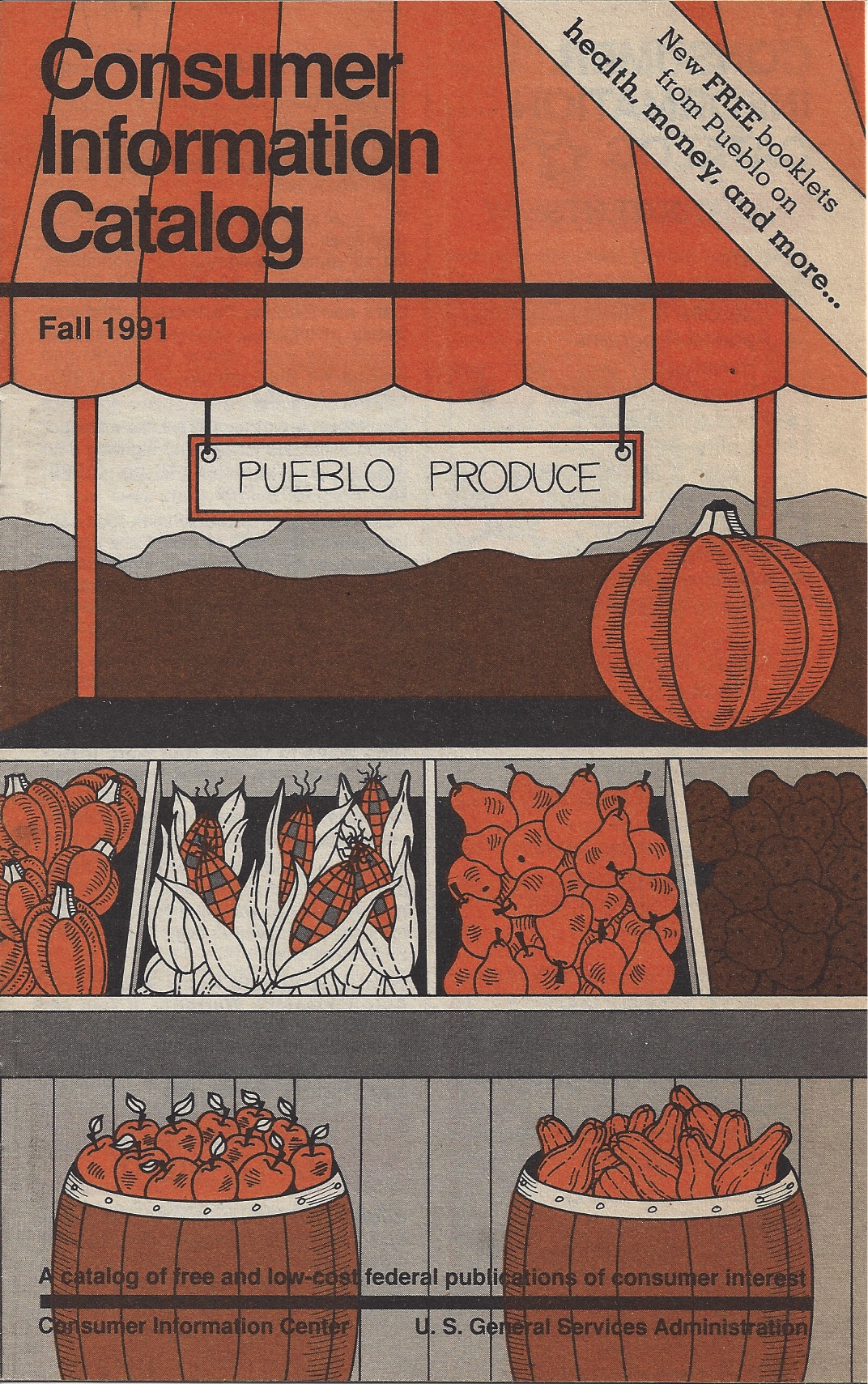
Consumer Information in 1991

consumer-information-cover

A few months ago, Alexis Rudd sent my kids some of her science books from her childhood. They have greatly enjoyed the books. My wife and I, being 30-somethings, greatly enjoyed finding a 1991 Consumer Information Catalog produced by US General Services Administration.

A catalog of free and low-cost federal publications of consumer interest

It is a spectacular snapshot of what US Federal Government thought “consumer interest” was in the Autumn of 1991. Continue reading “Consumer Information in 1991”

When Dr. Seuss sold things other than books

Contractor postal cards, between 1930 and 1940, Dr. Seuss Collection, MSS 230. Mandeville Special Collections Library, UC San Diego (Fair Use)

The Mandeville Special Collections Library at UC San Diego has a special exhibit of the artwork of Dr. Seuss from before he made a living selling books when he helped other people sell things.

You may notice much of the work is signed “Dr. Seuss”, which drove me to spend a significant chunk of time reading up on Theodore Geisel and when he started using the pseudonym. If that was my rabbit hole, then that signature was my white rabbit.

It is really interesting to see versions of recognizable characters, like Horton the elephant, appear in the ads. It’s like finding old commercials done by celebrity actors when they were young (except that these ads are more good-looking and stylish than embarrassing).

*Hat tip to Neatorama.


Giving credit where credit is due

Earlier this week, the very popular Facebook science outreach site, I Fucking Love Science, came under fire for its seemingly systematic use of copyrighted material from a variety of artists without attribution or their permission. This sparked a “conversation” – most of which is depressing and not worth reading – about how content should be shared. Over at the Symbiartic blog at Scientific American, artist (and the guy you want to design your tattoo for you) Glendon Mellow has, in the words of Peter Edmonds, composed an “important, smart post” summarizing his thoughts on the issue.

As members of the online culture, we don’t have to accept that image theft will always be the dominant way of sharing visual information online: culture matures. Expectations change. But right now, large portions of science communication online are part of the problem. – Glendon Mellow, “Mash-Up This! Science Communication’s Image Problem”

*Hat tip to Peter Edmonds.

Francois Jacob, 1920-2013

François Jacob, a pioneer in our understanding of the regulation of gene expression, passed away on Friday. His work with Jacques Monod was foundational to much of the work in my PhD thesis lab and inspired our approach to understanding splicing regulation in my post-doctoral lab. Like many true insights, his realization about a basic mechanism of biology was so basic and fundamental that seemed like the kind of thing we must have known all along. Maybe we did, but until François Jacob we didn’t know we knew it.

Carl Zimmer tells the story of Jacob’s moment of insight:

In the darkness of the Paris movie theater, Jacob hit on an answer. The repressor is a protein that clamps on to E. coli’s DNA, blocking the production of proteins from the genes for beta-galactosidase and the other genes involved in feeding on lactose. A signal, like a switch on a circuit, causes the repressor to stop shutting down the genes…Perhaps these circuits are common in all living things…But when François tried to sketch out his ideas for his wife, he was disappointed.

“You’ve already told me that,” Lise said. “It’s been known for a long time, hasn’t it?” – Carl Zimmer

*Hat tip to Heidi Smith via PZ Myers.