Running Low – Science for The People

#259 - News from the Dark
#260 – Running Low

This week, Science for The People looks across the Periodic Table and assesses the scarcity of modern society’s essential elements. They’re joined by Dr. Thomas Graedel, Director of the Center for Industrial Ecology at Yale University, to talk about the rare metals that play a role in our electronic devices. They’ll also speak to physics Professor Dr. Moses Hung-Wai Chan about our dwindling supply of helium. And they’ll talk about the phosphorous that plays a critical role in modern agriculture, with ecology professor Dr. James Elser, co-organizer of the Sustainable Phosphorus Initiative at Arizona State University.

News from the Dark – Science for The People

#259 - News from the Dark
#259 – News from the Dark

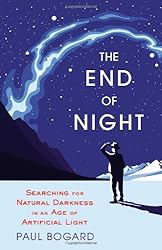
This week, Science for The People is peering out into the black to learn about deepest space, and our own night sky. They talk to Bad Astronomer Phil Plait, about recent measurements of gravity waves, and what they tell us about the birth of the Universe. They also speak to journalist and essayist Paul Bogard about his book “The End of Night: Searching for Natural Darkness in an Age of Artificial Light.” And Noisy Astronomer Nicole Gugliucci tells them about a project using citizen science to map the surface of the moon.

Opening for Biology Instructor at SCGSSM

The South Carolina Governor’s School for Science & Mathematics, where the better half of my kids’ DNA teaches, is looking for a new Biology Instructor.

BIOLOGY INSTRUCTOR
Great teachers, students & environment = the S.C. Governor’s School for Science & Mathematics (GSSM). GSSM is growing and requires outstanding faculty in several disciplines to start by August 2014. For details, please visit www.scgssm.org.

As part of our expansion, we are seeking an exceptional Biology instructor. Applicants should have a Master’s degree, Ph.D. preferred, and a love of teaching. Desired qualifications include a strong content background in Biology and experience in teaching Biology at college or advanced high school levels, knowledge and application of technology, an understanding of gifted learners, enthusiasm for teaching motivated and talented high-school-aged students and an ability to advise students in the completion of senior research projects. General academic advising, committee meetings, student activity advising, and occasional evening/weekend commitments are a regular part of faculty responsibilities.

Current courses taught at GSSM at the college or university level include AP Biology, Molecular Biology, Vertebrate Biology, Human Anatomy and Physiology, Neuroscience, Advanced Genetics and Ornithology. GSSM encourages the introduction of new courses. Courses offered will vary each semester depending on the interests and expertise of instructors, and on student interest. GSSM offers a unique opportunity to teach these subjects, including weekly two to three hour labs.

This is a full-time (10-month) teaching position, with full benefits available. A public school teaching certificate is not required. Salary is competitive and commensurate with credentials, experience and unique capabilities.

GSSM offers a wonderful teaching environment with motivated and talented students in a residential setting and is recognized among the top public elite high schools in the nation. We are a statewide, public residential high school for 11th and 12th graders specializing in the advanced study of science and mathematics. Historically, GSSM has maintained a 10:1 student to faculty ratio. Nearly 80% of the faculty members have earned doctoral degrees. Over five years, our students’ SAT average is 2059.

Please apply electronically. Forward a cover letter, resume and teaching statement, along with the GSSM application available at www.scgssm.org/employment, prior to March 31, 2014.

Forward all materials to email address: GSSMPersonnel@gssm.k12.sc.us

Please include the word “Biology” in the subject line.

The S.C. GSSM is an Equal Opportunity Employer.

Would you like to meet a Tardigrade?

In the Canopy with Water Bears and Wheelchairs

We’ve already met tardigrades (or water bears) virtually. If you are an undergraduate with an ambulatory disability, you also have an opportunity to meet tardigrades in the tops of trees.

At ScienceOnline 2014 I learned from Meg Lowman & Rebecca Tripp during a very impressive keynote presentation about a research program to study tardigrades in forest canopies that was specifically focused on making field research accessible to individuals with ambulatory disabilities. Not only was the research fascinating (water bears are EVERYWHERE), but it also represents an important effort to help the social practice of knowledge building that we call science actually include the diversity of our society.

The project is organized through the lab of William Miller at Baker University in Kansas. If you or someone you know might be interested, contact check-out the announcement flyer below, the information sheet below that, and contact the Miller lab. The application deadline is 14 March 2014. Act quickly while supplies last.REU-2014-AnnouncmentFlyer-2 (1)

REU-Canopy-InfoSheet2014-1 (1)

Pi Day 2014

Pi DayAs you may know, it is my firm and unflinching belief that our math & science “holidays” should be scheduled so that they actually teach something about the number being celebrated. Sure, 3.14 is a reasonable estimate of π, and March 14th does represent that number in typical US calendar notation (which has no respect for the hierarchical organization of dates).

But, that says nothing about what π represents. It represents the relationship between the radius (r) of a circle and both its circumference (C=2πr) and area (A=πr2). When it comes to expressing this relationship using dates, I prefer circumference because both the radius and circumference are lengths. Also, expressing the year as a circle makes sense to me (and, based on their mythologies, a large number of human cultures).

If C is 365.25 days and π is π, then 2r is approximately 116 days, which makes r approximately 58 days.

Which is why, at The Finch & Pea, 27 February is Pi Day.