Did NIH budget cuts delay an Ebola vaccine?

Mike Eisen makes an excellent point about NIH Director Francis Collins’ recent claims:

But what really bothers me the most about this is that, rather than trying to exploit the current hysteria about Ebola by offering a quid-pro-quo “Give me more money and I’ll deliver and Ebola vaccine”, Collins should be out there pointing out that the reason we’re even in a position to develop an Ebola vaccine is because of our long-standing investment in basic research, and that the real threat we face is not Ebola, but the fact that, by having slashed the NIH budget and made it increasingly difficult to have a stable career in science, we’re making it less and less likely that we’ll be equipped to handle all of the future challenges to public health that we’re going to be face in the future.

You can make a better case about the direct impact of funding cuts with the shrinking budget CDC Public Health Preparedness Funding, as Judy Stone notes over at Scientific American.

No, evolutionary biology doesn’t need a rethink

Suggestions that we need a new evolutionary synthesis because of phenomenon X pop up like weeds in biology. It’s nice to see some of my favorite evolutionary geneticists – Greg Wray, Hopi Hoekstra, Douglas Futuyma, Richard Lenski, Trudy Mackay, Dolph Schluter and Joan Strassman – make a strong case that the fundamentals of evolutionary theory can accommodate the hot new phenomenon of the day (e.g, epigenetics), and that genes are not passé:

The evolutionary phenomena championed by Laland and colleagues are already well integrated into evolutionary biology, where they have long provided useful insights. Indeed, all of these concepts date back to Darwin himself, as exemplified by his analysis of the feedback that occurred as earthworms became adapted to their life in soil…

Finally, diluting what Laland and colleagues deride as a ‘gene-centric’ view would de-emphasize the most powerfully predictive, broadly applicable and empirically validated component of evolutionary theory. Changes in the hereditary material are an essential part of adaptation and speciation. The precise genetic basis for countless adaptations has been documented in detail, ranging from antibiotic resistance in bacteria to camouflage coloration in deer mice, to lactose tolerance in humans…

All four phenomena that Laland and colleagues promote are ‘add-ons’ to the basic processes that produce evolutionary change: natural selection, drift, mutation, recombination and gene flow. None of these additions is essential for evolution, but they can alter the process under certain circumstances. For this reason they are eminently worthy of study.

h/t Ed Yong

This year’s chemistry nobel in context

One of my favorite science historians, Daniel Kevles, has a brief, insightful New Yorker piece that puts this year’s chemistry Nobel Prize in context:

Trying to see the fine structure of a cell with a light microscope is akin to attempting to discern the individual trees in a forest from a jetliner at thirty thousand feet.

Kevles explains how Betzig and Hell were obsessed with breaking the “Abbe limit,” the physical principle that the resolution of light microscopes is limited to the wavelength of light. Each of them figured out how to “argue with the laws of physics,” using some brilliant tricks with fluorescence. To someone outside of biology it may sound strange, but the development of fluorescent imaging and tagging technologies is turning out to be one of the most important developments in the history of biology, at least as revolutionary as the initial development of the microscope.

Mark Witton on Dinosaur Cheeks

“Deinonychosauria” (Cladistic Heraldry) by David Orr (All Rights Reserved; Used with Permission)

Should Deinonychus*, the clawed dinosaur that was the actual inspiration for the velociraptors of Jurassic Park‘s, have lean, Sting-like cheeks or chipmunk cheeks under their feathers?

In a recent post, paleontologist Mark Witton looks at the research on Deinonychus bite strength and how it should influence PaleoArt depictions of this iconic animal.

*While I am on the record with my belief that I could win a fight with a single Velociraptor, I have no doubt that I would lose against a Deinonychus and die slowly as it perched upon my mangled body leisurely consuming my innards.

HT: Tommy Leung

Science for the People: Edible

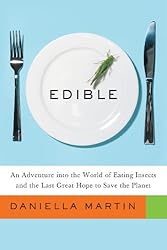
sftpThis week, they’re looking at the environmental impacts of foods we eat, and others that we should. They’ll speak to Daniella Martin, host of the insect cooking/travel show “Girl Meets Bug,” about her book “Edible: An Adventure into the World of Eating Insects and the Last Great Hope to Save the Planet.” And they’ll talk about the environmental effects of salmon farming with Peter Bridson, Aquaculture Research Manager for the Seafood Watch program at the Monterey Bay Aquarium (which has appeared in Eva Amsen’s Have Science Will Travel series).


*Josh provides research help to Science for the People and is, therefore, a completely biased and cooperative member of the team.