I disagree with this at Scientific American:
The conventions of scientific writing have two goals: to convey authority, and to demonstrate the author’s objectivity. Conventions that convey authority include a standardized article structure (Introduction, Methods, Results, Conclusion); booster words (Scientific articles contain more booster words [clearly, obviously] than other research articles, but less hedge words [may, seem, possibly].); and invocations of doom (To justify experiments articles often begin with overblown sentences like “As we all know, all species are dying.”).
Conventions that convey objectivity include the erasure of scientists as actors in their own experiments via past passive voice (e.g. “the chemicals were heated” versus “I heated the chemicals”) and the use of nominalizations or zombie nouns, which make actions themselves less visible by presenting their results as states of being (Compare “The rate was a reflection of population density increases,” to “The rate reflects an increased population density.”). – “Scientists as Writers”, Laura Jane Martin
Let’s be clear that we’re talking about research papers here, and not popularization of science. The goals of scientific convention are to present your data and make arguments as clearly and efficiently as possible.
When I read a scientific paper I’m not asking myself, ‘are these authors objective?’ Frankly, I don’t care whether they’re objective or not. Objectivity is overrated. I want to 1) understand what the authors did, 2) judge whether their methodology is sound, and 3) decide whether I agree with their arguments about the data.
Actually, as Laura Jane Martin points out, “today’s conventions emerged in a seventeenth century attempt to make scientific writing clearer.” So in fact I don’t disagree with her. Continue reading “Is scientific writing designed to suck?”

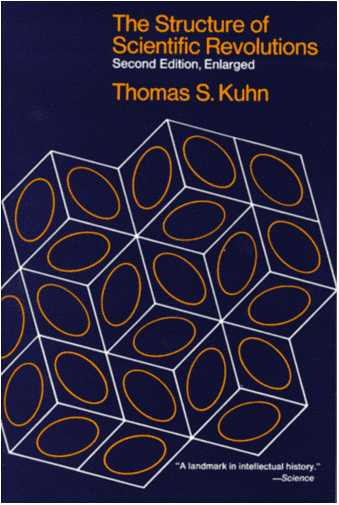 I will admit that I’m a sucker for book anniversaries of any sort, and since this month marks the 50th anniversary of the publication of The Structure of Scientific Revolutions, here’s your excuse to finally read it. I’ve been looking for an excuse to re-read it, since the first go around apparently made no impression on my brain – I will admit that I can’t say a single, intelligent thing about it.
 The Finch and Pea