
 Someday in the future each child that is born will have a file of their genome sequence prepared at birth. For some newborns in Boston, Kansas City, San Fransisco, and Chapel Hill the future is now. The National Institutes of Health is funding a new initiative to examine how the early availability of a child’s genome will affect medical care decisions and the families. $25 million dollars over 5 years is to be allocated between research sites. Each location is approaching the issue of infant genomes slightly differently. Continue reading “Baby’s First Genome”
Author: naylorsa
Duck, Duck, Golden Goose!

The second annual Golden Goose Award ceremony was held on September 19th. The Golden Goose Award is given to obscure federally funded research projects that ultimately resulted in breakthroughs with wide-ranging benefits. The name comes from The Goose That Laid the Golden Eggs fairytale. One of the 2013 awardees exemplifies the potential application of very basic and somewhat obscure science.
In 1966, Thomas Brock, a microbiologist, and his undergraduate research assistant, Hudson Freeze, set out for Yellowstone. They were interested in organisms that live in the most extreme of conditions. They collected bacteria thriving in the hot springs of the park. Among the samples they collected, one was called Thermus aquaticus. Molecular biologists around the world know it by its more common nickname, Taq. Continue reading “Duck, Duck, Golden Goose!”
Rabies, doing what it does best
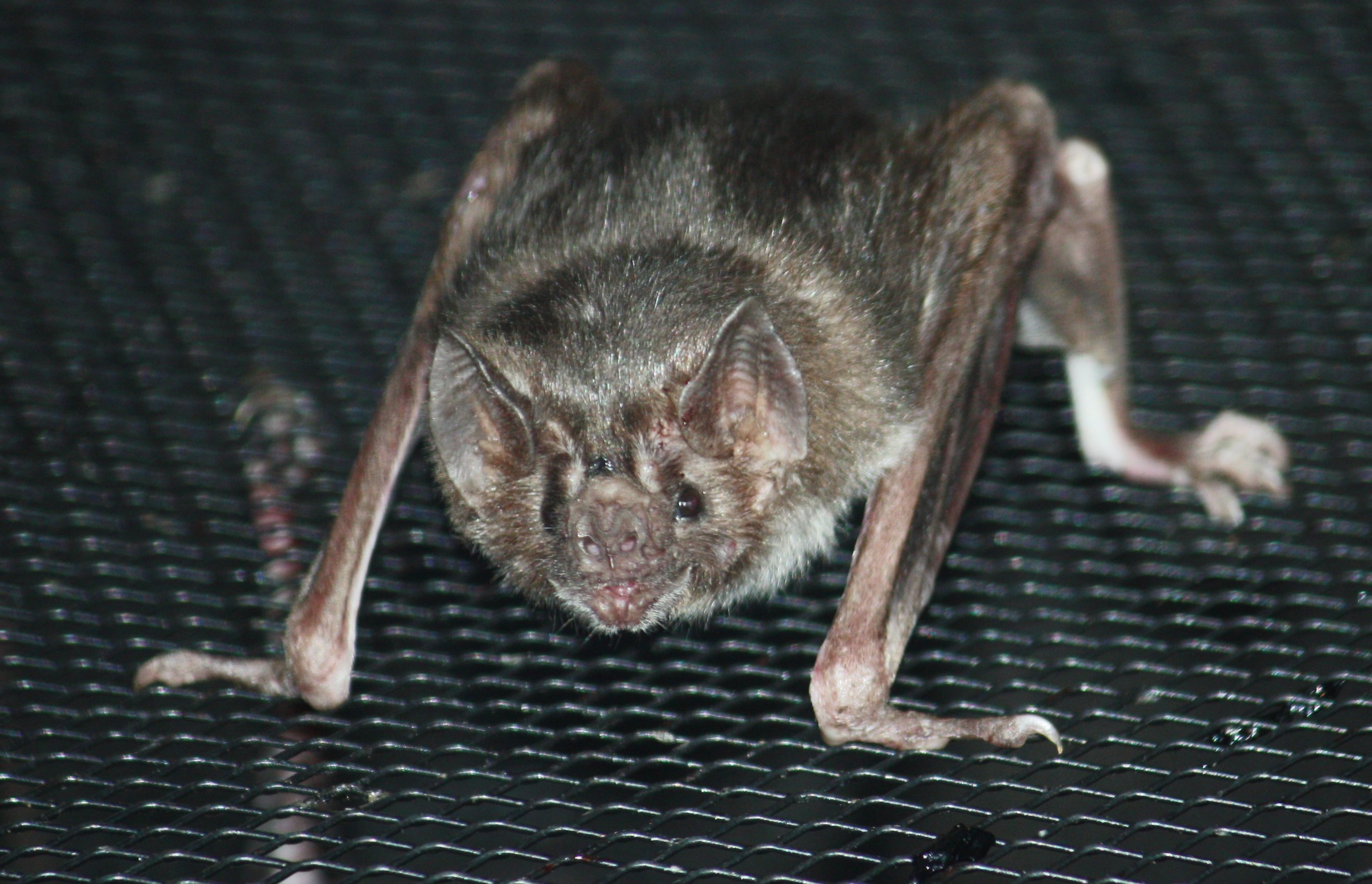 While no one I know personally has ever been infected with rabies, I do recall a tale of my father donning a racing helmet and wielding a tennis racket to rid our house of a bat. Presumably, he was protecting us from rabid bat fangs. Rabies is relatively well controlled in the US through pet vaccinations and early prophylactic care when someone is bitten by a potentially rabid animal. While rabies as a health concern in the US may be fading, rabies as a molecular biology tool is a cutting edge new technology. Continue reading “Rabies, doing what it does best”
Making mouse diseases more like human diseases
 It is almost impossible to study basic cellular mechanisms in humans. This is why scientists spend so much time trying to find animal models for human diseases. Sometimes, there is a naturally occurring disease in animals that is analogous to a human condition. Other times, the animal’s genome can be modified to replicate mutations that are found in human diseases. However, despite the best efforts of many scientists, models often fail to faithfully replicate all aspects of human disease.
This led to the creation of a new mouse model of spontaneously developing Creutzfeldt-Jakob disease (CJD) by the Lindquist lab at MIT. Continue reading “Making mouse diseases more like human diseases”
You carry your GPS with you

Somehow, when you get out of bed in the middle of the night, you manage to remember where the end of the bed is, how far it is to the bathroom and where the light switch is. You have developed a complex spatial memory of your house, and our brains are filled with countless other spatial maps (maybe some of us have fewer….cough, cough). How exactly does your brain encode this specific spatial information?
It turns out that is it using cells called grid cells, which work much like their name suggests. These neurons are spread out in a grid pattern in your brain and will generate an electrical spike in a pattern related to the direction you are moving. While this has been known about rats, mice and bats it has only recently been confirmed in humans. While fMRI experiments have suggested the existence of such cells, the only way to confirm that individual cells are spiking in response to a directional task is to make electrical recordings from them.
 The Finch and Pea