They have been removed, in the spirit of the open source movement, for the advancement of electric vehicle technology…Tesla will not initiate patent lawsuits against anyone who, in good faith, wants to use our technology.
–Elon Musk (emphasis mine)
The potential fly in the ointment is the phrase “in good faith”. They are retaining the right to enforce their patents, but choosing not too. It makes Musk’s definition of good faith and the consistency of that definition quite important. Continue reading “Mi Patent, Su Patent?”
Unlike the widespread reporting of the credulous media, the human skull is not specifically evolved to take a punch from other humans. Brian Switek explains the many problems with this hypothesis at National Geographic’s Phenomena. I admit that I thought, throughout my rugby career, that my head, and only my head, had evolved to be punched. It turns out that the way I played rugby had evolved to make people want to punch me in the head1. I was a particularly annoying person to play rugby against2.
Fortunately, human skulls are pretty robust in some key ways. It is just very unlikely that they got that way due to the evolutionary pressure of hominids punching each other in the noodle. One of the key problems with the punching hypothesis is that it is pure conjecture (and unreasonable conjecture, at that) without supporting experimental evidence. What would it take to really test the punching hypothesis?
WARNING: This post may contain a Game of Thrones spoiler “below the fold”.
Art, by a kid (mine) that was hung on a wall (mine)
Those of us in online environments are familiar with the concept of attention allocation or attention as currency. A new research paper in Psychological Science argues that off-topic wall decorations in the classrooms of young students distract from the learning.
I’m not a psychology researcher. So, I can’t and won’t comment on the merits of the work as it relates to the body of related research. From reports, the study does use a small sample size (24 students in one class) and the same students in both conditions. So, don’t start yelling at your kid’s kindergarten teacher based on this study alone.
As the parent of a kindergartener and a recently graduated kindergartener, I was a bit surprised to discover that there was debate about the decoration of classroom grounds on its educational merit. Here, competition for kindergarten students is pretty fierce. At the same time, we parents are pretty irrational consumers of education as a product.
Walls covered in bright colors and cute art by little kids? That makes a classroom look fun, inviting, and warm. It distracts us too; and, before you know it, we are signing applications and deposit checks.


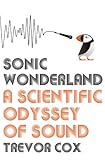 This week, Science for The People is exploring the science of sound and hearing. They talk to Trevor Cox, Professor of Acoustic Engineering at the University of Salford, about his book “Sonic Wonderland: A Scientific Odyssey of Sound.” And they speak to Andrew Wise, Senior Research Fellow at Bionics Institute, about a gene therapy technique to enhance the function of cochlear implants.
 The Finch and Pea