
Letter from Senator Lyndsey Graham on Net Neutrality

If Senator Tim Scott’s form letter on Net Neutrality didn’t say much, Senator Lyndsey Graham’s says even less. Unlike Senator Scott’s, only the first paragraph is subject specific. The final three are his form letter boilerplate. Senator Graham isn’t staking out a position. He is simply defending Congress’ power relative to the FCC, something he is usually loathe to do when it comes to the executive branch. Congress can act to declare internet service providers as common carriers; but will they?

I’d like to add a brief moment to address Senator Graham’s office on the matter of etiquette. Senator Graham and I are not on a first name basisContinue reading “Letter from Senator Lyndsey Graham on Net Neutrality”
Letter from Senator Tim Scott on Net Neutrality

As is my habit, I publish the form letters I receive from my elected representatives. On that front, Net Neutrality is the gift that keeps on giving – if you enjoy letters that don’t say anything – such as this missive from Senator Tim Scott. My general interpretation of this is that while Senator Scott is generally in favor of Net Neutrality, he is not going to spend any political capital flexing his muscles on behalf of the FCC’s reach or to push Congress to define internet service providers as common carriers. Thanks to rules about local internet service providers, the diversity of competition, which is key to Senator Scott’s hope for the future, has been decreasing, especially for those of us living in small towns in South Carolina. Continue reading “Letter from Senator Tim Scott on Net Neutrality”

Geology of Thrones

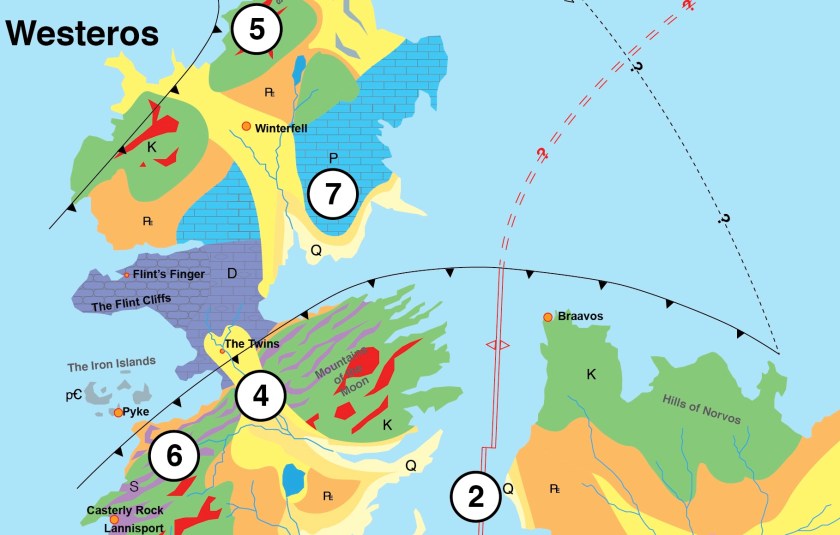
The folks at Generation Anthropocene have created a geologic history of the fictional world in George R.R. Martin’s Game of Thrones. They walk us through eight eras of geological development that explain the environment in which all the characters you like die horrible (plus one more explanation of how big the planet is). Each post helps you understand both geology and the Game of Thrones world a bit better.

Generation Anthropocene: ALL OF THE MAPS CREATED FOR THIS PROJECT ARE BASED ON MAPS CREATED BY JONATHAN ROBERTS, TEAR, AND THEMOUNTAINGOAT.  CERTAIN ARTISTIC DETAILS (SUCH AS MOUNTAIN RANGES) HAVE BEEN COPIED AND ADAPTED TO SUIT THE NEEDS OF THE GEOLOGIC RECONSTRUCTIONS.
Generation Anthropocene: ALL OF THE MAPS CREATED FOR THIS PROJECT ARE BASED ON MAPS CREATED BY JONATHAN ROBERTS, TEAR, AND THEMOUNTAINGOAT. CERTAIN ARTISTIC DETAILS (SUCH AS MOUNTAIN RANGES) HAVE BEEN COPIED AND ADAPTED TO SUIT THE NEEDS OF THE GEOLOGIC RECONSTRUCTIONS.

If you are interested in how people got around Westeros, you should check out Michael Tyznik’s stylish transit map.

5 Very Good Questions

Nature has published a comment by William P. Hanage suggesting ways to inoculate oneself against the hype associated with the burgeoning field of microbiome studies. As Bethany Brookshire (aka, SciCurious) notes, these questions should be applied to any and all research, not just the microbiome.

1. Can experiments distinguish differences that matter?
2. Does the study show causation or just correlation?
3. What is the mechanism?
4. How much do experiments reflect reality?
5. Could anything else explain the results?
paraphrased from William P. Hanage in Nature

Mythology is Gross

Genealogy of the Olympians in Greek Mythology (Wikipedia)
The authors of this encyclopedia do a good job of illustrating that myths have many variant versions.

Samuel Arbesman has a fun, if creepy, post over at Wired on calculating how inbred the Greek gods were. Previously, here at The Finch & Pea, we’ve taken on the inevitable inbreeding that must have occurred in Adam and Eve’s family, which provides some additional explanation of what exactly geneticists mean by “inbreeding coefficient” and what the consequences of inbreeding can be.

I’ve thought about taking on the genetics of the Greek gods before on these grounds, but have always gotten overly hung up on the many variants of the origin stories that often exist for each god. For the gods’ sake, Aphrodite has an origin story that has her arising as a female clone from Uranus’ castrated testicles (most likely due to the SRY gene never being expressed during development).