The Dress

I was not particularly interested in “The Dress” for I had long ago accepted the fickle nature of both human and technological perception. That, however, does not mean one should dismiss* “The Dress” as trivial, a distraction, or a waste of time. Andrew David Thaler expresses the key point of this social phenomenon extremely well:

Screen Shot 2015-03-06 at 11.34.35 AM

*One should probably dismiss all the cheap marketing attempts to capitalize on “The Dress”, as well as Time naming the original poster as one of the 30 Most Influential People on the Internet.

Book Punks

Mike was recently interviewed by Book Punks about his series of reviews of post-apocalyptic fiction through history (#apocalypsethen) and how this fiction speaks about our relationship with science.

I love the genre because the apocalypse is a fascinating thought experiment: what happens when all of the science and technology that we use to mediate our interactions with nature and with each other disappears? What happens to human nature when it confronts the raw forces of nature without the intervention of technology? – Mike White

Mike also does not give himself very good odds of survival in a post-apocalyptic scenario, which is a bit depressingly realistic (personally, I think Ben is the most likely of The Finch & Pea staff to survive – dude can make good food out of anything, even cooking over a campfire).

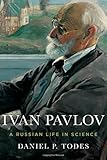
Science for the People: Pavlov

sftpThis week, Science for the People will learn about the life and work of a groundbreaking psychologist whose work on learning and instinct is familiar worldwide, and almost universally misunderstood. They spend the hour with Daniel Todes, Ph.D, Professor of History of Medicine at The Johns Hopkins University, discussing his book Ivan Pavlov: A Russian Life in Science.

*Josh provides research & social media help to Science for the People and is, therefore, completely biased.

Midden DNA

Some people don’t like the term “junk DNA”, because they assume all that extra DNA in the human genome must be doing something. Some of those people are tenured faculty, members of the ENCODE project, and have trouble penning reasonable definitions of biological function.

Other people have experimental data to show that random sequences of DNA can be biochemically active without physiological effect, understand that the genome’s complexity resists easy classification, and can, simultaneously, understand that these swathes of non-functional DNA are valuable because they contain the history of our evolution.

In that light, I am going to propose that we abandon the misleading phrase “junk DNA” and adopt a word from archaeology used to describe piles of informative waste: midden*.

A midden…is an old dump for domestic waste which may consist of animal bone, human excrement, botanical material, vermin, shells, sherds, lithics (especially debitage), and other artifacts and ecofacts associated with past human occupation. The word is of Scandinavian via Middle English derivation, but is used by archaeologists worldwide to describe any kind of feature containing waste products relating to day-to-day human life. – Wikipedia

Now, if you want to call it midden DNA or the DNA midden, that I am happy to leave up to personal taste and style.

*A potential confusion might arise when researchers sequence DNA from biological samples in an actual midden heap – a risk with which I am willing to live.

#SciArt Tweetstorm

Rainbow Microbes by Michele Banks

The Grand Poobah’s of science art at the Symbiartic science art blog have declared 1-7 March to be the week of the science art tweetstrom using the hashtag #sciart.

Here at The Finch & Pea we currently have 181 “Art of Science” posts (well 182 now), or 30 per day for the the rest of the week. That should keep y’all busy.