Sunday Science Poem: Emily Dickinson and the Experiment of Consciousness

Emily Dickinson’s # 822
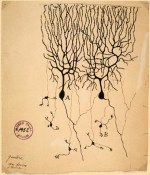
PurkinjeCellHow much consciousness is necessary for experience? Does a lobster or E. coli have experience, or does experience exist only with more awareness, awareness not just of the environment, the direction of a food source or a competitor for a mate, but awareness of self, of the passage of time, of the past, and of the alternative possibilities of the future?

In # 822, Emily Dickinson describes experience as an experiment in consciousness. Each of us, as a consciousness, is aware of environment (‘the Sun’), our fellow species members (‘Neighbors’). We share this basic level of awareness with much of the living world. A much rarer awareness, probably existing only in some vertebrates, is self-awareness (‘itself’ is used five times in this poem of 67 words), and awareness of death.

Beyond self-awareness, we have a capability for mental experimentation that is only possible with language, and is thus probably unique among organisms. Here is how Daniel Dennett illustrates this capacity: Continue reading “Sunday Science Poem: Emily Dickinson and the Experiment of Consciousness”

Power Up!

Blackboard with mathematics sketches - vector illustrationStatistical Power! It sounds like something a math textbook superhero would exclaim while collecting data points. I’ll be honest, even though I have a PhD, my stats background is very weak. My college major required all sorts of delightful calculus and differential equations but I’ve never taken a statistics course. My graduate work required only the most basic of statistical analysis (which lucky for me, our software could handle without my input). It turns out that I am not alone, and this is a major problem. Continue reading “Power Up!”

Breaking in order to Build: Part 2

Image Courtesy of Michael Schmidt

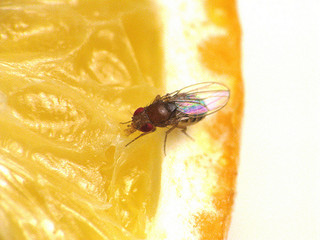
I recently wrote about how breaks in neural DNA may be part of the process our neurons use to generate new memories. About the same time, I found a new study in Science that addressed the role of the genome in neurons from a different angle. It turns out that Drosophila (fruit flies) have particularly heterogeneous genomes in the neurons associated with learning and memory. Now let me back up and explain exactly what I mean by heterogeneous genomes and how that can affect learning and memory. Continue reading “Breaking in order to Build: Part 2”

Smarter mice are safer than smarter sharks

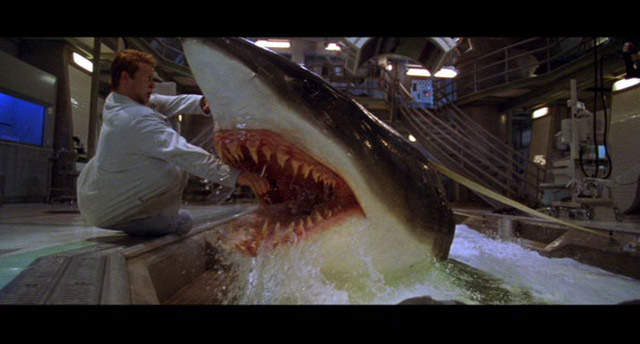
deep blue seaI don’t know if you’re familiar with the cinematic gem Deep Blue Sea, but as far as ridiculous neuroscience sci-fi horror movies go, it is awesome. Let me summarize the plot for you. A group of researchers is working in an underwater lab trying to cure Alzheimer’s. Their proposal involves genetically engineering three Mako sharks to enlarge the size of their brains. Somehow, the researchers plan to harvest these huge brains and then use the tissue to cure Alzheimer’s…  Lets just say, they didn’t cure Alzheimer’s and spoiler! Samuel L. Jackson gets eaten in one of cinema’s greatest death scences. Continue reading “Smarter mice are safer than smarter sharks”

Getting from A to B

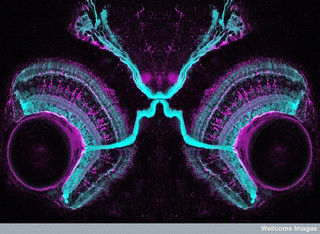
Rebrafish retinal cells, optic nerves, and glia are labeled. Retinal cells send projections through the optic nerve to their targets in the brain.Dr Kara Cerveny & Dr Steve Wilson Wellcome Images
Visual System of 4 day old zebrafish
Dr Kara Cerveny & Dr Steve Wilson Wellcome Images

How do individual cells find their way in the complex environment of a human body or a small worm? Some cells need to navigate from where they are born to where they are needed (like immune cells). Other cells need to send out a very long extension to make a contact with a very specific target (like a neuron sending an axon through layers and layers of other neurons to reach its connection in a circuit). I used to study a very specific example (one motor neuron connecting to one specific muscle) of this type of navigation in the fruit fly. Continue reading “Getting from A to B”