
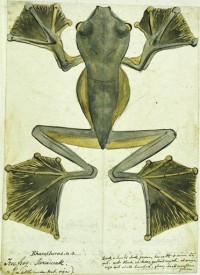
Last week, the Natural History Museum in London unveiled a digital archive of the letters of 19th century naturalist Alfred Russel Wallace, the co-discoverer with Charles Darwin, of evolution by natural selection. The archive, introduced on the 100th anniversary of Wallace’s death, naturally focuses on his writings, but also contains some paintings and drawings. Wallace, who spent years in far-flung places collecting specimens, didn’t have the option of pulling out a camera to document his finds. He often sketched or painted his discoveries, including this lovely watercolor of a flying frog which he painted in Sarawak. It may not be Audubon-level in its artistry and detail, but it’s a useful scientific illustration which also has great personality and charm.
Tag: Charles Darwin
Science Tourist: Sedgwick Museum in Cambridge
I’ve lived in Cambridge, UK, for the past three years. There are many things I don’t like about Cambridge (and I’m leaving soon) but that only makes me more appreciative of the few places I do like very much, and one of those is the Sedgwick Museum of Earth Sciences.
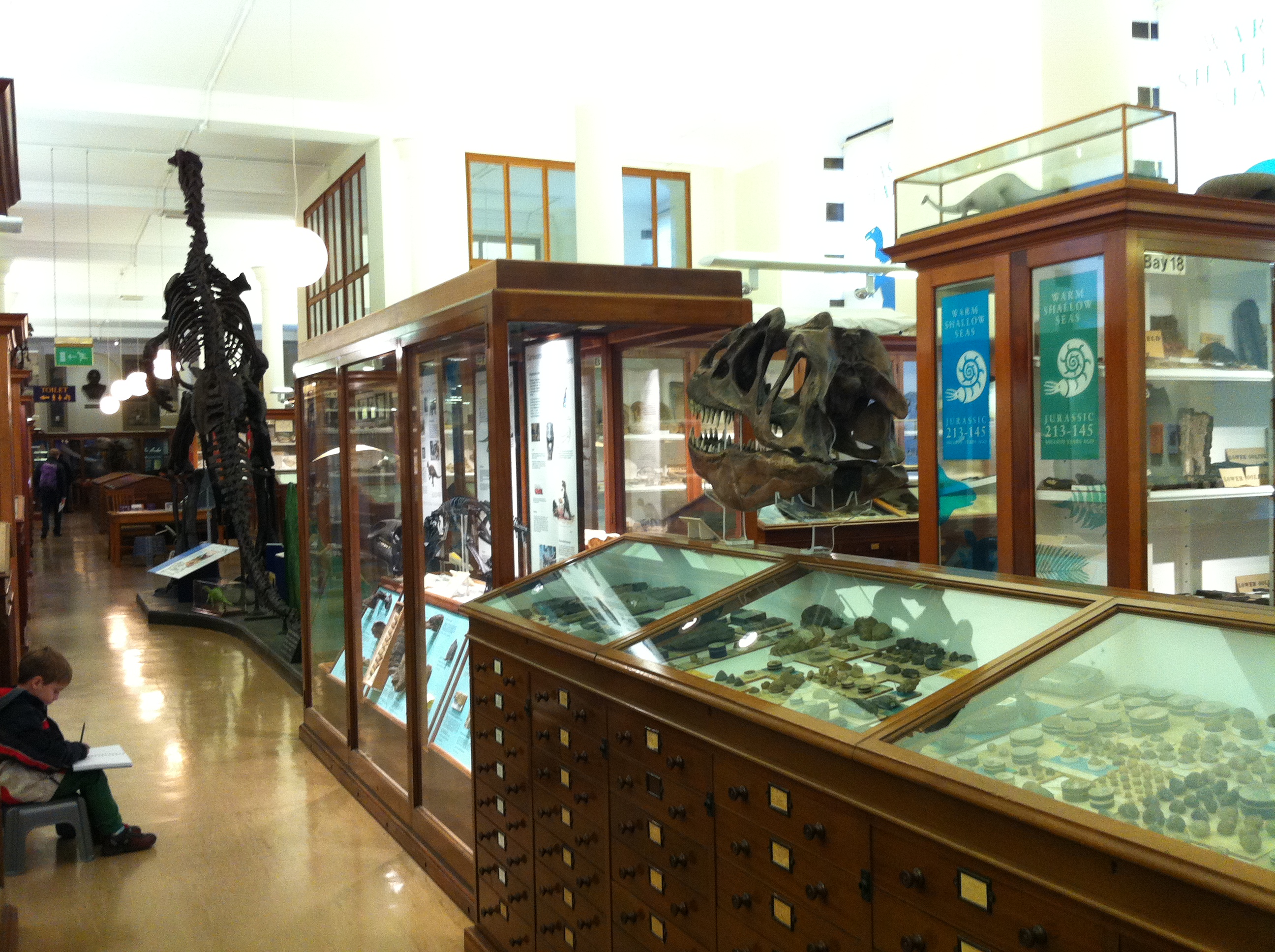
The Sedgwick Museum is one of the museums of the University of Cambridge. It’s located on one floor of the Department of Earth Sciences, right in the centre of town. The collection of fossils and rocks is on display along two corridors, in imposing cabinets.
This could easily have been a terribly boring setup, but the museum has managed to make the most of the small space, and turned the entire museum into a geological timeline! You enter the museum in the Cretaceous Period (65-145 million years ago), and if you turn right you can walk all the way back in time to the Cambrian explosion, 500 million years ago. Along the way, you can see fossils from all over the world. Continue reading “Science Tourist: Sedgwick Museum in Cambridge”
Darwin and Melville in the Galapagos
A little preview from a forthcoming Darwin Day essay on The Voyage of the Beagle, here are the contrasting styles of Darwin and Melville in their descriptions of the Galapagos. Melville’s imagery is impressionistic and improvisational, while Darwin’s approach to imagery depends, naturally, on observational precision and tight organizations of his thoughts, which can be just as successful as Melville’s more consciously literary style.
Melville’s description of the Galapagos from The Encantadas: Continue reading “Darwin and Melville in the Galapagos”
Natural Selection Day
Today is the 153rd anniversary of the theory of evolution by natural selection. Continue reading “Natural Selection Day”

