 Within science fiction, there is a great tradition of the oddball post-apocalyptic novel, pioneered by Philip Dick in Dr. Bloodmoney (1965) and Deus Irae (with Roger Zelazny, 1976). It is a tradition still thriving today in books like Jonathan Lethem’s Amnesia Moon (1995) and Ryna Boudinot’s Blueprints of the Afterlife (2012), and it includes Denis Johnson’s lyrical Fiskadoro. The oddball post-apocalyptic novel is not concerned with the gritty realities of survival; instead, it takes place in a less lethal and much more hallucinatory setting that is populated with various hucksters, grotesques, dreamers, and generally confused people who are trying to figure out just what the hell is going on.
The post-apocalyptic setting of Fiskadoro is a group of small fishing communities in the paradise of the Florida Keys, about sixty years after a nuclear war destroyed North America and probably much of the rest of the world. Life here is based on scraps of the pre-holocaust world: physical scraps, scraps of language, scraps of identity, and scraps of awareness of the birth of the present world. Salvaged car seats make up the living room furniture, and people speak in a combination of broken English and Spanish. The residents of these villages piece together their identities by assuming names of celebrities nobody can any longer recall, or grandiose but largely irrelevant titles like ‘Manager of the Miami Symphony Orchestra’. Continue reading “The End of the World, 1985: A Post-apocalyptic tropical paradise”


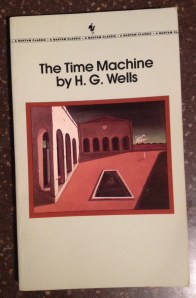

 The purpose of the
  Arthur C. Clarke didn’t write write typical post-apocalyptic stories, but he sure liked to write about dying worlds, long-abandoned constructions, last cities, the end of humanity, and vast, empty spaces. In his stories, humans who face extinction, or who live as the last holdouts on a barren Earth, are not doomed. Instead, they’re about to have their consciousness expanded as they become tied into a grand galactic narrative. But unlike other galactic narratives like Asimov’s Foundation trilogy, which treat the galaxy or universe as a gigantic platform on which to re-stage Edward Gibbon, Clarke keeps his universe unfailingly mysterious. Pursuing that mystery is humanity’s noblest aim – it is an essentially religious imperative that becomes a means of transcendence.
 The Finch and Pea