
 Lately I’ve been reading enough SF from small independent presses for a review series. And so over the next few weeks it will be Indy SF Month here at The Finch and Pea, which will include one of the recent nominees for this year’s Philip K. Dick award, a fascinating, non-horror zombie apocalypse from one of my new favorite small presses, and a collection of fascinating stories by a long-time local (St. Louis) SF author.
First in line is M.J.A. Watney’s Kybernos, a self-published work that was a quarter-finalist in 2014 Amazon’s Breakthrough Novel Award competition. Watney provided me with an ARC of this intriguing work, which, like a good fraction of the indy SF we’ll discuss in the upcoming weeks, is better described as speculative rather than science fiction.
Kybernos is part of a tradition of SF stories that play with the direction of time, not time travel so much as questions of reversibility and causality. Hard SF usually comes to mind when we think of this theme – Gregory Benford’s great classic Timescape explored the idea of trying to change the present by sending messages to the past via tachyons, faster-than-light particles that travel backwards in time. Unlike Timescape, Kybernos is not hard SF, but it explores some of the same questions about alternate time trajectories and the reversal of cause and effect. Continue reading “Indy SF Month: M.J.A. Watney’s Kybernos”
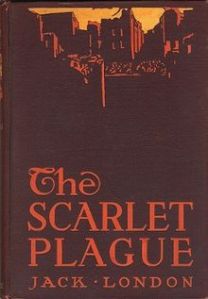 We’re all familiar with classic scenes of a brutal post-apocalyptic world like this: A group of refugees from the pandemic is holed up in an abandoned building with a cache of food and arms, firing on a gang of assaulting raiders. Or, a former professor of English Literature, clad in goat skins and huddled around a fire, is telling his dirty, illiterate grandsons about life before civilization vanished.
 Back in 1805, the French priest de Grainville
 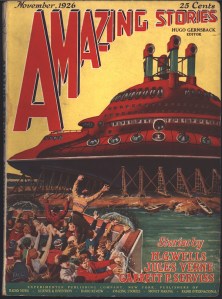 1912 was a good year for science fiction — according to some, it was
 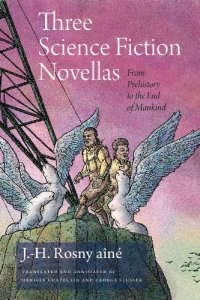 As I
As I  The Finch and Pea