The Art of Science: Biologically-Enhanced Fashion

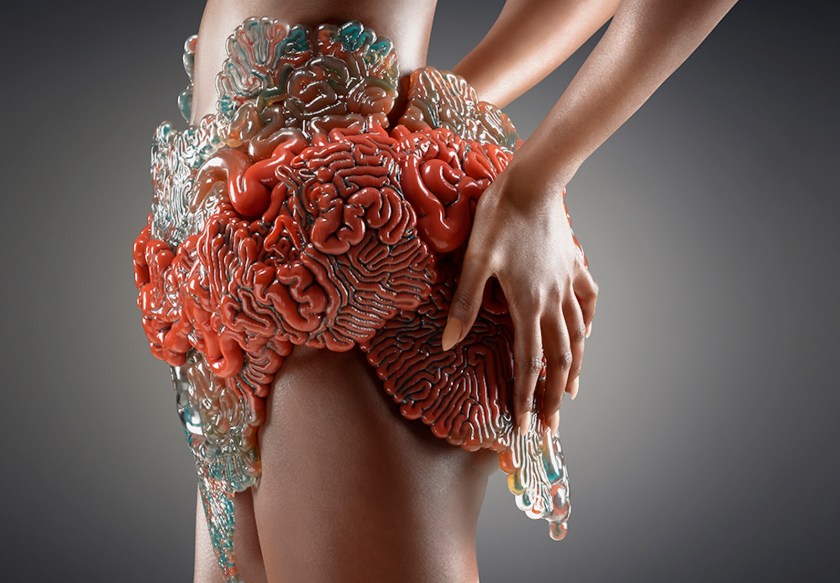
Mushtari, from the Wanderers project

This is the Björkiest thing I have ever seen.  Wanderers,  a collaborative project to create digitally grown and 3d printed wearables that could embed living matter, looks like a perfect fit for the Icelandic chanteuse, who is famous for her biophilia and wildly adventurous fashion sense.

A team led by Neri Oxman of MIT and Christoph Bader & Dominik Kolb of Deskriptiv is working on a computational growth process which can mimic a wide variety of growing structures.  Based on growth patterns found in nature, computer models create shapes that adapt to their environment.  Once a design is generated, a 3D printer creates a wearable structure.

Filip Visnjic at Creative Applications Network explains: “Starting with a seed, the process simulates growth by continuously expanding and refining its shape. The wearables are designed to interact with a specific environment characteristic of their destination and generate sufficient quantities of biomass, water, air and light necessary for sustaining life: some photosynthesize converting daylight into energy, others bio-mineralize to strengthen and augment human bone, and some fluoresce to light the way in pitch darkness.”

In the long term, the team hopes to produce 3D printed microfluidic devices through which to pump living matter (such as photosynthetic bacteria) to bring the Wanderers to life. In the short term, they’ve created an amazingly hypnotic video showing how the computer simulates growth patterns (watch it here) and some stunning molded plastic breastplates and even a skirt. The pieces, which look a lot like glistening external brains and intestines, are more attractive than I’m making them sound.  And sure, they’re wearable – if you’re Björk.

More photos and information about the Wanderers project are here.
 

The Vatican Observatory

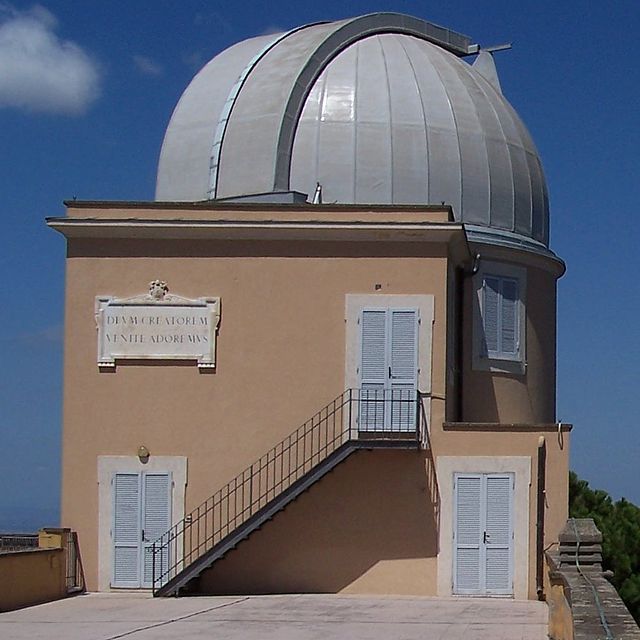
Vatican Observatory at Castel Gandolfo

Did you know that the Vatican has a science institute?

When the pope recently announced that he doesn’t see a conflict between evolution, the Big Bang and the teachings of the catholic church, some people reacted with surprise. It’s a lot less surprising when you realize that the Vatican has employed astronomers for centuries.

Dating back to at least the calendar reform of 1582, Vatican astronomers have studied the sky. These days they’ve got the calendar pretty much figured out, but they have enough work on their hands. They hold conferences and summer schools, study nearby galaxies, and – something that might seem surprising for an institute with religious ties – they search for extraterrestial life.

The Vatican Observatory has two locations: One is at the Pope’s summer residence Castel Gandolfo, near Rome, and the other one is at Mount Graham Observatory in Arizona. There is no longer an observatory in Vatican City itself, because Rome’s smog and city lights interfere with the view.

PopeScope_GroundLevel
Vatican telescope at Mount Graham Observatory in Arizona

Visiting the observatories is not straightforward. The location at Castel Gandolfo does not have regular tours, and is inaccessible when the pope is using his summer home. The Arizona site can be visited as part of an organised tour, but only on particular days.

Image credits: Castel Gandolfo photo by Wikimedia user Rb85z37, licensed under CC-BY-SA 3.0. Mount Graham photo by Wikimedia user GreatInca, licensed under CC-BY-SA 3.0.

What Jim doesn’t know could fill a [INSERT REALLY BIG THING HERE]

Laura Helmuth pretty much nails it in her Slate piece on the auction of James Watson’s Nobel prize medal:

Watson…knows fuck all about history, human evolution, anthropology, sociology, psychology, or any rigorous study of intelligence or race. – Laura Helmuth

HT: Deborah Blum

“James Watson deserves to be shunned”

The phrase “must read” gets used too lightly. In this case, however, I must insist you read Adam Rutherford in The Guardian. Rutherford summarizes why we should respect the scientific discovery of James Watson, why we should shun the failed humanity of the man, and why this is far from a unique problem in the history of science.

Here’s our challenge: celebrate science when it is great, and scientists when they deserve it. And when they turn out to be awful bigots, let’s be honest about that too. It turns out that just like DNA, people are messy, complex and sometimes full of hideous errors. – Adam Rutherford

HT: Alok Jha

Science Caturday: Small Business Caturday

giardia


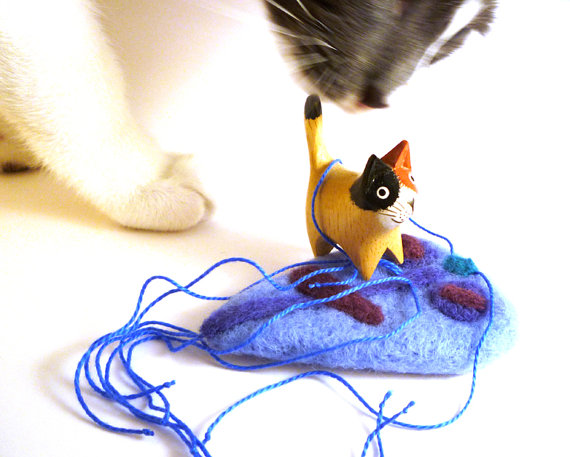
Today is Small Business Caturday, a day set aside for holiday shoppers to discover and support cat-owned businesses.  One of our favorites is Mycrobe Catnip, an etsy store devoted to creating geeky catnip toys that are equally irresistible to cats and science-obsessed humans. Mycrobe was started by Talia Jewell, a scientist who turned her felting hobby into a side business with the help of her feline companions. She makes catnip toys in the shapes of UFOs, fish, birds, insects and – coolest of all – microbes, including this amazing giardia parasite.  You can seriously indulge your feline companions with a Mycrobe Geeky Catnip Toy of the Month Club membership, which might include anything from bugs to rockets.