Apocalypse 1912: Salvation Through Faith in Science

Garrett P. Serviss’ The Second Deluge (1912)

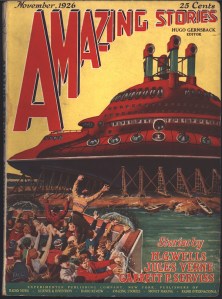
Servissamazingstories21912 was a good year for science fiction — according to some, it was the best year. Certainly for pulp science fiction, it was a landmark year. Although the first dedicated pulp SF magazine, Amazing Stories, wouldn’t appear for more than a decade, two of the foundational texts of pulp SF were published in 1912: Edgar Rice Burroughs’ A Princess of Mars, which began as the serial “Under the Moons of Mars” in February, and Hugo Gernsback’s Ralph 124C 41+, whose last installment was published in March.

Another contributor to this early pulp ferment, less memorable than Burroughs or Gernsback, was the American journalist Garrett Serviss. Serviss was a popular science writer who had also written an 1898 sequel to Wells’ War of the Worlds, featuring an invasion of Mars led by none other than Thomas Alva Edison. The Second Deluge, serialized in 1911-12, is a pulpy, early instance of a classic storyline that crops up over and over again post-apocalyptic fiction: Noah’s Ark. Continue reading “Apocalypse 1912: Salvation Through Faith in Science”

The Art of Science: Turning Pollution into Pigment

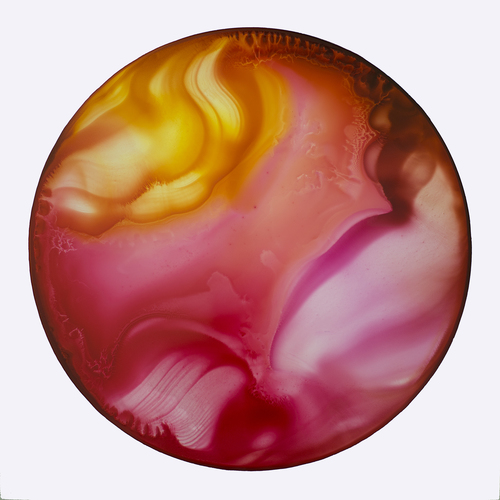
John Sabraw, Chroma S1 12, 2013, Mixed media on aluminum composite panel

Need proof that you can make art out of almost anything? Artist John Sabraw creates beautiful paintings using the byproducts of acid mine drainage. Sabraw, an artist and professor at Ohio University, works together with OU chemists and engineers to turn the toxic runoff from abandoned mines into pigments, which he then makes into paints and uses to create his artwork.

Ohio has miles of abandoned coal mines filled with metal dust. The mines eventually fill with water, which becomes acidic as the oxygen in it reacts with sulfide minerals in the rock, and picks up high concentrations of iron and aluminum. This water then spills out into streams, polluting them and killing wildlife.

An environmental engineering professor at OU, Guy Riefler, worked with some students to develop a novel approach to this problem – to take this toxic runoff and turn it into paint. This is not as crazy as it sounds – many commercial red and yellow paints are made from ferric oxyhydroxides, one of the major components of the polluted water. Riefler and his students worked on processing and refining the runoff into pigment (there’s a video here that goes through the main steps). Then they approached Sabraw, who had experience in making paints from scratch, to be a product tester.

The rest is not so much history as, well, science and art. Sabraw created a range of both oil and water-based paints from the runoff and now uses them to make all of his paintings, which have been featured in numerous gallery shows. You can see his work in an upcoming show at Chicago’s McCormick Gallery from March 6- April 25, 2015 or at his website.

Riefler and Sabraw are continuing to work on the paints, and hope to create a viable commercial line, with proceeds going to clean up polluted streams in Ohio.

Grant Museum of Zoology

For my last science travel outing of the year, I went to the Grant Museum of Zoology, during lunch break of my last work day of 2014.
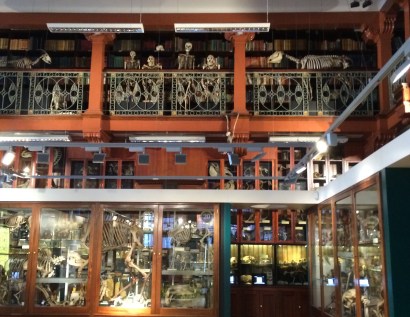
2014-12-19 13.31.22

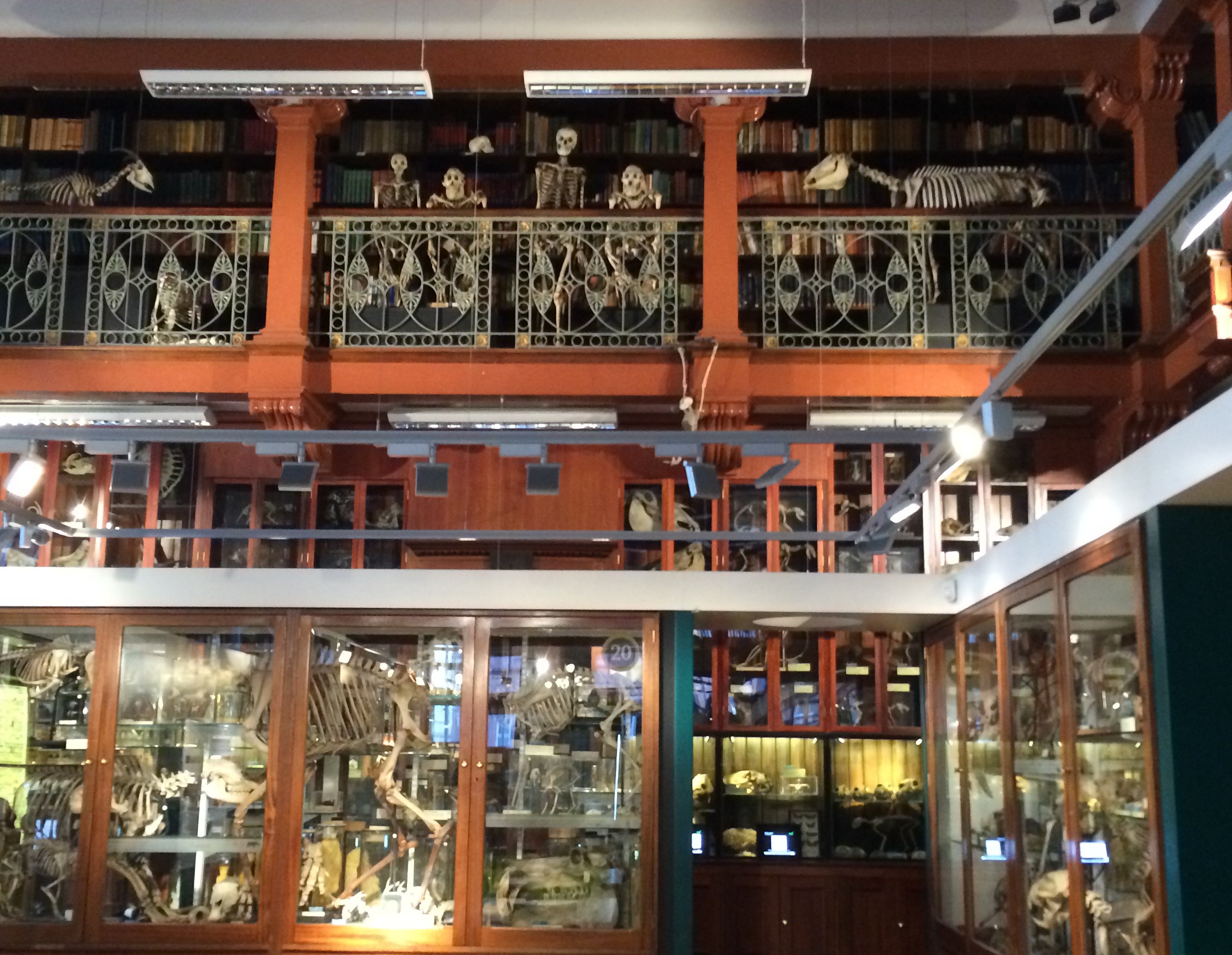
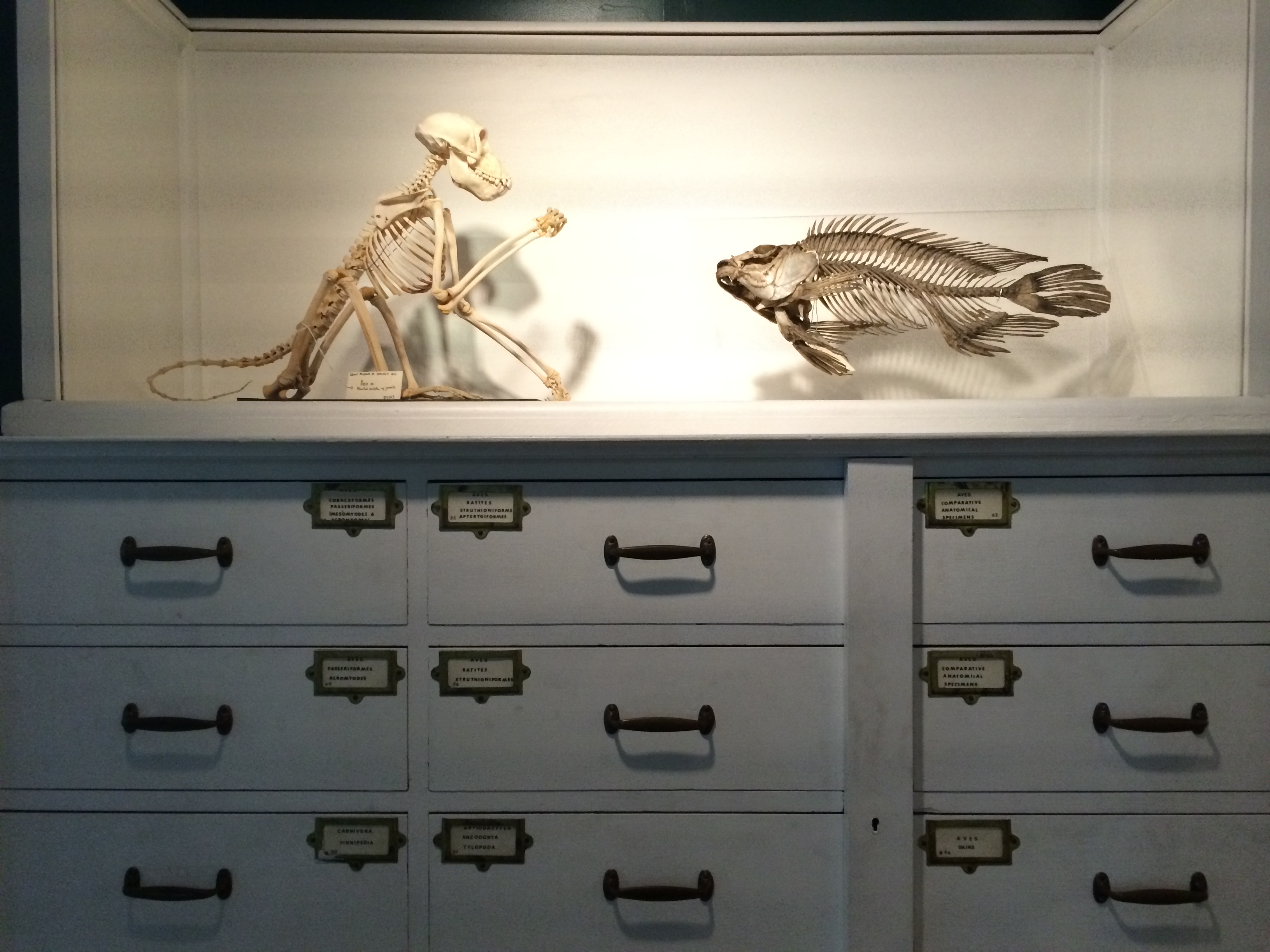
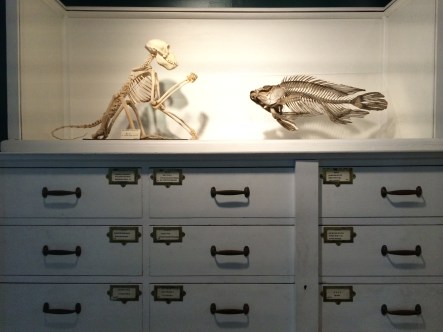
The Grant Museum of Zoology is a natural history museum of University College London. As a university museum, it’s not very big – only spanning one room – but there is a lot to see. It has samples from 67,000 species, including one of only seven existing quagga skeletons in the world.
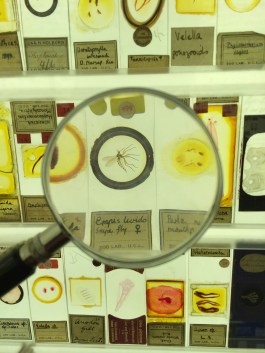
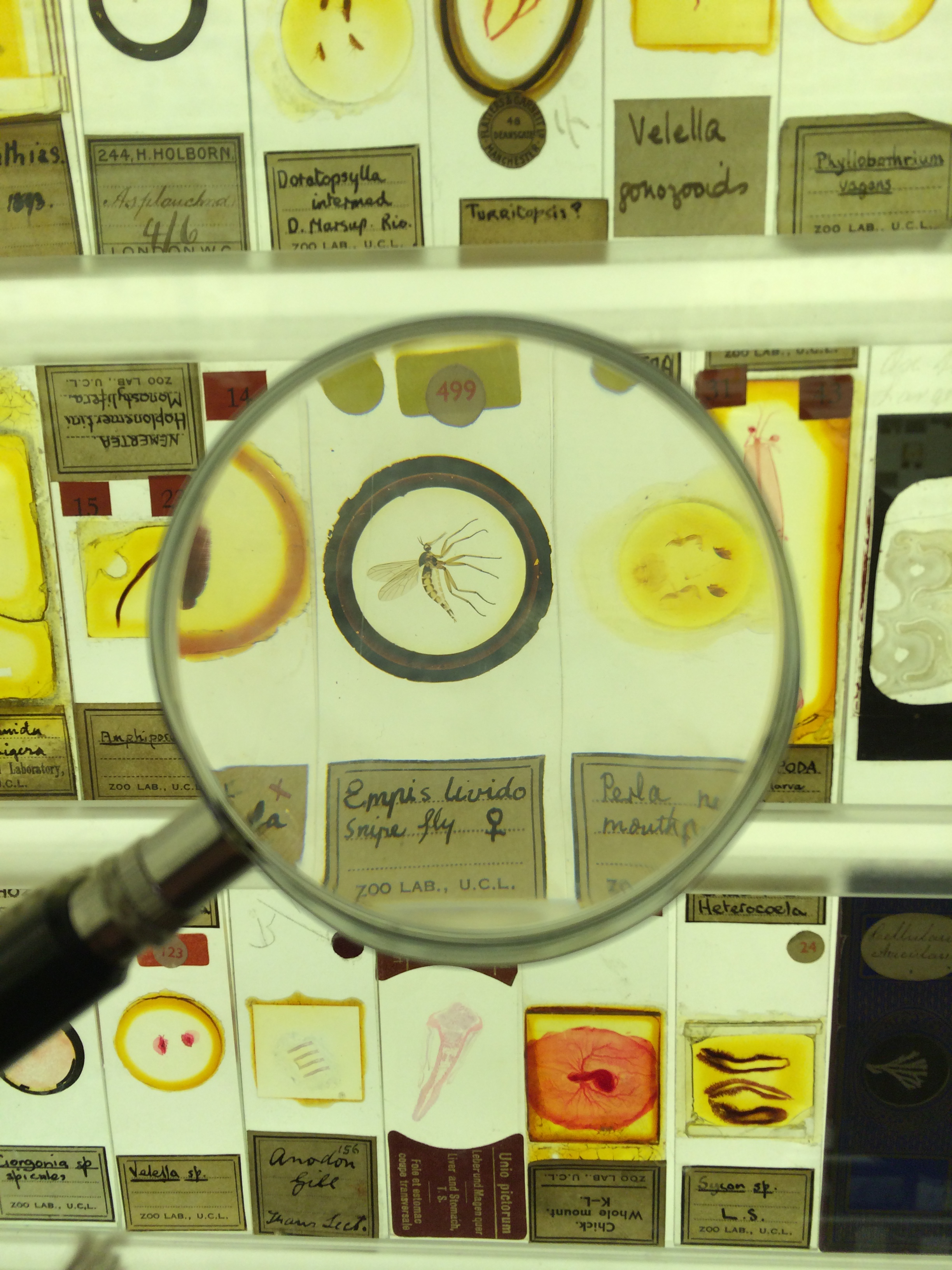
2014-12-19 13.40.46Elsewhere, there’s a little alcove that’s covered floor to (mirrored) ceiling in old microscope slides, which you can take a closer look at with the provided magnifying glass. It made me feel like a 19th century biologist!

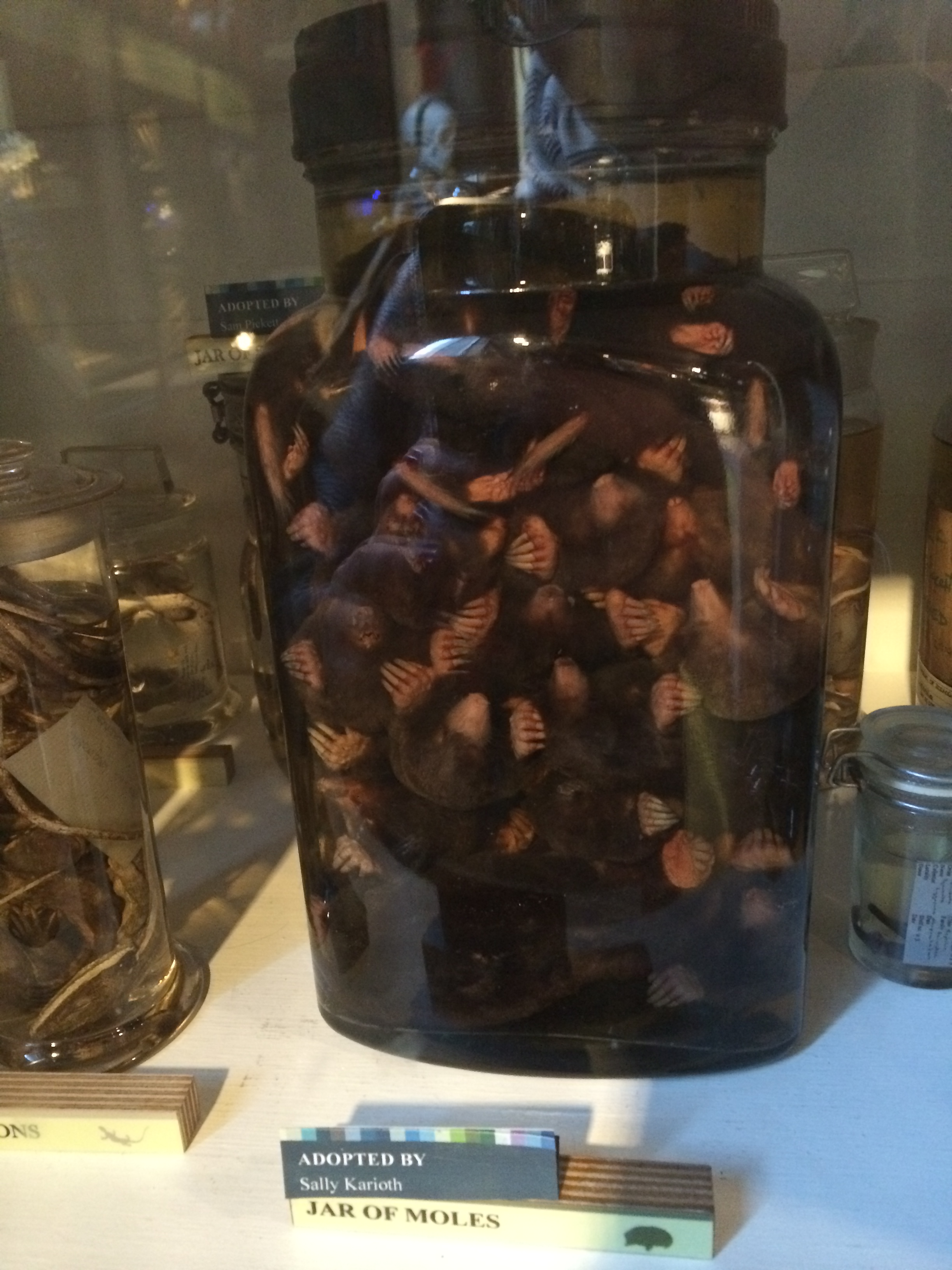
The museum was founded in 1828 as a teaching museum, so some of the specimens were prepared for educational purposes, which can make them a bit creepy-looking. Monkey heads in jars, that sort of thing.

Today, the museum still has an educational purpose. It’s the only zoological university museum in London, and offers teaching support to university groups at UCL and beyond, who want to use the samples in the classroom, as well as to high school, artists, film crews, and others in need of animal anatomy samples.

The museum is currently working on continued preservation of some of its largest skeletons as part of the “Bone Idols” project. When I visited, the rhino was being worked on.

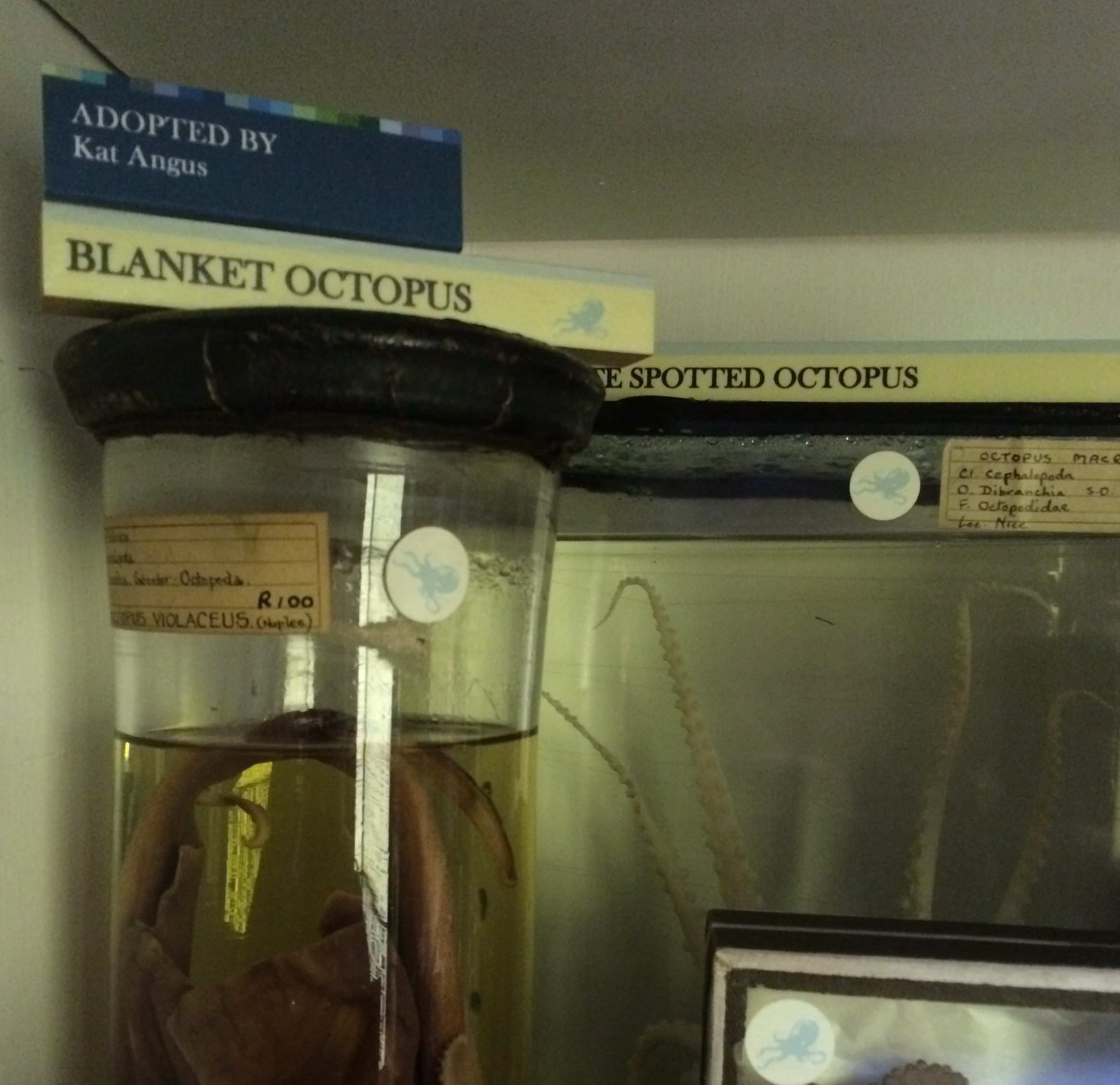
2014-12-19 13.27.38To be able to carry out this preservation task, as well as its regular maintenance, the Grant Museum is raising funds in several ways. The most visible is the “adopt-a-specimen” project, which allows you to have your name displayed next to one of the jars or skeletons, in return for a donation.

Recently, my friend Kat (who lives in Canada) received this specimen adoption as a birthday present from her other London-based friend, so I set out to find her jar. I knew it was an octopus, so that narrowed it down somewhat, but it still took me a while to find the cephalopod section. When I did, I had to search a bit among all the other adopted samples, but then I saw it, at the back!
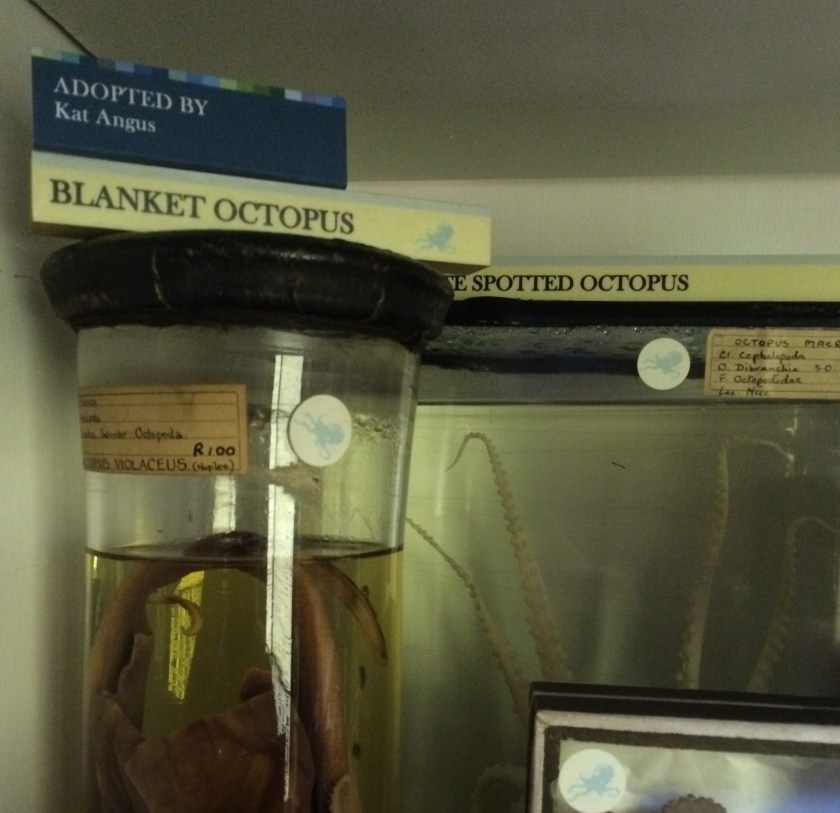
2014-12-19 13.38.18

If you also want your name on an animal of your choice, you can adopt a specimen via the Grant Museum website. Let me know if you do, and I’ll drop by again to visit it. The museum is a stone’s throw from my office and I can’t believe I had never even been before last week!2014-12-19 13.42.47
 

Why reproducibility initiatives are misguided

In my latest Pacific Standard column, I take a look at the recent hand-wringing over the reproducibility of published science. A lot of people are worried that poorly done, non-reproducible science is ending up in the peer-reviewed literature.

Many of these worries are misguided. Yes, as researchers, editors, and reviewers we should do a better job of filtering out bad statistical practices and poor experimental designs; we should also make sure that data, methods, and code are thoroughly described and freely shared. To the extent that sloppy science is causing a pervasive reproducibility problem, then we absolutely need to fix it.

But I’m worried that the recent reproducibility initiatives are going beyond merely sloppy science, and instead are imposing a standard on research that is not particularly useful and completely ahistorical. When you see a hot new result published in Nature, should you expect other experts in the field to be able reproduce it exactly? Continue reading “Why reproducibility initiatives are misguided”

Apocalypse 1910: Extinction is Inevitable

J.-H. Rosny aîné’s The Death of the Earth (1910)

RosnyAs I wrote when I first began this series on post-apocalyptic science fiction, what makes this genre so compelling is how its writers put our mastery of nature up against the possibility of human extinction. The extinction of a species is a routine event, and has been for the entire history of life on earth. So what about us? Will our species eventually disappear, or will our mastery of science and technology protect us from nature’s ruthless assaults?

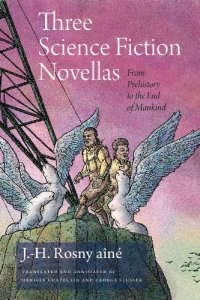
This theme is beautifully explored by one of the early masters of science fiction, the Belgian writer J.-H. Rosny aîné. Rosny, whose career began in the 1880’s and ended with his death during the Campbellian Golden Age, can be considered the father of hard science fiction because, as his translators argue, unlike Verne or Wells, he “was the first writer to allow science to write his narratives” from a “neutral, ahumanistic” perspective.

In this way, Rosny is much like the scientifically realist Camille Flammarion; but unlike Flammarion, Rosny’s purpose is novelistic rather than didactic. The result is fiction that is as compelling as that of Verne or Wells, told in a detached, analytic style that makes Rosny’s voice unique in early SF. This voice has a powerful effect in The Death of the Earth, a ruthless evolutionary vision of human extinction, in which our species cedes the planet to a completely new form of life. Continue reading “Apocalypse 1910: Extinction is Inevitable”