
Book Punks

Mike was recently interviewed by Book Punks about his series of reviews of post-apocalyptic fiction through history (#apocalypsethen) and how this fiction speaks about our relationship with science.

I love the genre because the apocalypse is a fascinating thought experiment: what happens when all of the science and technology that we use to mediate our interactions with nature and with each other disappears? What happens to human nature when it confronts the raw forces of nature without the intervention of technology? – Mike White

Mike also does not give himself very good odds of survival in a post-apocalyptic scenario, which is a bit depressingly realistic (personally, I think Ben is the most likely of The Finch & Pea staff to survive – dude can make good food out of anything, even cooking over a campfire).

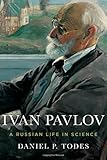
Science for the People: Pavlov

sftpThis week, Science for the People will learn about the life and work of a groundbreaking psychologist whose work on learning and instinct is familiar worldwide, and almost universally misunderstood. They spend the hour with Daniel Todes, Ph.D, Professor of History of Medicine at The Johns Hopkins University, discussing his book Ivan Pavlov: A Russian Life in Science.

*Josh provides research & social media help to Science for the People and is, therefore, completely biased.

Midden DNA

Some people don’t like the term “junk DNA”, because they assume all that extra DNA in the human genome must be doing something. Some of those people are tenured faculty, members of the ENCODE project, and have trouble penning reasonable definitions of biological function.

Other people have experimental data to show that random sequences of DNA can be biochemically active without physiological effect, understand that the genome’s complexity resists easy classification, and can, simultaneously, understand that these swathes of non-functional DNA are valuable because they contain the history of our evolution.

In that light, I am going to propose that we abandon the misleading phrase “junk DNA” and adopt a word from archaeology used to describe piles of informative waste: midden*.

A midden…is an old dump for domestic waste which may consist of animal bone, human excrement, botanical material, vermin, shells, sherds, lithics (especially debitage), and other artifacts and ecofacts associated with past human occupation. The word is of Scandinavian via Middle English derivation, but is used by archaeologists worldwide to describe any kind of feature containing waste products relating to day-to-day human life. – Wikipedia

Now, if you want to call it midden DNA or the DNA midden, that I am happy to leave up to personal taste and style.

*A potential confusion might arise when researchers sequence DNA from biological samples in an actual midden heap – a risk with which I am willing to live.

Art of Science: Jessica Lloyd-Jones Sculpts the Body Electric

Jessica Lloyd-Jones, Optic Nerve  2008 - 2010.              Blown glass, xenon
Jessica Lloyd-Jones, Optic Nerve 2008 – 2010.
Blown glass, xenon

Welsh artist Jessica Lloyd-Jones describes her work as merging art, science and technology. All three are certainly present in her sculpture series Anatomical Neon, which she made from 2008-2010. Lloyd-Jones describes the works on her website:

“Blown glass human organs encapsulate inert gases displaying different colors under the influence of an electric current. The human anatomy is a complex, biological system in which energy plays a vital role. Brain Wave conveys neurological processing activity as a kinetic and sensory, physical phenomena through its display of moving electric plasma. Optic Nerve shows a similar effect, more akin to the blood vessels of the eye and with a front ‘lens’ magnifying the movement and the intensity of light. Heart is a representation of the human heart illuminated by still red neon gas. Electric Lungs is a more technically intricate structure with xenon gas spreading through its passage ways, communicating our human unawareness of the trace gases we inhale in our breathable atmosphere.”

Although these pieces are beautiful in photographs, they are much more amazing in motion, so I urge you to visit Lloyd-Jones’ website and see her short videos of the pieces as the chemical light flickers through the organs. (I mean, seriously, check out the Optic Nerve). These pieces give gorgeous, graphic life to the chemical impulses shooting through our bodies and powering our minds.

The African Science Truck Experience

The African Science Truck Experience (TASTE) is an amazing charity I first found our about when founder Amy Buchanan-Hughes spoke at a science unconference I co-organised a few years ago.

TASTE is a project to provide school kids in Uganda with appropriate science lab tools that they need to study science in middle and high school. It’s difficult and expensive to set up science labs in individual schools in Uganda, but TASTE solves the problem with wheels: They have a mobile lab (the “science truck”) which can travel from school to school. Kids use the equipment when the truck is in town, and then it leaves after their labs are done, onto the next location!

TASTE1

In 2013, they reached 1400 students this way, and now TASTE are planning their next trip to Uganda. They are raising money throughout 2015 to be able to return in 2016 with the mobile lab and teacher training.

They’ve just started their fundraising, which involves a weekly focus on a specific item that they need sponsors for. This week’s item is…. a box of cockroaches, to help students learn anatomical drawing, which is a part of their curriculum.

TASTE2

You can follow TASTE on Facebook and Twitter to keep track of the weekly items, or their fundraising page to donate. (Note that the donation amounts listed are in British pounds. £10 is approximately $15 US)

Images from TASTE site and Facebook page.