
All of us at The Finch and Pea send our wishes for a joyous Easter to all those who celebrate, and a sciency Sunday to all.

All of us at The Finch and Pea send our wishes for a joyous Easter to all those who celebrate, and a sciency Sunday to all.
Sorry, no science today, kittehs are busy making surprises for your Easter basket.


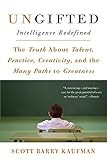 This week Science for the People is learning about how scientists and society measure intelligence, and the relationship between smartness and success. We’re joined by cognitive psychologist Scott Barry Kaufman, to talk about his book Ungifted: Intelligence Redefined. We’ll also talk to Nathaniel Barr, postdoctoral researcher at the University of Waterloo, about research into the relationship between smartphone use and cognitive skills.
*Josh provides research & social media help to Science for the People and is, therefore, completely biased.
This graphic that they have been using regularly during the NCAA tournament (and I’ve seen it on other CBS Sports) broadcasts drives me nuts.
Can you figure out why?
*No, it is not that I hate Maryland. In fact, I bear then no ill will at all, now that they are no longer in the ACC to muck things up for my Blue Devils. Go Duke!
Lita Albuquerque’s installation Beekeeper (2006), now on view in Santa Fe, is a piece that is much more compelling than the artist’s own description of it would lead you to believe.
According to Albuquerque, “Beekeeper (created in collaboration with Chandler McWilliams and Jon Beasley) is a pair of video projections controlled by generative computer software. The individual pixels that make up the image of the beekeeper separate and move out into space, dissolving the solid form into its constituent parts, spread until the entire wall is covered in a sea of slowly moving pixels, then reverse direction, heading for their original position. The software allows each pixel to choose its own unique path every time, creating a work in a constant state of becoming.” (source)
The artist has said that her goal with this work was “to present the visual similarity between a beekeeper and an astronaut,” which she approached by “[creating] a narrative around which the beekeeper’s aim is to help maintain biological life on the planet and the astronaut became the starkeeper maintaining life in the cosmos.”
On that level, this piece doesn’t work for me. In fact, it makes very little sense. The main visual similarity between apiarists and astronauts is the fact that both wear protective suits. Beekeepers, at least until very recently, were more interested in producing honey than in “maintaining biological life on the planet”, and astronauts are “starkeepers”, protecting the stars and planets from intergalactic threats, only in the movies.
As art that explores how we see and comprehend the world, however, Beekeeper is sublime. Just thinking about how the pixels gather and disperse could keep your mind working for hours. And as a statement about what we human beings are – collections of particles in constant flux – Beekeeper approaches the profound.
You can see Beekeeper in the exhibition Inventory of Light at Peters Projects in Santa Fe until April 25th, and you can find more work by Lita Albuquerque on her website.
 The Finch and Pea