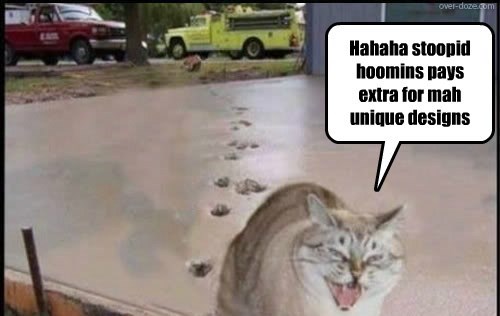
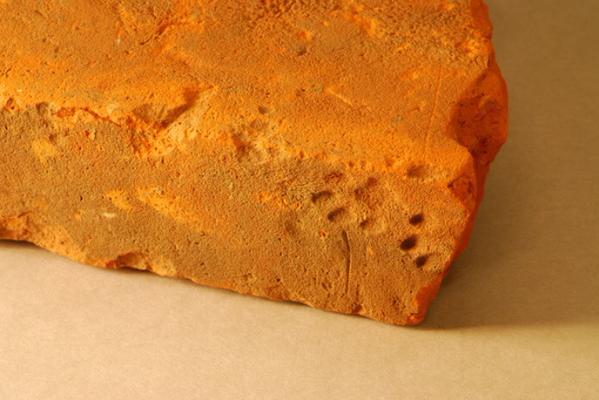
A researcher at a British museum recently discovered perfectly preserved kitteh paw prints on a roof tile dating from Roman times. An archaeologist at Gloucester City Museum who was examining thousands of fragments of Roman roof tile came across the uniquely-marked fragment, which was excavated in Gloucester in 1969. Archaeologists believe a cat walked across some wet tiles which were drying in the sun in about AD 100.
Lise Noakes of Gloucester City Council noted that “dog paw prints, people’s boot prints and even a piglet’s trotter print have all been found on tiles from Roman Gloucester, but cat prints are very rare.” Most cats, of course, prefer to keep their paws clean and dry. But now that they know their prints are rare and valuable, some enterprising kittehs are sure to jump into the field of custom paint and cement work.
…I was taking to a girl. We were both backstage about to give this big presentation in front of, like, the world’s top scientists about some, you know, medical breakthrough we just had; and I’m backstage talking with her and I’m, like, berating her and, like, telling her how stupid she is, and then, and then, I try to sleep with her…
The scene, although fiction, rings very true, because this scene happens – not always in such a confined time frame, with those particular details, or with that intensity – but the aggression, denigration, and sexual objectification of women in science is ever present.
The focus of the description is on how the abuse of the female character illustrates flaws in the male character, because the description of the scene exists to illustrate the process of auditioning for a specific character. In real life, however, should we be more concerned with the character of the jerk or the life experience of those who have such behavior directed at them? As Janet Stemwedel notes in her column in Forbeson Tim Hunt’s controversial comments:
What if, when asked to say a few words to the Korean women scientists and the science journalists at the luncheon, he had recognized the audience he was speaking to was likely to have had quite different experiences in science than he had?
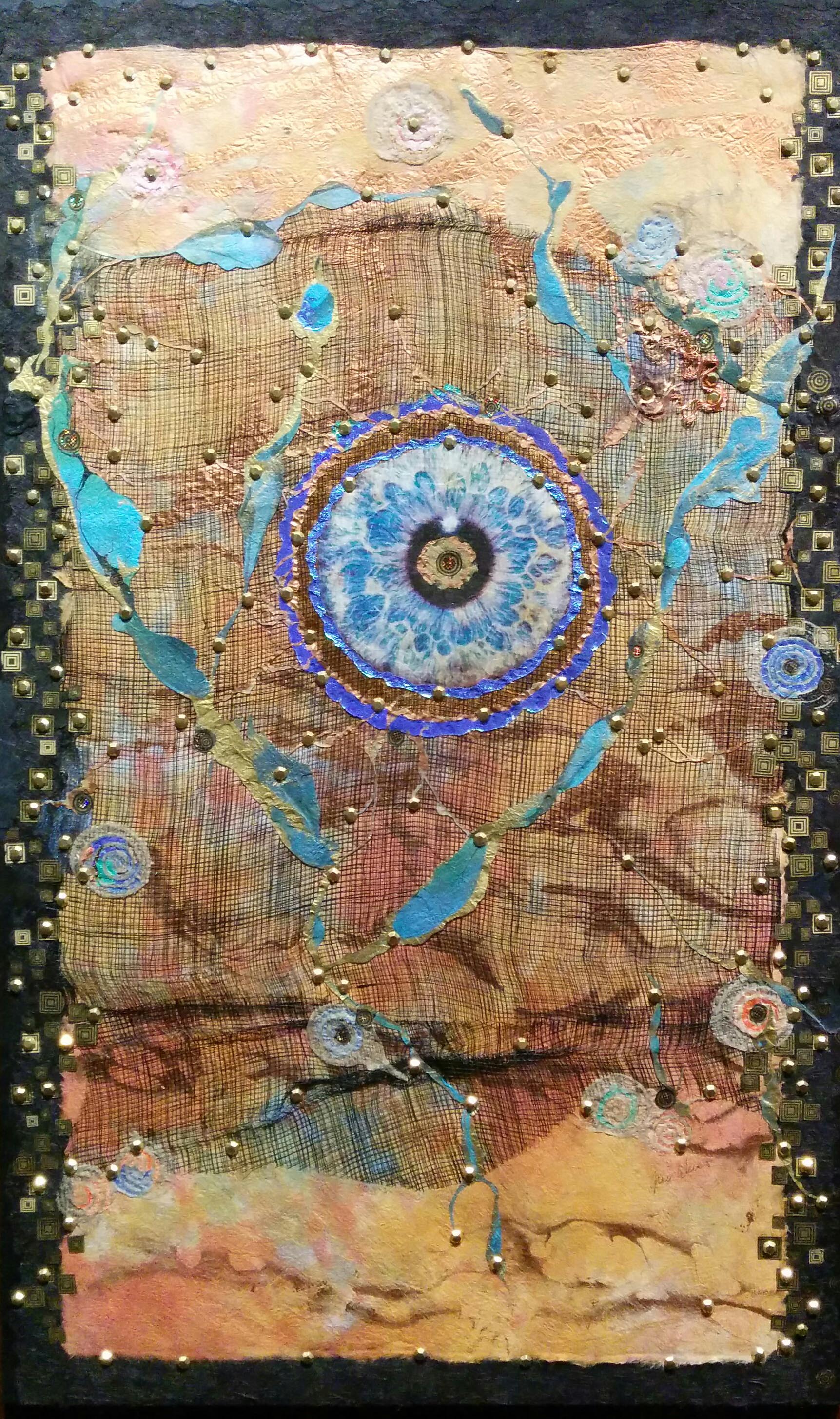
Grace Harbin Wever, Iridium – My Darkness to Light II, 2013, Mixed Media
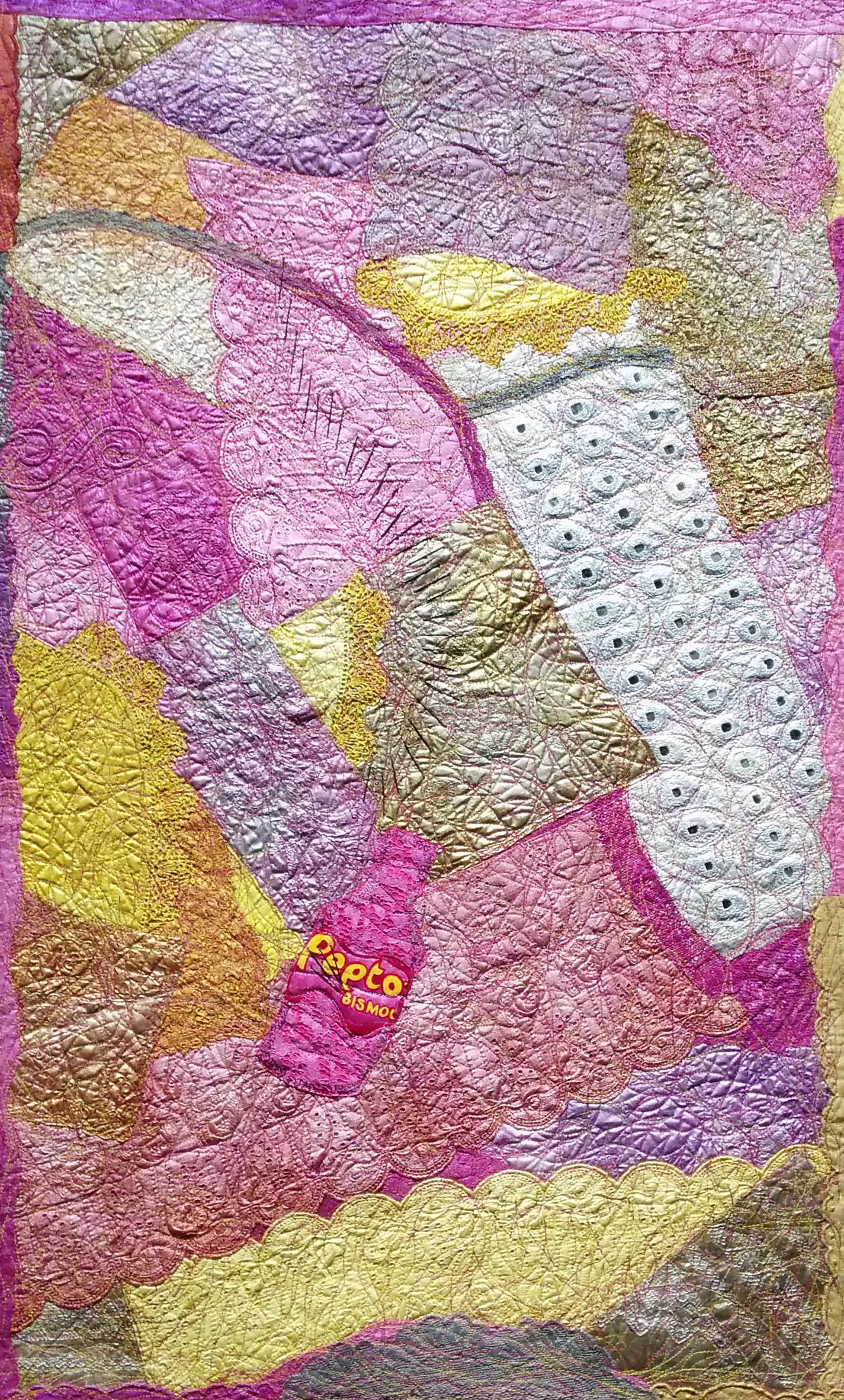
Soft materials meet hard science in Radical Elements, an exhibition at the National Academy of Sciences featuring 40 contemporary art quilts, each inspired by a different element from the periodic table. The works in the show, organized by Studio Art Quilt Associates, explore the elements in many ways, ranging from their industrial uses to personal memories associated with them. For example, Barbara Schulman’s piece, A Pepto Bismuth Story (below), started with the “beautiful crystalline structure” and iridescent colors of the element, which reminded the artist of her mother’s hankies and lace, so she incorporated them into the design along with bismuth’s best-known consumer product, Pepto-Bismol.
Grace Harbin Wever’s Iridium – My Darkness to Light II (above), takes a more strictly scientific idea, although she expresses it in a highly artistic, indirect way. The artist, a former cell biologist, was intrigued when she learned that iridium microelectrodes had been successfully implanted into the human brain as part of studies in vision and perception. A range of materials, including holographic fabric and copper wire, surround the central eye image, nodding to the juxtaposition of the natural and the man-made that characterizes recent advances in the field of vision.
Indeed, very few of the quilts on display stick to the traditional materials of fabric, thread and batting. Materials used range from duct tape and aluminum foil to keyboard keys and dining utensils. Curator Jill Rumoshosky Werner notes, “In a relatively short period of time, the field of art quilting has undergone a fundamental change. The primary focus has shifted from decorating the surface of a quilted wall hanging to a much broader acceptance of ideas, styles, and materials.”
For the past year and a half, Lou Woodley and I have been running MySciCareer, a website with first person science career stories. It’s not just jobs in research and it’s not just jobs outside of research – it’s both.
If you just watch the images on the front page for a while (or look at the ones in this post), you’ll see a lot of very different jobs and people come by. Researchers, writers, teachers, politicians, startup founders. The only thing they have in common is that they have been trained as a scientist at some point in their lives.





 The Finch and Pea