Science Caturday: Let’s Try That Again

cat-hate-it

This week, psychologist Brian Nosek and his colleagues from the Center for Open Science released the results of four years of work on a unique project. Since 2011, he and 270 other scientists in The Reproducibility Project have been attempting to replicate 100 previously published psychology studies. The results, published this week in Science, were worse than expected – just 36% of the replicated studies produced as strong a result as the original research.

That sounds pretty bad! But this article by Ed Yong in The Atlantic goes systematically through the issues around study design, publication and replicability and concludes that “failed replications don’t discredit the original studies, any more than successful ones enshrine them as truth.”

Most scientists agree that more efforts like the Reproducibility Project are essential to leading scientific research toward practices that produce more robust results. Luckily, research cats are generally amenable to repeating experiments over and over again, particularly if they involve can openers or pushing objects off tables.

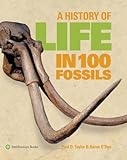
Science for the People: Coffee Table Science

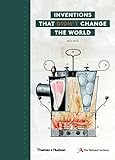
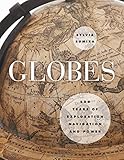
sftpThis week, Science for the People meets the authors of three big books that use stunning images to tell intriguing stories about the history of science. We’ll discuss evolution and the building of the fossil record with invertebrate palaeontologist Paul Taylor, author of A History of Life in 100 Fossils. Archivist Julie Halls shares stories of unheralded ingenuity from her book Inventions that Didn’t Change the World. We will also learn about attempts to map the world in three dimensions from independent conservator Sylvia Sumira, author of Globes: 400 Years of Exploration, Navigation, and Power.

*Josh provides research help to Science for the People and is, therefore, completely biased.

There is enough room in this rabbit hole for all of us

11000417785_50feb0ac6d_o
From p305 of “The British Miscellany: or, coloured figures of new, rare, or little known animal subjects, etc. vol. I., vol. II” by James Sowerby

The British Library’s Flickr account is a bloody rabbit hole of lovely. And, all the images are being released for free without copyright restrictions*. I won’t guarantee that there is something there for every flavor of nerdery, but, if you don’t find your interests represented by something here, I think you need to seriously question your life choices.

*The British Library does offer you the option to purchase higher-than-screen quality images, which seems like a workable model to me.

The technology to receive HBO in 1989 was predicted a hundred years earlier…from p134 of the “The Conquest of the Moon: a story of the Bayouda” by André Laurie – pseud. [i.e. Paschal Grousset.]

The Art of Science: Stylish Sci Tattoos, Minus Pain

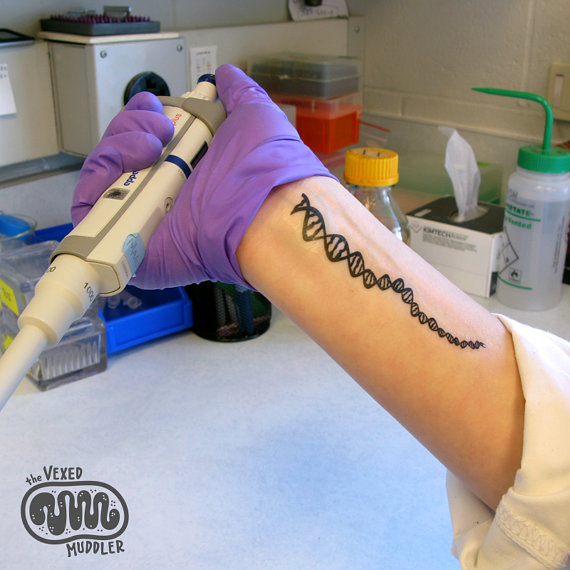
DNA temporary tattoo by the Vexed Muddler

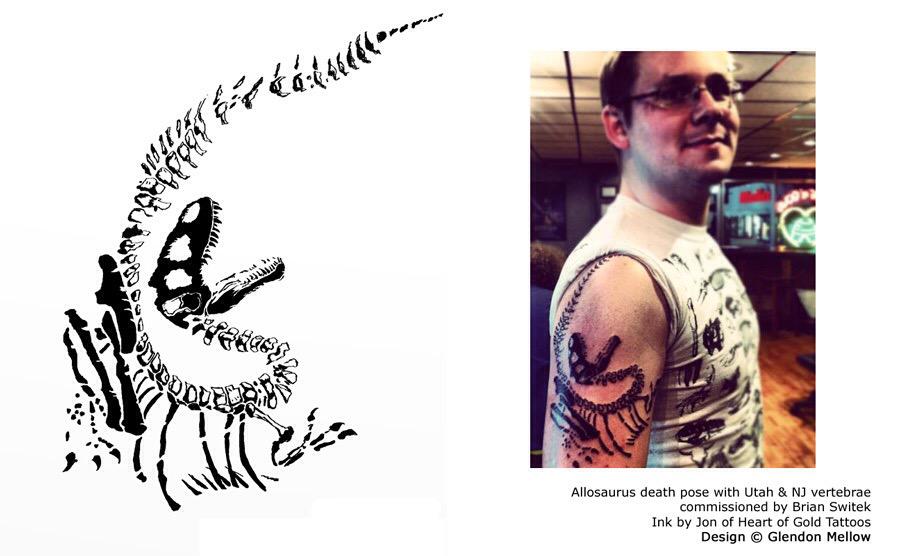
The Science Tribe are a proud people, many of whom display their allegiances on their skin in a dazzling variety of geeky tattoos. Science writers @Scicurious and @Laelaps, for example, both have cool tats designed by @FlyingTrilobite – a caffeine molecule and some dino bones. But there are those who fear the needle, or the commitment, of permanent ink. For them, The Vexed Muddler has created a new series of temporary science tattoos, available in her etsy shop. The Vexed Muddler (aka Peggy Muddles) is a biology lab tech by day, and she knows her microbes. You can chose from a variety of bacteria, a spiky virus and a classic DNA double helix. So be a trendsetter, wear your gut flora on the outside for a change. While you’re at it, you might want to accessorize with one of the Muddler’s lovely ceramic necklaces, in styles ranging from mitochondria to whipworms.

The Chevin

I visited the area around Leeds recently, and came across this sign [pdf] by the Leeds Geological Association, on the Chevin.

IMG_0167

The Chevin is a ridge in the West Yorkshire landscape, formed over thousands of years. The surrounding area is mostly a valley (one of the “dales” of the Yorkshire Dales) formed by prehistoric rivers and glaciers.

IMG_0163
The view

I wasn’t expecting to encounter any science on this trip, so the geology sign was a surprise. Fittingly, I found it at “Surprise View”, the highest point of the Chevin.