
It’s a dismal, grey 17C today with a chill in the air; autumn already feels like it’s on the way in Edmonton. It’s the kind of day that hints at the winter to come and brings a familiar longing to be jammed into a warm bar with some good beer and a great loud band. Thankfully, I’ve got Edmonton’s own Fire Next Time to round out the daydream and to look forward to this winter. Continue reading “Following the “Old Roads” with Fire Next Time”
Library of America Sci-Fi Smorgasbord
 In preparation for the Library of America’s forthcoming volumes of vintage American Sci-fi, they’ve put up an amazing online companion with reviews of the books, additional stories, essays on the historical context, and a gallery of great covers.
If you’re like me and are struggling to sit tight until the books are released, the web site will keep you busy for awhile.
Observing Charlotte
 Back in June I did a short interview* with Tyler Dukes for the Charlotte Observer. Here’s a taste:
Q: Science in pop culture tends to turn up a lot in your posts. Are you ever surprised by where ideas turn up?
If you want to, you can really can find science in everything because it’s about how the world works… It’s being able to find things that are really compelling and interesting and make you spend more time than you should writing about it or investigating it.
They actually published the interview in a timely manner. I’m only getting around to posting it here because I have been busy. How busy? I’m not sure how to quantify the business involved in international house hunting, relocating two small children transatlantically, and switching from full-time researcher to full-time science consultant/writer. I know how to describe it qualitatively, but not without swearing.
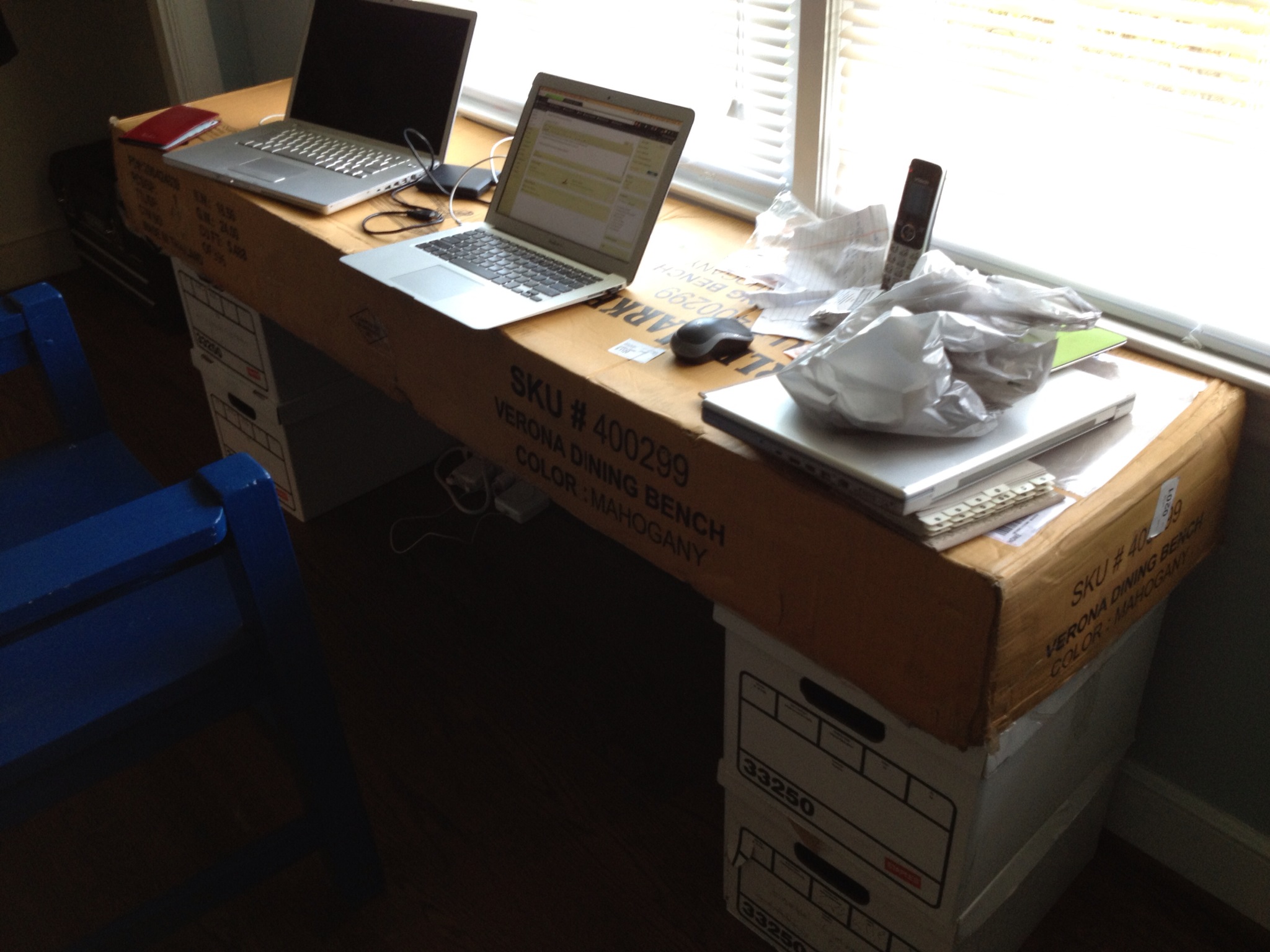
I’m also writing this from a laptop computer sitting on a desk made of cardboard boxes, because affordable moving companies are (a) slow, and (b) do not care.
*Well it was short by the time Tyler was done editing it down to something palatable.
Economics does shape science
Some final observations from Paula Stephan’s provocative book, How Economics Shapes Science (Harvard University Press, 2012):
1) The current incentive structure is creating an inefficient system. The job market for biomedical PhDs has been generally poor for some time now, and it has been getting worse. From the perspective of Deans and established investigators, the system is working beautifully because established scientists are highly productive. But from an economic perspective (and from the perspective of newly trained PhDs), this is a highly inefficient system that relies on cheap, temporary, highly skilled workers with future job prospects that are unlikely to repay the opportunity costs of PhD and postdoc training.
The university research system has a tendency to produce more scientists end engineers than can possibly find jobs as independent researchers. In most fields, the the percentage of recently trained PhDs holding faculty positions is half or less than what it was thirty-three years ago; the percentage holding postdoc positions and non-tenure-track positions (including staff scientists) has more than doubled. In the biological sciences it has more than tripled. Industry has been slow to absorb the excess. A growing percentage of new PhDs find themselves unemployed, out of the labor force, or working part time.
Career outcome numbers in biomedical sciences
Again from Paula Stephan’s How Economics Shapes Science, p. 179-180:
The evidence that problems exist is perhaps even more striking when one studies the over 400 National Institute of General Medical Sciences NIH Kirschstein National Research Service Awards (NRSA) fellows awarded during 1992-1994. Kirschtein fellows are supposedly the very best, selected for their research promise. This particular group of Kirschstein fellows also had the good fortune of launching their careers when the NIH budget was doubling.
What happened to their careers? By 2010, slightly more than a quarter of the former Kirschstein fellows had tenure at a university; 30 percent were working in industry. What about the others? A handful (about 6 percent) were working at a college; 4 percent were research group leaders at institutes. Another 20 percent were working as a researcher in someone else’s lab and a startling 14 percent could either not be located after extensive Google searches or had not published a paper since 1999. This was not exactly what one would expect from “the best” who came of professional age during the doubling of the NIH budget. If times were tough for them, times will be much tougher for those who have graduated since or will graduate in the near future.
That’s remarkable – there are more former fellows who are working as staff scientists in someone else’s lab or who seem to have left science (34% total) than have taken tenure track jobs (~25%), or than have taken jobs in industry (~30%).
Keep in mind that today, a Kirschstein fellowship or some other private fellowship is absolutely a minimum requirement for a faculty position these days.
 The Finch and Pea