Science Caturday: Thank you for explaining that!

Thank you for explaining that!

Thank you for explaining that!

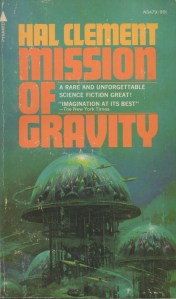
Hal Clement’s Mission of Gravity

Classic Hard Sci-Fi By The Book

Charles Lackland is far from home, holed up in an isolated outpost on the inhospitable planet Mesklin. Inhospitable to humans anyway, but not to the methane-based, centipede-like natives who are adapted to the enormously high and remarkably variable gravity, the fierce cold, and the extreme storms of this gigantic, disc-like planet. Lackland’s mission is to assist a crew of Mesklinite natives on a journey to recover mission data from an unmanned rocket that crashed near one of Mesklin’s poles. With a gravity 700 times that of Earth, the pole is a place no human can survive. But the natives, Captain Barlennan and his methane sea-faring crew of the Bree, can make the journey. Continue reading “Hal Clement’s Mission of Gravity”

Manipulating variables in “Little Bunny Foo Foo”


Don’t worry, “Little Bunny Foo Foo” is not the Song of the Week. Like many children’s songs, it goes through a set number of repetitions1 based on the dubious theory that repetition both appeals to kids AND is good for them.

My daughter, The Frogger, has discovered that, while the number of repetitions (N) has a traditional value (N=3), it is a manipulable variable which can be set at multiple values with effects on the enjoyment of the singers. Continue reading “Manipulating variables in “Little Bunny Foo Foo””

Pea Green Boat

pyrofibonacciology, n, the study of Fibonacci sequences created using flaming objects

Unlike me, you may not have an encyclopedic memory of all my writings. So you may not recall the time I evaluated the Fibonacciness of Katy Chalmers‘ golden fire spiral.

Apparently, it was enough to convince the folks at the e-zine Pea Green Boat that I knew something about patterns in nature. As a result, you can now read my responses to their questions (formatting removed the questions and turned it into a, hopefully, more coherent piece) in the latest issue, entitled “Ascend”.

I think this apparent problem may be driven by the fact that patterns in nature are not always reliable. Sometimes that twig snapping is a harmless deer. Sometimes its a leopard* about to pounce. It is probably a better evolutionary bet for us to have brains that are willing to believe in the pattern that a twig-snap almost always precedes a pouncing leopard, even if it almost always the deer.

*I think my obsession with the idea that leopard predation was a major evolutionary pressure on the human species was the result of having read 2001: A Space Odyssey just a bit younger than is advisable.

The Art of Science: The Lure of Lead

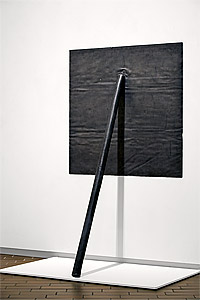
Lead is heavy. Not just in terms of physical density, but also of cultural weight.  Malleable, ductile and resistant to corrosion, lead has been used for over 8,000 years for many purposes. The Romans, who gave the element its name (Pb, for plumbum) built their famous water and sewer system of lead pipes, and used it to make statues, sarcophagi, cooking pots, and wine vessels.   In the middle ages, lead was used in roofing and plumbing, as well as for statues and ornaments, including the strips joining the pieces of colored glass in church windows. Up until the 20th century, lead was still widely used in paint and solder and as an additive in fuel. Continue reading “The Art of Science: The Lure of Lead”