
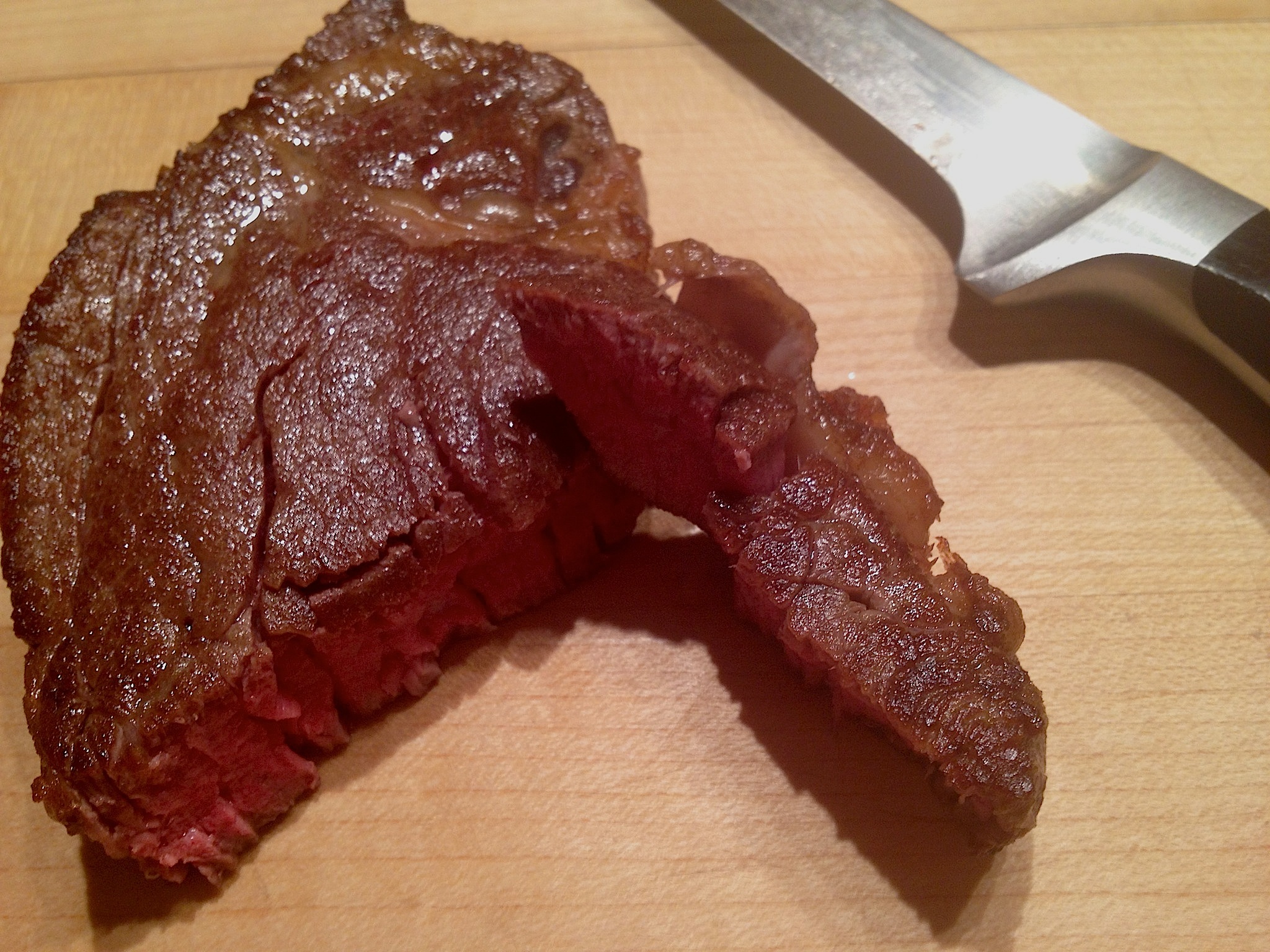
 As we head towards colder weather and the holidays, I thought it might be a good time to talk about meat. Some might say summer, the height of barbecue season, is the time for meat; but I think of summer as a time for beautiful, fresh vegetables, not of meat. For me, a big hunk of steak is for when I want something warm and hearty. We are all about passion for food and the science behind good cooking. A well cooked steak has plenty of good science behind it and can make those carnivores among us start to drool like Homer Simpson with a donut. But the first ingredient when cooking meat is respect. Continue reading “Ribeye Steak: The Secret to Perfect Steak”
No really, talk to strangers

I’ve always been resistant to “networking”. Going up to random people I don’t know and talking myself up seemed ridiculous and weird. I avoided events that were specifically organized for that purpose. It’s not that I can’t talk with people I do, in fact, have a few friends. I just didn’t think the helpfulness of the exercise outweighed the intense awkwardness I would feel.
Turns out, I was wrong. I know, I know, everyone is always saying how important and easy networking is. I don’t think I’m the only person (definitely scientist) that had this same aversion. I hope sharing my (limited) experience will encourage those of you who still think networking is awkward and weird.
When I moved to DC and started my post-doc I was determined to put myself out there both to make new friends and to make job connections. I cold emailed a list of former NIH fellows to see if they would tell me about their current jobs. Most of them said yes, to my shock and horror, because now I actually had to talk with these people. To my surprise, I actually enjoyed talking with them, I learned a great deal about my career options, and it wasn’t awkward at all. After getting my confidence up, I even attended a “networking happy hour”, the event I spent all of my previous life avoiding. Despite being terrified that I was the awkward girl in the room, I was able to chat with at least five different people. Of course it’s hard to walk up to people you don’t know, but at an event like that everyone is expecting it so it’s fine. I haven’t met my new BFF yet or gotten a connection to the perfect job but I am definitely more comfortable meeting new people. The moral of this story is, just talk to people, it won’t be as terrible as you think. Along the way, you may make a new friend or meet someone who knows of the perfect job for you.
This week’s Nobel Prizes have simplified my talk introductions
For my entire scientific career, I’ve introduced every talk with one of the following arguments:
1) G-protein coupled receptors are fundamentally important and interesting because they are involved in almost every aspect of our physiology, and because they are the targets of the majority of currently used drugs.
2) Gene regulation is fundamentally important and interesting because it is involved in almost every major biological process, including development, cell division, and differentiation, as well as disease.
Now I can skip all that and say:
1) GPCRs are important and interesting, and the Nobel Prize for Lefkowitz and Kobilka proves the Swedish Academy agrees with me.
2) Gene regulation is important and interesting, and the Nobel Prize shared by Yamankana proves the Swedish Academy agrees with me.
My hearty congratulations to the winners.
The Art of Science: Put a Shark on It
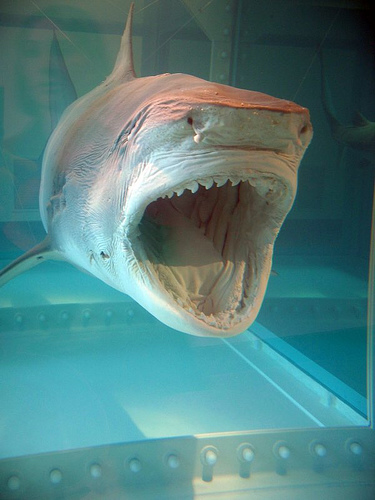
Sharks are scary. The apex predators of the ocean, they have giant mouths with rows of pointed teeth, they can grow to a great size, and they never stop moving. And yet, according to the National Oceanic and Atmospheric Administration (NOAA), more people are killed by electrocution by Christmas lights than by shark attacks. (source) So our fear of sharks isn’t rational, it’s cultural. Artists, take note: If fear is what you’re going for, put a shark on it. Continue reading “The Art of Science: Put a Shark on It”




 The Finch and Pea