Science Tourist: Sedgwick Museum in Cambridge

I’ve lived in Cambridge, UK, for the past three years. There are many things I don’t like about Cambridge (and I’m leaving soon) but that only makes me more appreciative of the few places I do like very much, and one of those is the Sedgwick Museum of Earth Sciences.

The Sedgwick Museum is one of the museums of the University of Cambridge. It’s located on one floor of the Department of Earth Sciences, right in the centre of town. The collection of fossils and rocks is on display along two corridors, in imposing cabinets.
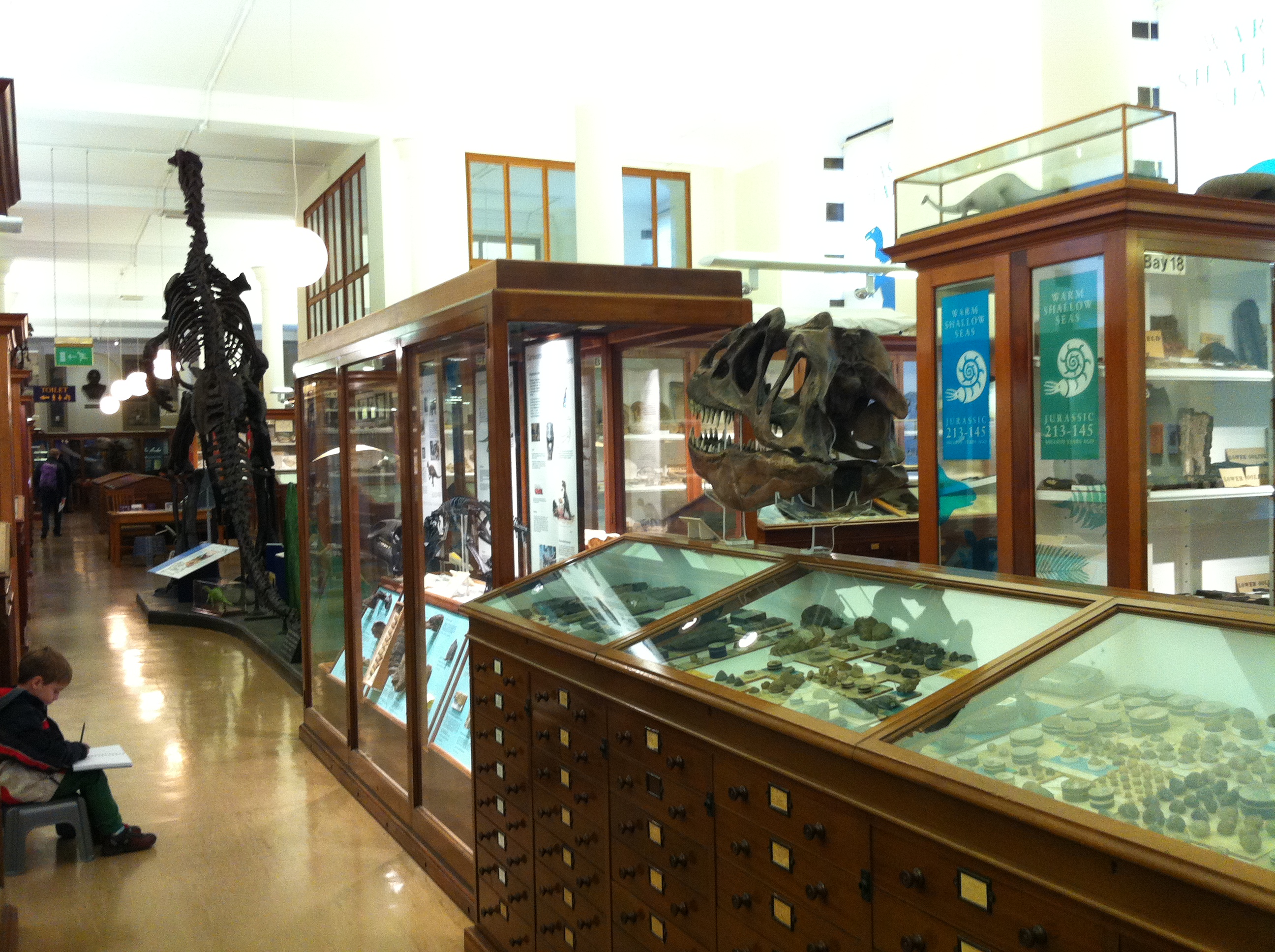
Sedgwick1

This could easily have been a terribly boring setup, but the museum has managed to make the most of the small space, and turned the entire museum into a geological timeline! You enter the museum in the Cretaceous Period (65-145 million years ago), and if you turn right you can walk all the way back in time to the Cambrian explosion, 500 million years ago. Along the way, you can see fossils from all over the world. Continue reading “Science Tourist: Sedgwick Museum in Cambridge”
Don’t stop believing, until you see it

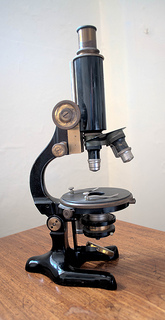
microscopeIf you can’t see something, how do you know it is there? In my research, I rely on my ability to take pictures of neurons making connections with each other and other types of cells. What I know to be the truth about these connections, is based on only what I can see through the microscope. I was reminded just how little we can actually “see” by a recent paper in the journal Science.

This new paper used newer imaging technology called STORM (STochastic Optical Reconstruction Microscopy), which enhances imaging by only exciting and imaging a few individual fluorescent molecules at a time. This prevents groups of fluorescent molecules from distorting fine detail by forming a large bright fuzzy cloud. The Harvard scientists saw that a structural protein, Actin, actually forms rings around the axons of neurons.(!) Up until now, the organization of actin in the axons and dendrites has been a mystery. Continue reading “Don’t stop believing, until you see it”

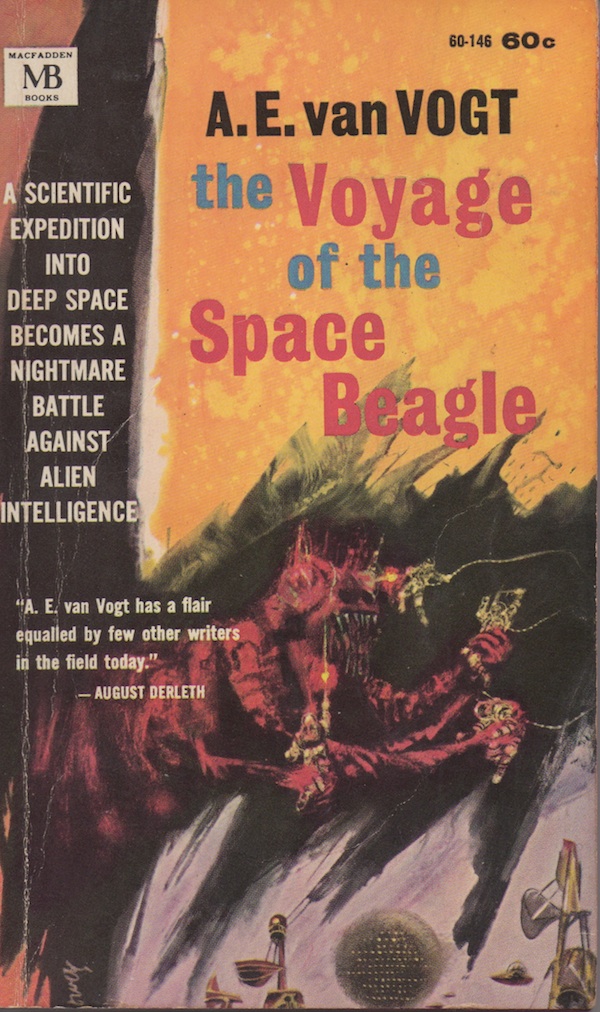
The Infuriating and Essential Science Fiction of A.E. Van Vogt

vanvogtvoyagespacebeagleIf you like the pulp science fiction of the Campbellian Golden Age from the late 1930’s to the early 1950’s, you’re bound to run across A.E. van Vogt’s name on nearly every must-read list. (Incidentally, not everyone, including me, considers this era to be the real Golden Age of science fiction). For fans of vintage science fiction, van Vogt is essential because his works were crucial in the canalization of many of the core ideas that we now consider essential to science fiction. At the same time, van Vogt is infuriating because his writing is annoyingly juvenile, even when compared against the other writers who shared pages in the same magazines aimed at juveniles.

When you read van Vogt today, it’s hard not to wonder what people saw in this guy when they ranked his works as some of the greatest ever in science fiction. Continue reading “The Infuriating and Essential Science Fiction of A.E. Van Vogt”

Plants as a metaphor for adulthood?: Frank Turner’s Photosynthesis [Repost]

Marie-Claire is going to be very busy over the next month educating the youth of Canada. Too busy to even listen to music, which is about her favorite thing to do, after educating the youth of Canada. In the meantime, we will be reposting some of our favorite Song of the Week posts…

A catchy and heartfelt folk song with a charming video and a scientific process in the title:  It’s hard not to love Frank Turner’s Photosynthesis. Continue reading “Plants as a metaphor for adulthood?: Frank Turner’s Photosynthesis [Repost]”

Science Caturday: Moar Speriments in Grabity

grabity

Nice of those doggies to help with the science.

via Cheezburger.com